
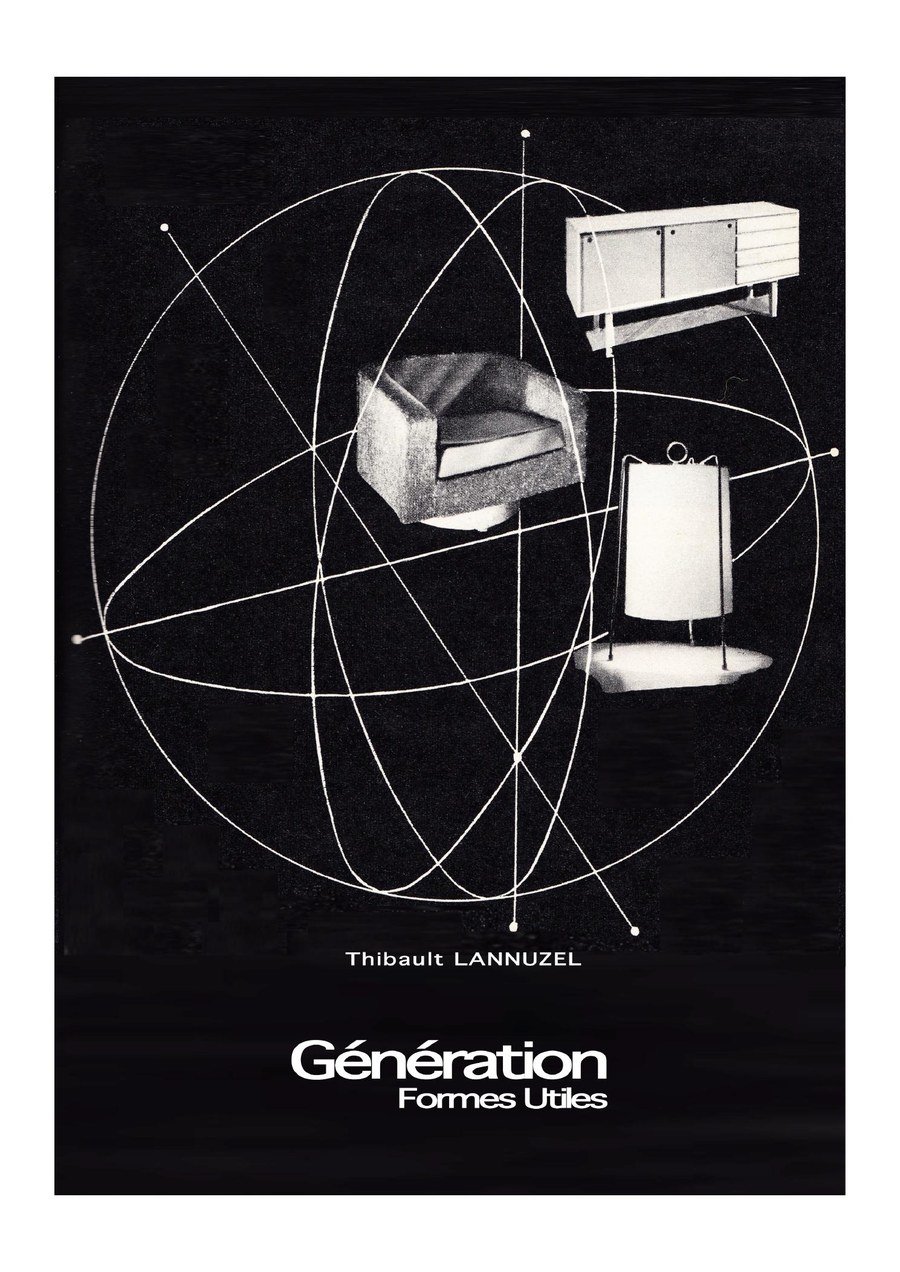
RESEARCH
FORMES UTILES GENERATION
A HISTORY OF FRENCH DESIGN · 1945–1973
Thibault Lannuzel's doctoral research focuses on a generation of French designers who, from the Reconstruction to the end of the Trente Glorieuses, participated in the emergence of mass-produced furniture, industrial design and a new interior architecture.
A GENERATION
In the aftermath of World War II, a new generation of French designers emerged in the furniture, seating, lighting, and interior design sectors. This generation did not constitute a formal school or association. Rather, it was defined by a similar age, shared training, time spent in the same design offices, shared professional networks, and a common desire to bridge the gap between design and industry.
This research identifies eleven designers at the heart of this phenomenon: Janine Abraham, Dirk-Jan Rol, René-Jean Caillette, Pierre Guariche, André Monpoix, Michel Mortier, Joseph-André Motte, Pierre Paulin, Antoine Philippon, Jacqueline Lecoq and Alain Richard.
The term "Useful Forms Generation" refers to the Useful Forms section created at the initiative of André Hermant as an extension of the UAM and presented at the Household Arts Fair: a space where form and function are thought of together.
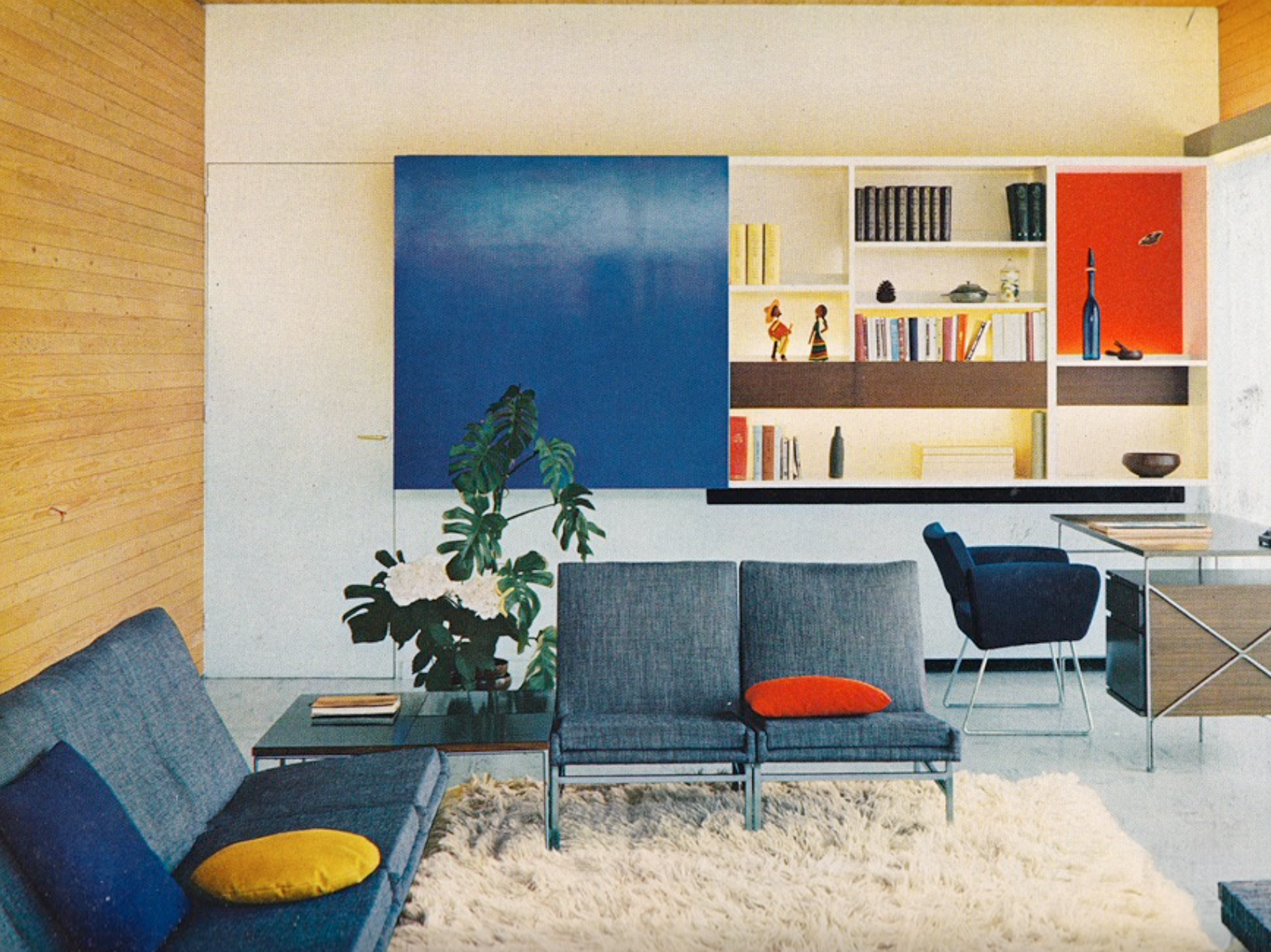
André Monpoix and Alain Richard, residence, avenue d'Auteuil, Paris, Jean Ginsberg architect, 1954. French House, No. 75, March 1954, p. 9. Final credit to be confirmed.
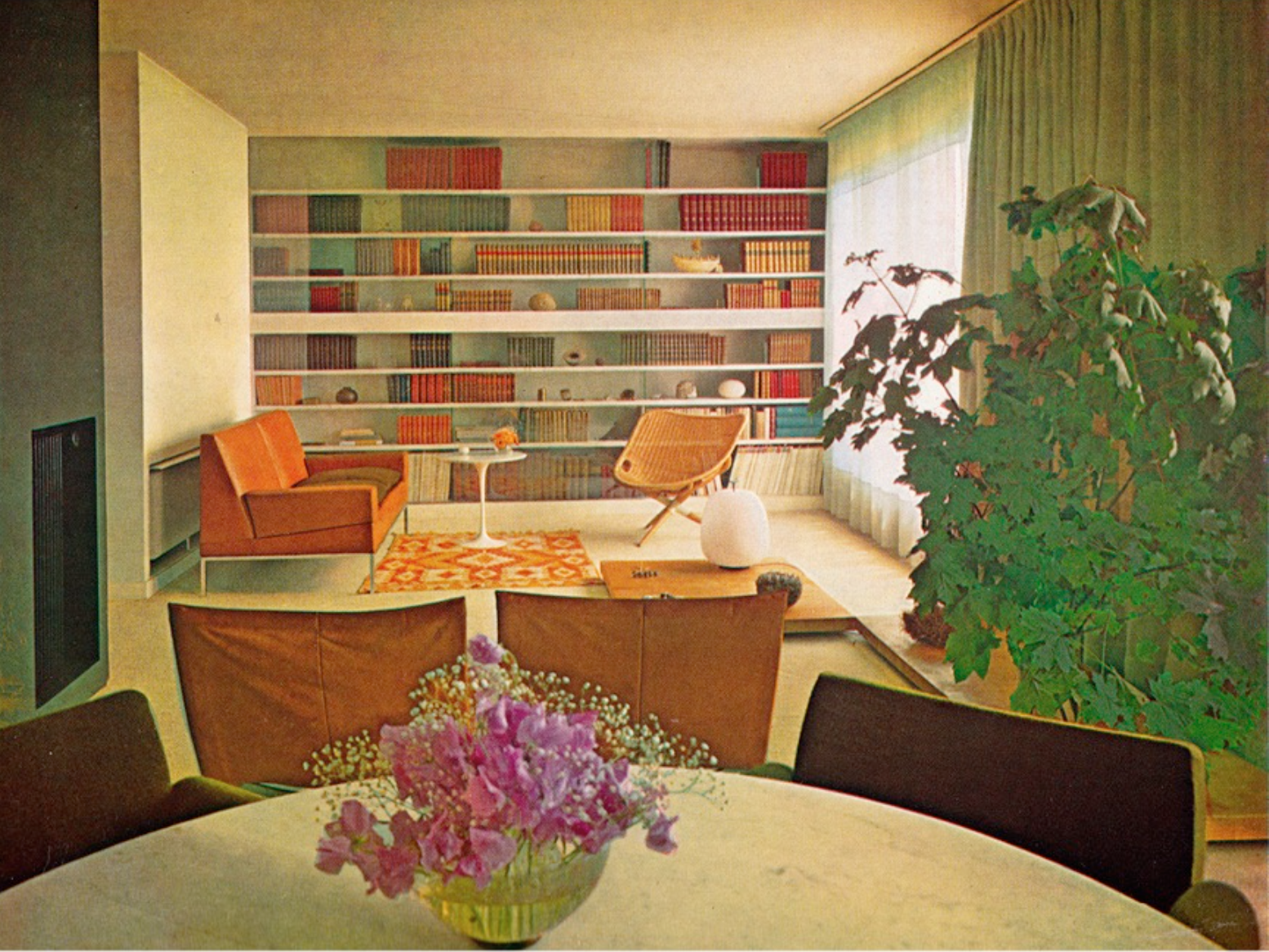
Joseph-André Motte, residence, rue des Wallons, Paris, 1962. Joseph-André Motte agency catalogue, SCORE editions, Paris, 1969. Final credit to be confirmed.
1945
Reconstruction, new housing, redefinition of furniture and its uses.
1950—1960
Trade fairs, publishers, new materials, collective signatures and distribution of mass-produced furniture.
1960—1973
Public procurement, equipment, transport and the transition from object to interior architecture.
FROM SOCIAL FUNCTIONALISM TO DESIGN
The generation studied belongs to a French lineage that includes Francis Jourdain, then René Gabriel and Marcel Gascoin. These designers championed rational, mass-produced, accessible furniture adapted to the transformations of modern housing.
Among their younger contemporaries, these principles translate into rigorous design, ingenious construction systems, precise materials, meticulous joinery, and a constant pursuit of ergonomics. The object is no longer conceived as an isolated decorative piece, but as an element within a modern living environment.
The designer then appears as the interlocutor capable of linking use, material, industry and space.
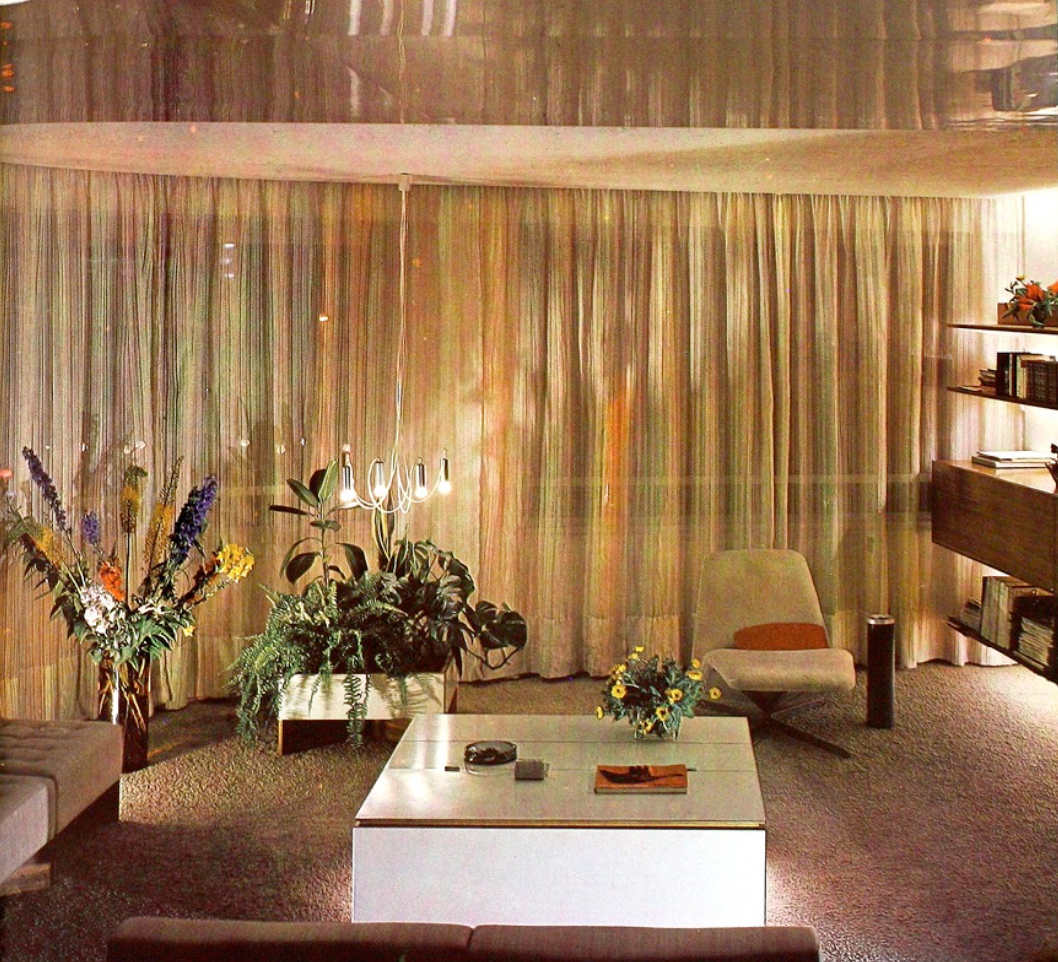
Pierre Guariche, residence, place Adolphe-Chérioux, Paris, 1966. French House, No. 211, October 1967, p. 142. Final credit to be confirmed.
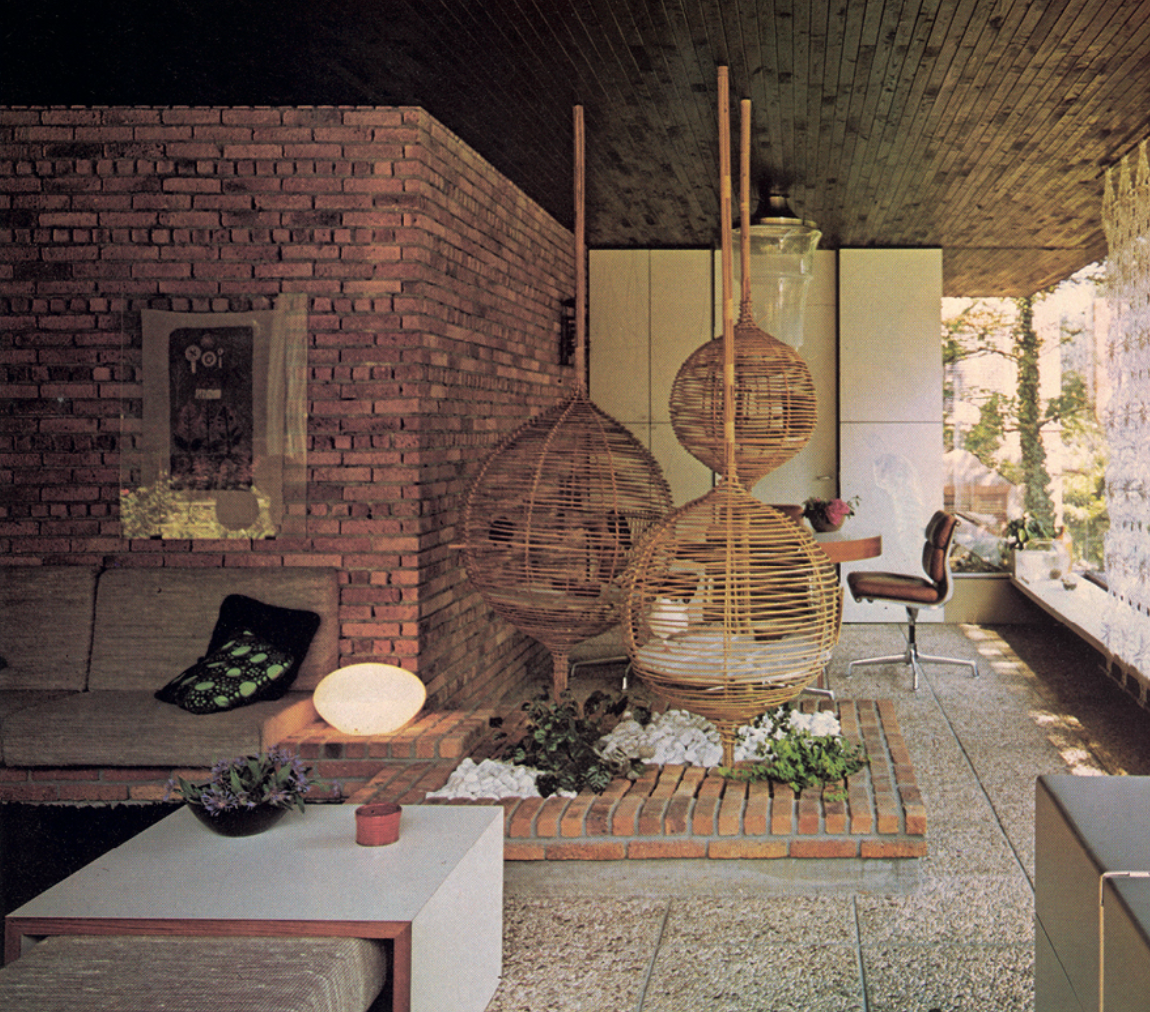
Janine Abraham, "chicken coop" of the living room, Avenue du Château, Meudon, 1969. Color photograph. Final source and credit to be confirmed from the archive caption.
ELEVEN DESIGNERS
Janine Abraham & Dirk-Jan Rol · René-Jean Caillette · Pierre Guariche · André Monpoix · Michel Mortier · Joseph-André Motte · Pierre Paulin · Antoine Philippon & Jacqueline Lecoq · Alain Richard.
Each biography will be progressively linked to the corresponding works, archives, publishers, public collections and DIZAGN objects.
OBJECTS & RESEARCH
Some works already documented by DIZAGN make it possible to articulate historical research, biographies of designers and the material study of models.

PIERRE GUARICHE
Bridge Vampire · Steiner · c.1953

ARP.
A7 armchair known as CORB · Steiner prototype · 1955
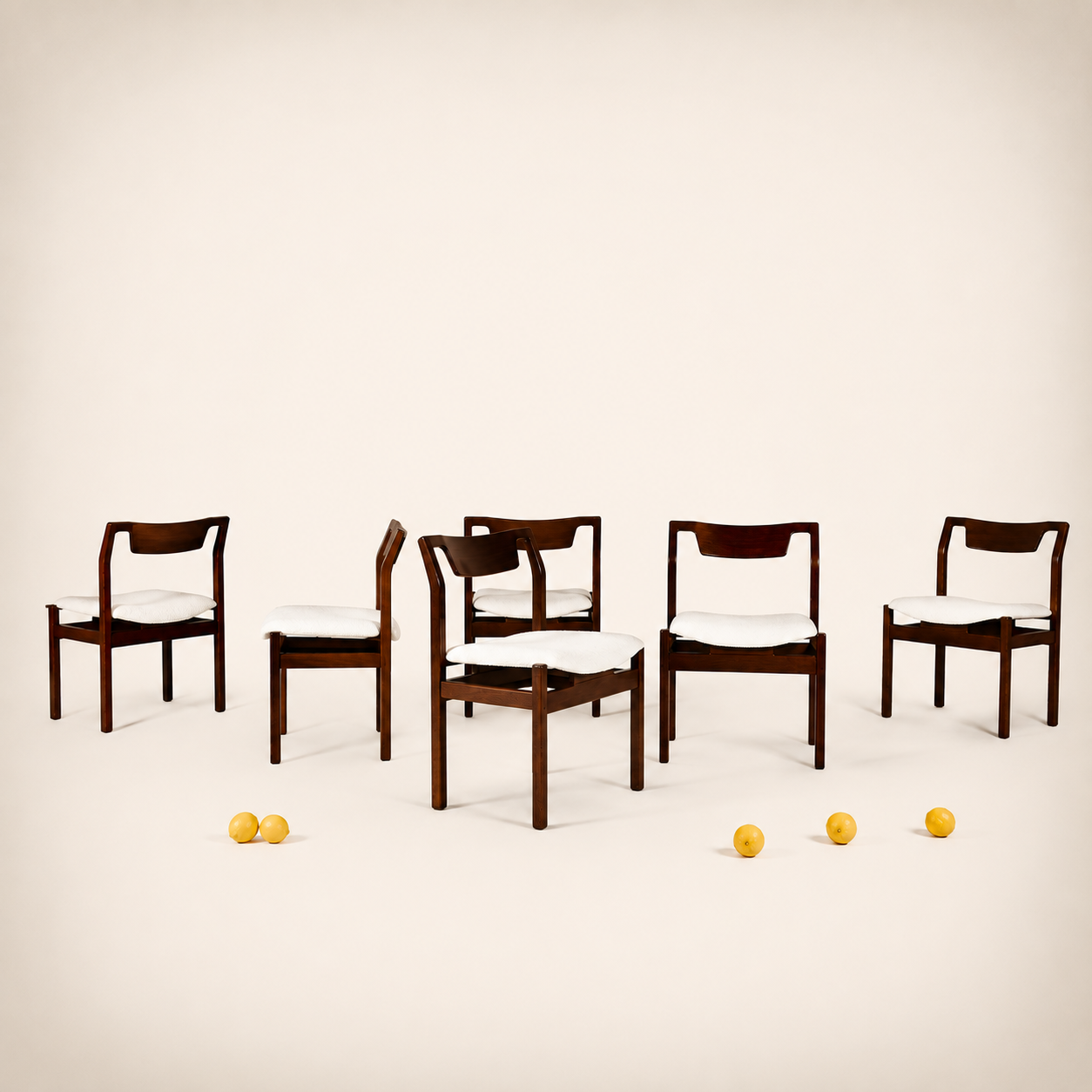
MICHEL MORTIER
Hexagon Chairs · Steiner · 1961
ARCHIVE-BASED RESEARCH
The doctoral research was built from a corpus of nearly 10,000 documents: primary sources, family and institutional collections, catalogues, periodicals and interviews with direct or indirect actors in this history.
The archives, often scattered or still held by families, allow us to place the models in their context of creation, manufacture, exhibition and use. They also shed light on the relationships between designers, publishers, manufacturers, institutions and clients.
Archival documents presented later on this page will be subject to systematic verification of credits and reproduction rights.
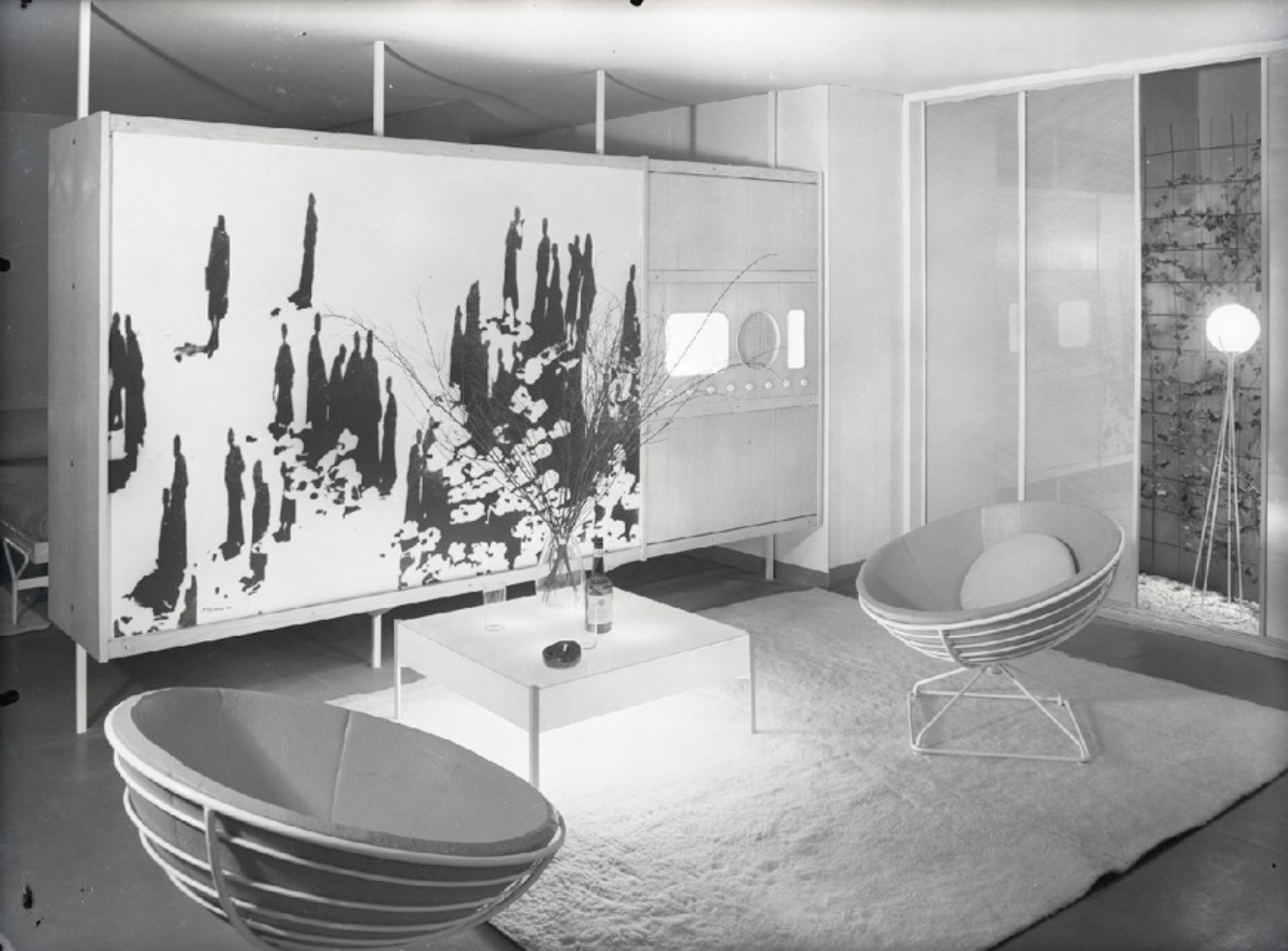
ARP, Airborne, Disderot, Minvielle and Cabanne, Steiner publishers, "Foyer d'aujourd'hui" section, 1955. Photo Jean Collas, Jean Collas Archives, Musée des Arts décoratifs, Paris. Final digitized file to be replaced after validation.
FROM OBJECT TO SPACE
The creation of mass-produced models is the starting point, not the end goal. As these designers open their own agencies, their work expands to include retail, housing, government buildings, cultural facilities, and transportation.
Public commissions and the Mobilier national (National Furniture Collection) provided a major platform for this evolution, to the point of making interior architecture one of the natural extensions of their practice.
THESIS & PUBLICATION
Generation Useful Forms — A study of a group of designers in France, 1945-1973, doctoral thesis in Art History, University Paris IV–Paris-Sorbonne, 2011–2016.
The current editorial project aims to transform this research into an illustrated book intended for a wider audience, without abandoning the documentary rigor of the thesis.
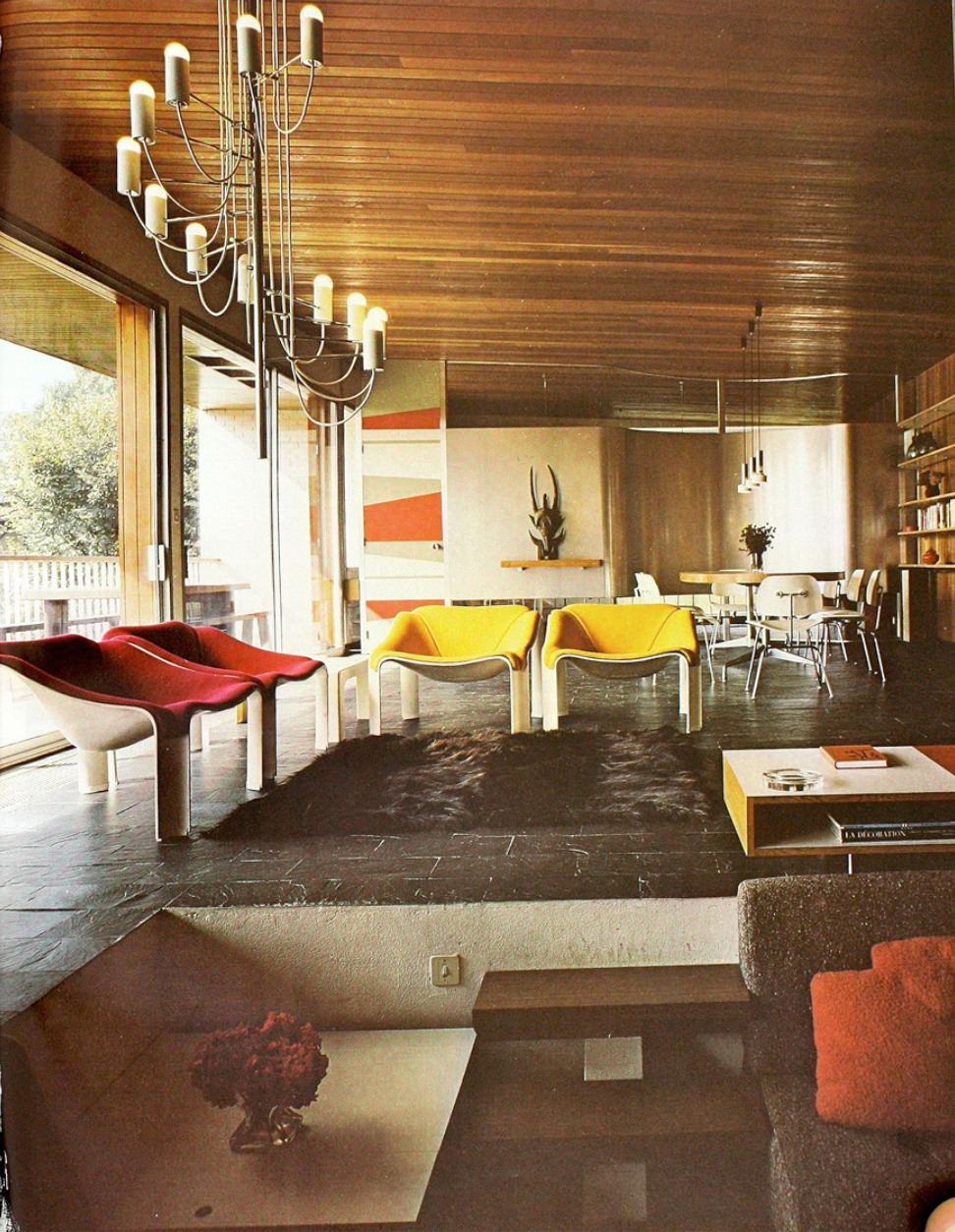
Michel Mortier, living room area, Villa André Levy, Esbly, 1970. Color photograph, Michel Mortier Archives, Paris. Final digitized file to be replaced after validation.
CHAPTER ONE
Creating a generation — French design schools, workshops and networks →
This first essay explores the training venues, design offices, masters, salons and networks that allow us to understand how this community of creators is formed.
TO BE CONTINUED
This page will serve as the entry point to a collection of biographies, thematic articles, chronologies and annotated documents devoted to French design from 1945 to 1973.
Creating a generation — schools, workshops and networks →
Useful Forms — UAM, Household Arts and Industrial Object Fair →
Thibault Lannuzel — art historian, expert and founder of DIZAGN →
Sources: doctoral research by Thibault Lannuzel; DIZAGN archives and documentation.