
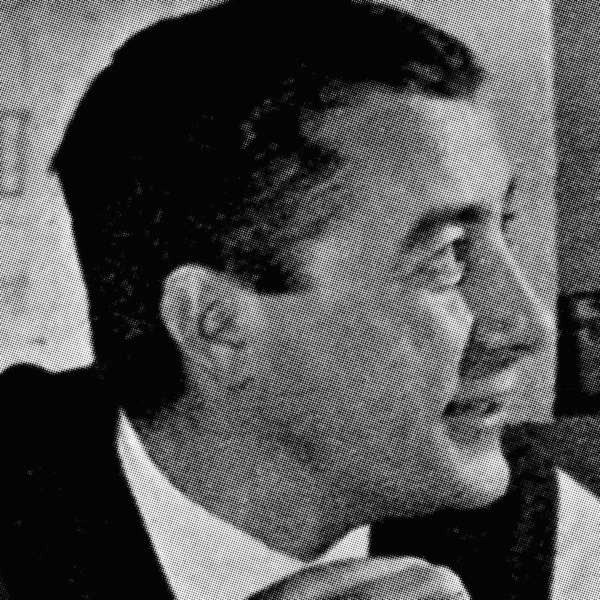
Portrait of Alain Richard. Source: Galerie Pascal Cuisinier — all rights reserved.
ALAIN RICHARD
1926–2017 · Designer · Interior Architect · Industrial Designer · Graphic Designer
Alain Richard belongs to the generation that, in post-war France, imposed a design philosophy based on rigorous construction, mass production, and the integration of the object into space. His exceptionally broad career ranges from domestic furniture to major public projects, encompassing lighting, signage, graphic design, and museum design.
His career illustrates the gradual transition from traditional decorator to global designer: a creator capable of designing a table or a pendant light as well as a circulation network, a museum or the visual identity of a public facility.
BIOGRAPHY
Born in 1926 in Plouha, Côtes-d'Armor, Alain Richard initially considered a career in the Navy. Health problems dissuaded him from this path, and his drawing teacher encouraged him to apply to the École nationale supérieure des Arts décoratifs (National School of Decorative Arts). There, he studied under René Gabriel, a leading figure in post-war furniture design, and graduated top of his class in interior architecture in 1949.
He immediately joined René Gabriel's studio and participated in projects for apartments, shops, and hotel installations, while also working on furniture for publishing. Gabriel's sudden death in 1950 interrupted this initial experience. Richard then completed his training with several internships, notably in the Netherlands with the architect Henri Salomonson, before a brief stint in Marcel Gascoin's design office.
In 1952, he founded his own agency with his wife, Jacqueline Iribe, a textile designer who would later collaborate with Knoll International. The young couple quickly began designing spaces for the Cité Internationale Universitaire de Paris: first the Tunisian House, then the Moroccan House. It was in this context that Alain Richard met Robert Vecchione, director of Meubles TV, a key player in the renewal of French furniture in the 1950s.
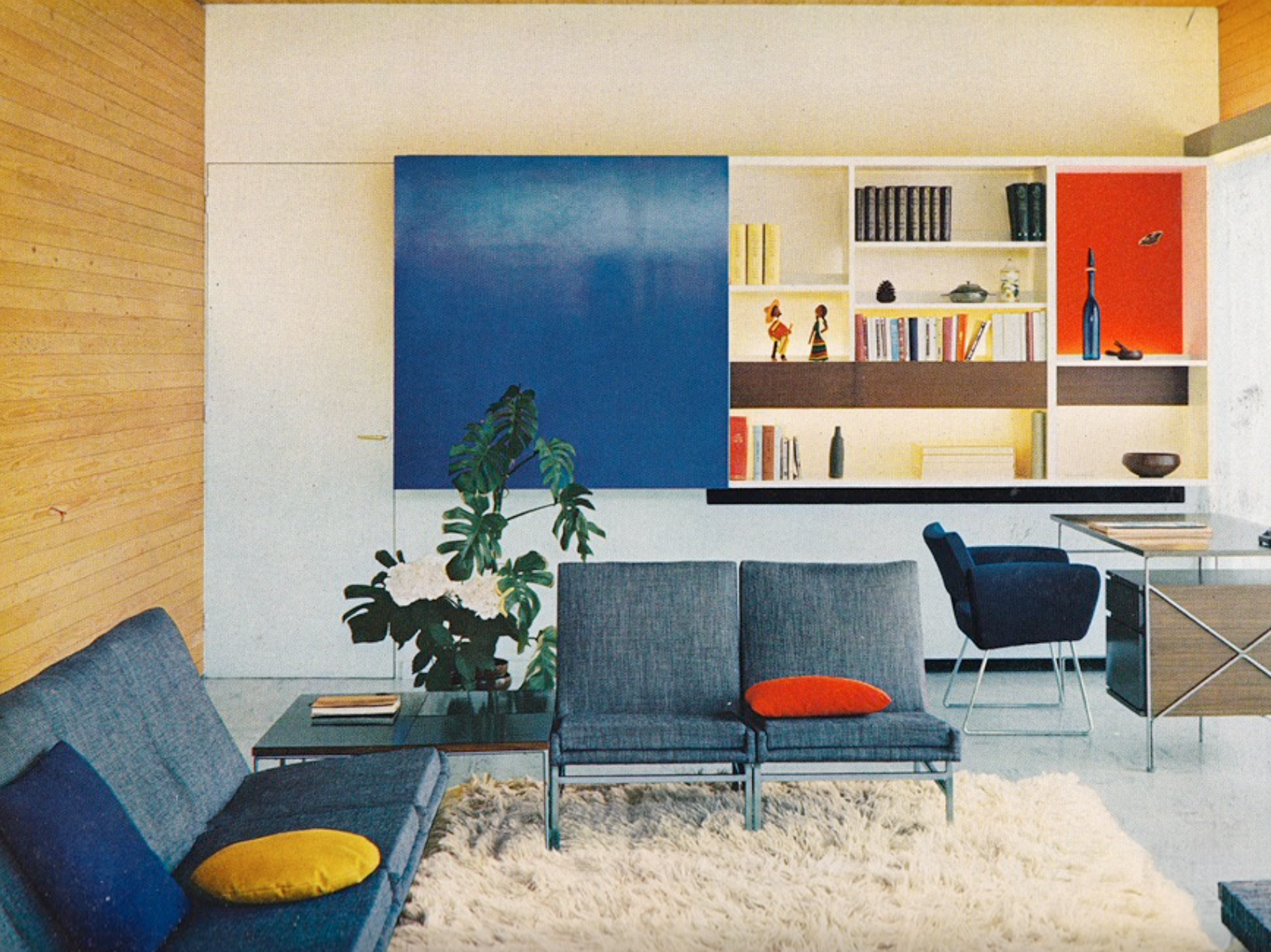
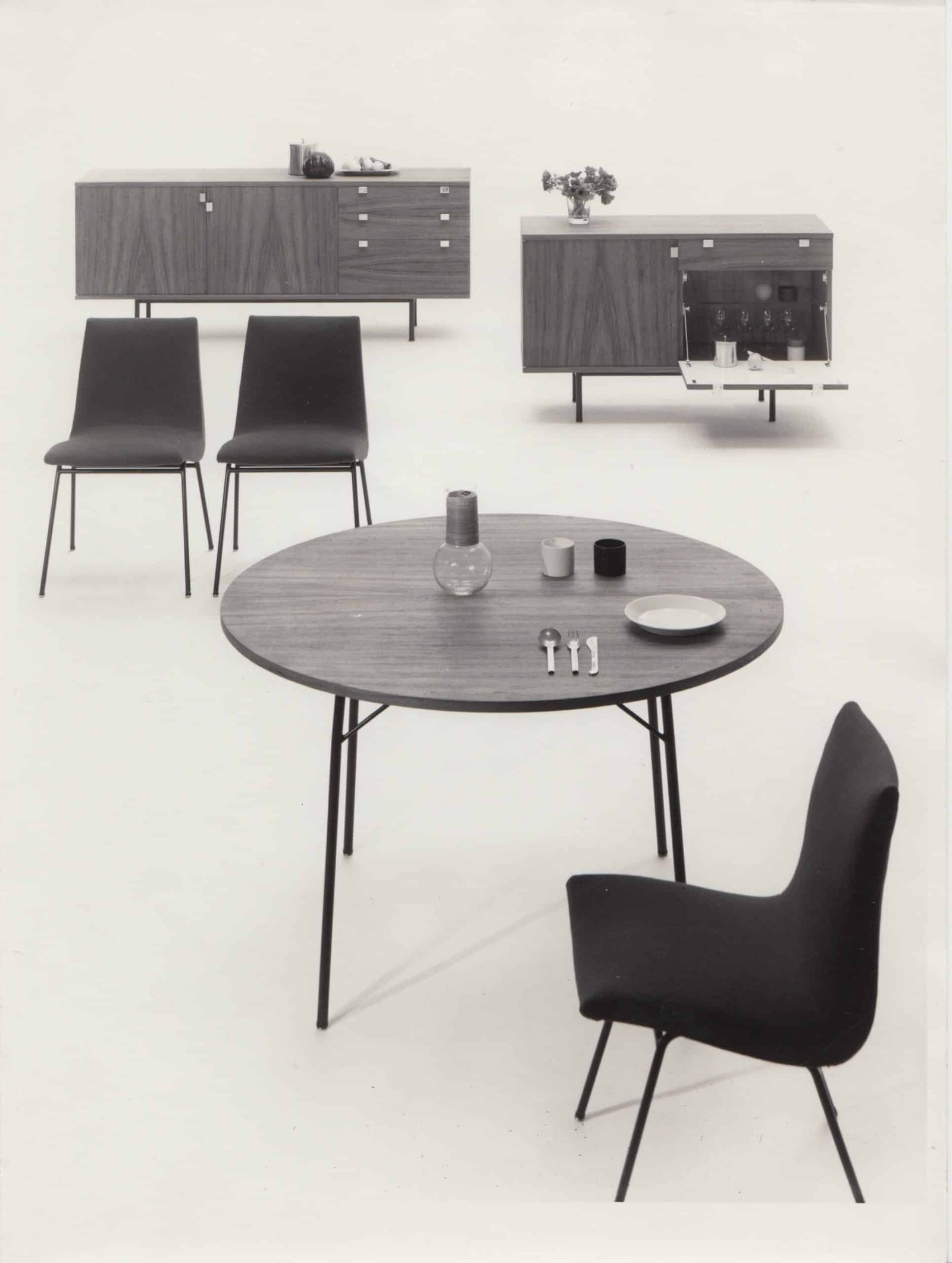
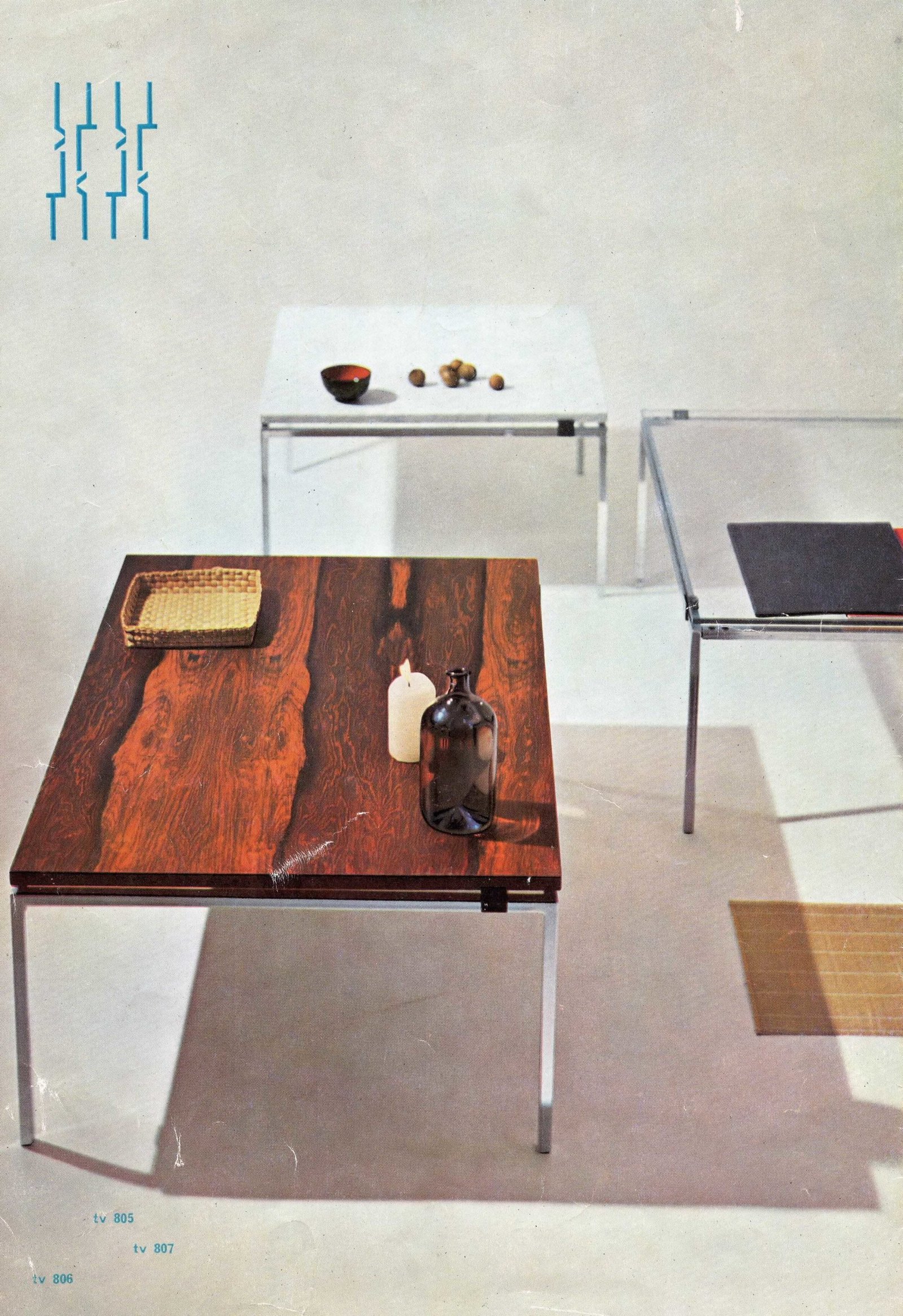
Meubles TV published a large part of his work until 1968. There, Richard developed tables, storage units, desks, and modular sets of remarkable simplicity. From 1959 to 1964, he also headed the design office for the publisher's "office" department. Simultaneously, he participated in Georges Charron's Groupe 4 alongside... Joseph-André Motte, René-Jean Caillette and Geneviève Dangles, an experience that demonstrates the collective desire to offer contemporary furniture truly adapted to modern living.
International exhibitions and fairs played a crucial role in his recognition. At the 1954 Milan Triennale, several of his creations received awards. In 1956, he collaborated with architect Ionel Schein on the design of the experimental plastic house presented at the Salon des Arts Ménagers (Household Arts Fair). Two years later, for the Brussels World's Fair, he designed the parents' bedroom in the "doctor's house" and received a Grand Prix.
Richard never limited his work to furniture. For Pierre Disderot, he designed a range of lighting fixtures where geometric precision met a genuine reflection on the diffusion of light. He received the René Gabriel Prize in 1964. From the mid-1960s onward, his firm increasingly focused on public and industrial commissions, notably with the National Furniture Collection's Research and Creation Workshop. The AR office furniture program exemplifies this shift toward complete systems rather than isolated objects.
In 1968, the agency restructured into several departments, including industrial design, graphic design, and packaging, eventually employing around forty people. This organization reflected a very modern conception of design as a cross-disciplinary field. During the 1970s, Richard completed several major projects: the Hauts-de-Seine prefecture building in Nanterre, in collaboration with André Wogenscky; the Auber and Nanterre-Préfecture RER stations; signage and pictograms for the RATP (Parisian public transport network); courthouses; government ministries; and administrative buildings.
His work in museum design also became significant. As a consultant to the French Museums Directorate, he worked in some twenty museums, including the Museum of Art and History in Saint-Denis, and participated in the renovation of the Etruscan and Greco-Roman galleries at the Louvre. Simultaneously, he taught at the ENSAD (National School of Decorative Arts) and the ESAG Penninghen (School of Architecture and Design), where he headed the Interior Architecture department. This teaching role complemented a career marked by writing, theoretical reflection, and a commitment to transmitting the methods of modern design.
Alain Richard died in 2017. His work now appears as one of the most coherent of his generation: furniture, light, visual identity, museography and major programs are linked by the same search for clarity, measure and constructive intelligence.
WORK AND FORMAL LANGUAGE
Alain Richard's design language is based on a great economy of means. The lines are clean, the volumes low and legible, the structures reduced to their essentials. Wood, metal, glass, laminates, and industrial materials are used without gratuitous effect. Function does not produce an austere aesthetic; on the contrary, it serves a search for extremely precise proportions.
His furniture for Meubles TV demonstrates this focus on modularity and mass production. Storage units play on the interplay of solid and void; tables utilize slender legs; and lighting fixtures for Disderot seek to control light through the geometry of reflectors and screens. In larger projects, the same approach is applied to the architecture itself: circulation, signage, furniture, graphics, and colors form a coherent system.
PUBLISHERS AND COLLABORATORS
TV furniture · Pierre Disderot · Charron / Groupe 4 · TFM · Mobilier national / ARC · collaborations with Jacqueline Iribe, René Gabriel, Marcel Gascoin, Ionel Schein, André Wogenscky and the RATP.
SELECTIVE CHRONOLOGY
1926 — born in Plouha 1949 — top of his class at ENSAD and joined René Gabriel's studio 1951 — Marcel Gascoin's move to ARHEC 1952 — creation of his agency with Jacqueline Iribe 1954 — Milan Triennale and development of TV Furniture editions 1956 — experimental plastic house with Ionel Schein 1958 — Grand Prix at the Brussels World's Fair 1964 — René Gabriel Prize 1966 — Grenoble Cultural Center 1967–1970 — Nanterre prefecture and RER stations Auber / Nanterre-Préfecture 1970s — major programs of the Mobilier national and museography 1979 — French Embassy in Moscow 2017 - death.
SELECT BIBLIOGRAPHY
Patrick Favardin, Interior designers of the 1950s · catalogue Mobi Boom, the explosion of design in France 1945–1975 · Pascal Cuisinier Gallery, Alain Richard, lighting and furniture 1950–1970 · TV furniture documentation · inventories and archives of the Mobilier national.
PUBLIC COLLECTIONS
Museum of Decorative Arts, Paris · National Furniture · public collections linked to the major administrative, museographic and transport programs designed by the Alain Richard agency.
See Alain Richard in the collections of the Musée des Arts Décoratifs · Documentation Gallery Pascal Cuisinier.
FORMES UTILES GENERATION
Alain Richard is one of the eleven designers studied in the doctoral research Useful Forms Generation by Thibault Lannuzel, dedicated to French design from 1945 to 1973.
The three documents below are taken from the iconographic corpus of the thesis Useful Forms Generation and the archival collections that it references.
PERIOD DOCUMENTS — SELECTION
ALAIN RICHARD AT DIZAGN
AVAILABLE WORK
DIZAGN ARCHIVES — WORKS SOLD
Pieces already processed by DIZAGN and kept online for documentary purposes.


DIZAGN Expertise → Thibault Lannuzel →
Main sources: Galerie Pascal Cuisinier; Musée des Arts décoratifs; Mobilier national; DIZAGN documentation. Portrait: all rights reserved.