
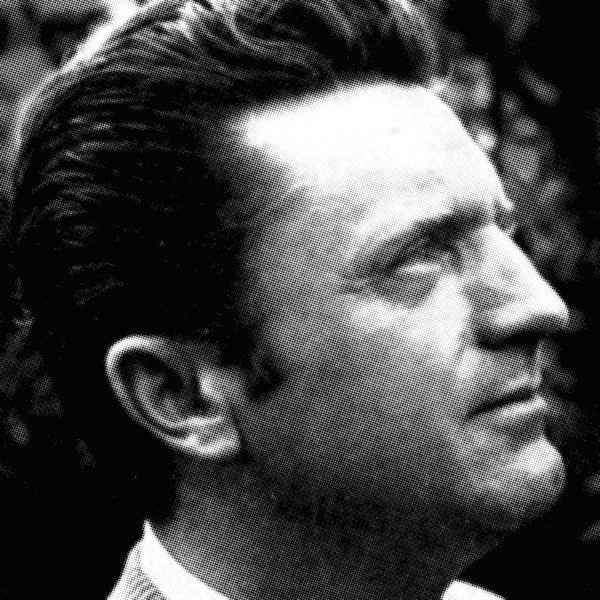
Portrait of Joseph-André Motte. Source: Galerie Pascal Cuisinier — all rights reserved.
JOSEPH-ANDRÉ MOTTE
1925–2013 · DESIGNER · INTERIOR ARCHITECT · MAJOR PUBLIC PROJECTS
Joseph-André Motte is one of the key figures in post-war French design. His career links mass-produced furniture, interior architecture, and the major public programs that accompanied the modernization of France.
His work is distinguished by a constant attention to use, the quality of materials and the ability of design to structure collective as well as domestic spaces.
BIOGRAPHY
Born in 1925 in Saint-Bonnet, in the Hautes-Alpes region, Joseph-André Motte showed an early interest in drawing. He attended the École des Arts Appliqués in Paris, where he studied under René Gabriel, Louis Sognot, and Albert Guénot. Graduating at the top of his class in 1948, he joined Pomone, the art studio of Le Bon Marché department store, directed by Guénot.
From this period onward, he combined interior design with research on mass-produced furniture. His time with Marcel Gascoin was decisive: there he met Pierre Guariche And Michel Mortier, with whom he shares a common desire to renew French production by combining comfort, construction economy and new techniques.
His Tripode armchair, designed in the late 1940s and produced by Rougier, already reveals this quest for lightness. Motte then worked with rattan, metal, wood, foam and plastics, refusing to limit his vocabulary to a single material.
In 1954, he founded the Atelier de Recherches Plastiques (Workshop for Plastic Arts Research) with Guariche and Mortier.’ARP. Motte works directly with manufacturers and develops seating, storage solutions, and lighting fixtures for mass production. This experience confirms Motte's ability to design product families, not just isolated items.
But his unique style is most evident in his large-scale projects. At Orly Airport, where he collaborated with architect Henri Vicariot, the interior design played a key role in creating the image of a modern airport. He subsequently worked on projects at the Maison de la Radio (French Radio House), in prefectures, ministries, the Louvre, and numerous other institutions. In doing so, he developed a true expertise in public design.
From the 1970s onwards, his collaboration with Paul Andreu on the Paris metro gave rise to the Andreu-Motte style. The color, the light, the built-in benches and the shell seats constitute an immediately identifiable visual language, still present today in many stations.
Motte belongs to a generation that views design as a civic discipline: drawing should improve everyday life and give coherent form to collective spaces. His projects demonstrate a remarkable continuity between furniture, interior architecture, and public service.
WORK AND FORMAL LANGUAGE
Motte's work combines geometric rigor with a quest for comfort. He utilizes rattan as well as stainless steel, wood, and synthetic materials. The forms remain clear, often enveloping, yet the construction remains legible. Color gradually becomes an integral architectural tool.
PUBLISHERS AND COLLABORATORS
Rougier · Steiner · Charron · Minvielle · Disderot · Verre Lumière · Mobilier national / ARC · ARP with Pierre Guariche And Michel Mortier · collaborations with Henri Vicariot and Paul Andreu.
SELECTIVE CHRONOLOGY
1925 - birth · 1948 — major in Applied Arts 1949–1952 — initial research and collaboration with Marcel Gascoin 1954 — ARP Foundation 1957 — René Gabriel Prize 1958–1961 — Orly airport improvements 1962 — Radio House 1970s — development of the Andreu-Motte style for the Paris metro 2013 - death.
SELECT BIBLIOGRAPHY
Patrick Favardin, Interior designers of the 1950s · Galerie Pascal Cuisinier, research and exhibitions dedicated to Joseph-André Motte · Mobilier national, notices and inventories of orders · catalogues of the Salons des Arts ménages.
PUBLIC COLLECTIONS
Mobilier national · Centre Pompidou / Musée national d'art moderne · Musée des Arts décoratifs, Paris, as well as several public collections linked to major state development projects.
FORMES UTILES GENERATION
Joseph-André Motte is one of the eleven designers studied in the doctoral research Useful Forms Generation by Thibault Lannuzel, dedicated to French design from 1945 to 1973.
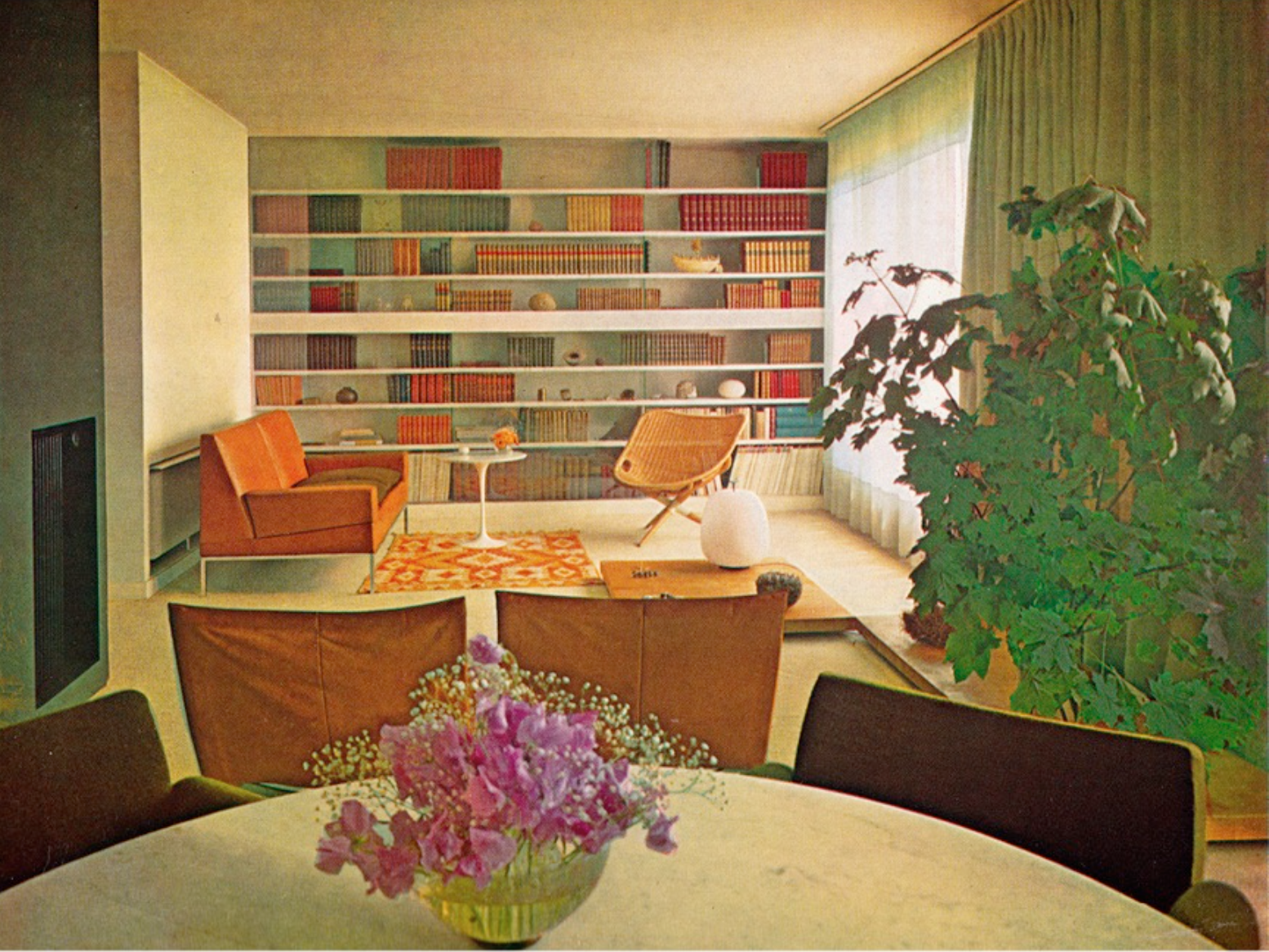
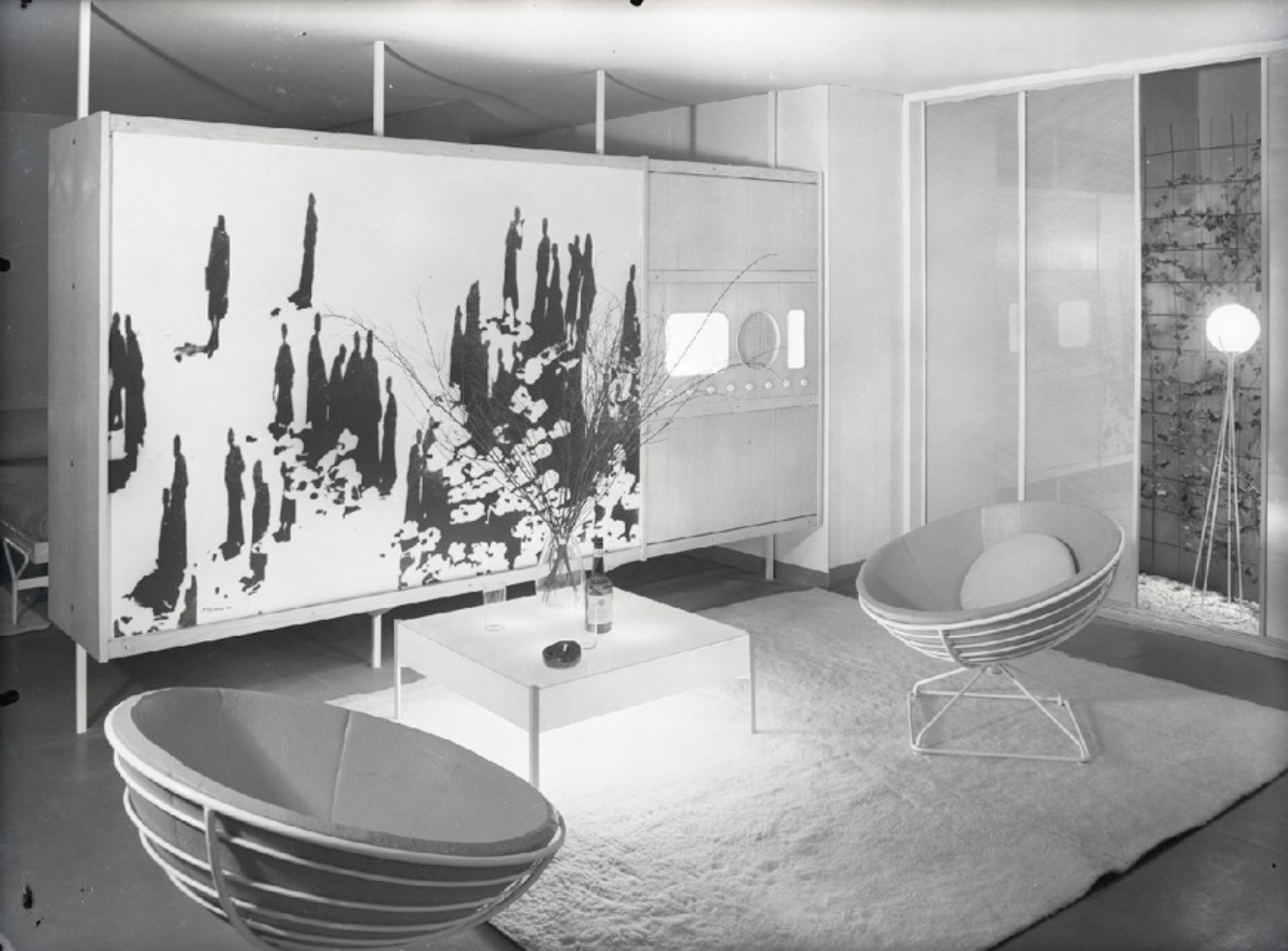
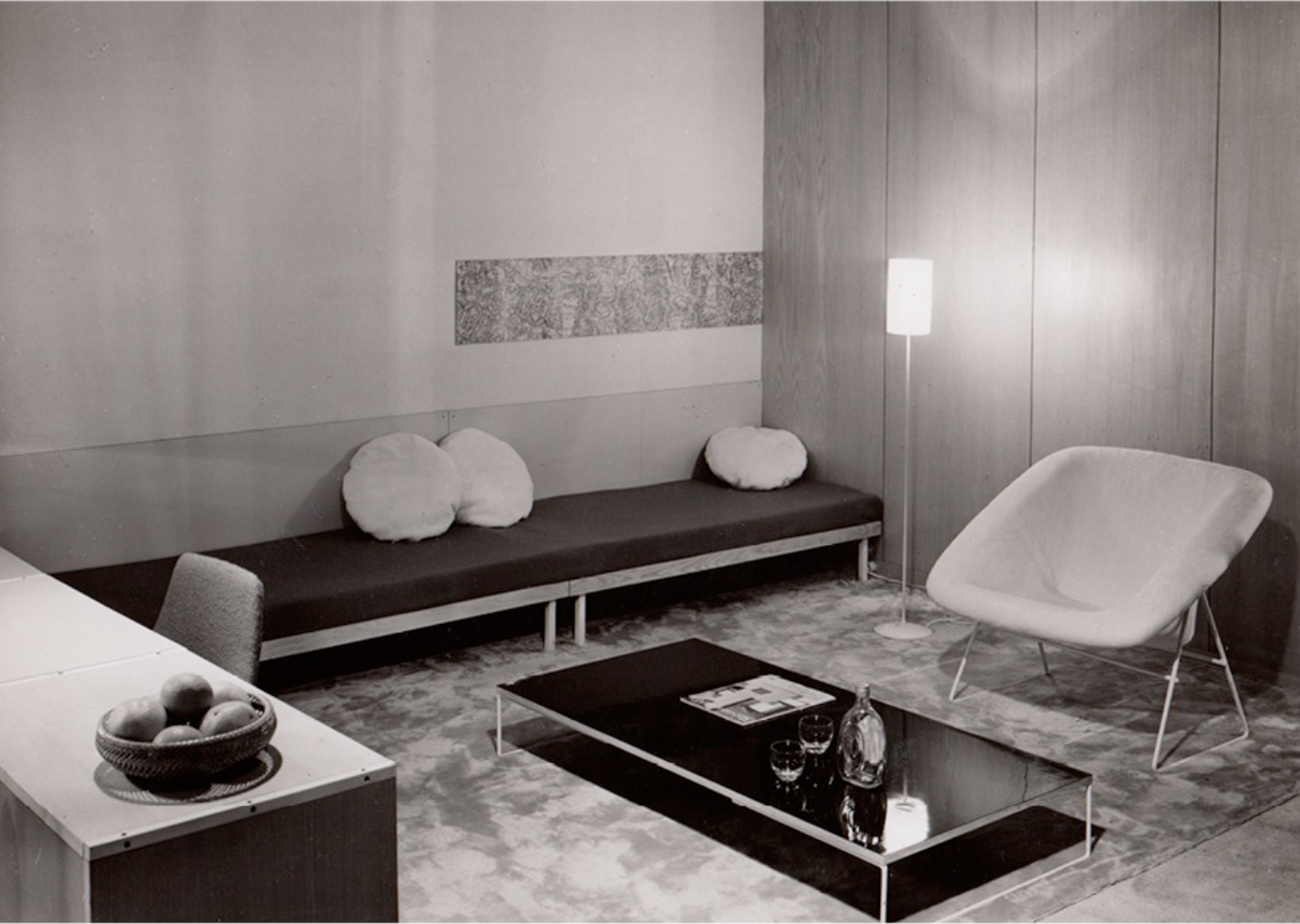
The three documents below are taken from the iconographic corpus of the thesis Useful Forms Generation.
PERIOD DOCUMENTS — SELECTION
JOSEPH-ANDRÉ MOTTE AT DIZAGN
AVAILABLE WORKS
No works by Joseph-André Motte are currently available on DIZAGN. The archives below show pieces previously sold by the gallery.
DIZAGN ARCHIVES — WORKS SOLD


DIZAGN Expertise → Thibault Lannuzel →
Main sources: Mobilier national; Galerie Pascal Cuisinier; DIZAGN documentation. Portrait: all rights reserved.