
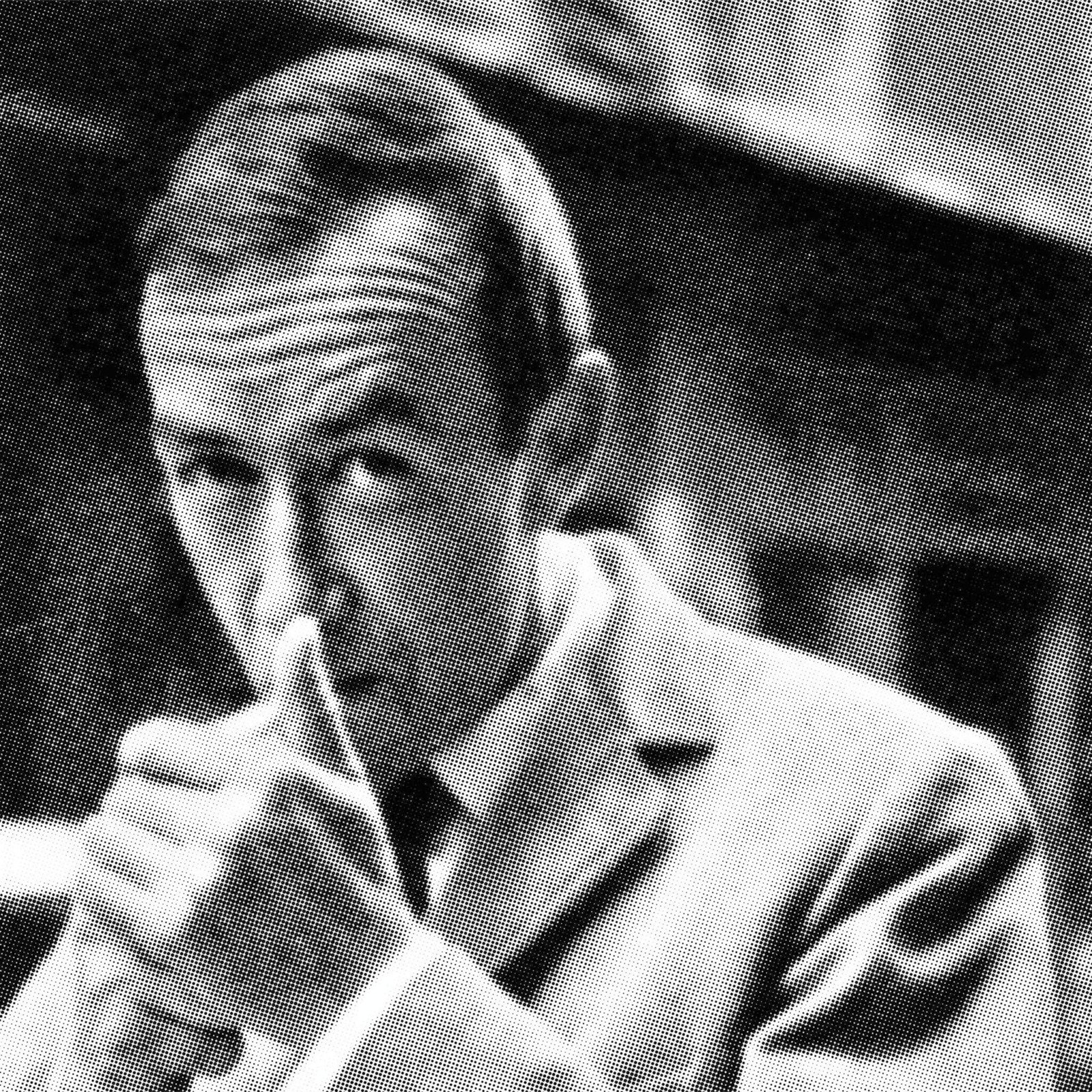
Portrait of Pierre Guariche. Source: Galerie Pascal Cuisinier — rights reserved.
PIERRE GUARICHE
1926 — 1995 · DESIGNER · DÉCORATEUR · ARCHITECTE D’INTÉRIEUR
Pierre Guariche belongs to the generation that profoundly transformed furniture and lighting design in France after 1945. His work combines structural rigour, economy of means and close attention to the possibilities of industrial production.
For Guariche, modernity was never simply a stylistic effect: it arose from the structure of the object, its material and its method of manufacture.
BIOGRAPHY
Born in 1926, Pierre Guariche first received technical training before entering the École Nationale Supérieure des Arts Décoratifs. There he was strongly influenced by René Gabriel, a central figure in Reconstruction-era furniture. Graduating in 1949 alongside a generation that also included Alain Richard, André Monpoix and André Simard, he soon entered the professional circle around Marcel Gascoin.
Le bureau d’études ARHEC de Gascoin constitue alors l’un des principaux laboratoires du jeune design français. Guariche y rencontre Michel Mortier et Joseph-André Motte. Tous trois partagent la même volonté de concevoir un mobilier adapté aux logements nouveaux, produit en série et débarrassé de toute lourdeur décorative.
From the early 1950s, Guariche opened his own office and developed several programmes for production. The Préfacto series for Airborne used steel tubing and wood to create demountable, economical furniture. It responded directly to shrinking domestic spaces and the need for light, mobile and accessible pieces.
At the same time, Guariche established himself as one of the leading French lighting designers. His collaboration with Pierre Disderot produced models using reflectors, screens, articulated arms and precisely balanced systems. Light was treated not as ornament but as an architectural material.
In 1954, Guariche founded the Atelier de Recherches Plastiques with Joseph-André Motte and Michel Mortier. The A.R.P. sought to bring design and industry closer together, working directly with Steiner, Airborne, Minvielle and Disderot. The group developed seating, modular furniture and lighting under a collective signature.
After the A.R.P. ended in 1957, Guariche expanded his work as an interior architect and became artistic director of the Belgian manufacturer Meurop. His work broadened to offices, public facilities, shops, administrations and ski resorts, including several programmes at La Plagne.
This ability to move from object to space explains the coherence of his work. Whether designing a light, an armchair or a complete interior, Guariche consistently sought the clearest and most rational solution.
ŒUVRE ET LANGAGE FORMEL
Guariche’s design language is founded on the tension between lightness and precision. Steel tubing, moulded plywood, folded sheet metal and synthetic materials are used for their mechanical as well as visual qualities. Structures remain legible and curves support use without concealing construction.
In lighting, his mastery of reflectors and articulated systems enabled him to direct light with remarkable economy of means. In furniture, he pursued mobility, stackability, demountability and modularity.
ÉDITEURS ET COLLABORATIONS
Airborne · Steiner · Pierre Disderot · Minvielle · Meurop · Negroni · Meubles TV · A.R.P. with Joseph-André Motte and Michel Mortier.
CHRONOLOGIE SÉLECTIVE
1926 — naissance · 1949 — diplôme de l’ENSAD · 1950–1953 — premières séries et programme Préfacto · 1954 — fondation de l’A.R.P. · 1957 — fin de l’A.R.P. et développement de l’architecture intérieure · années 1960 — direction artistique de Meurop et grands programmes · 1965 — Prix René Gabriel · 1995 — décès.
BIBLIOGRAPHIE SÉLECTIVE
Patrick Favardin, Les décorateurs des années 50 · Galerie Pascal Cuisinier, research and exhibitions devoted to Pierre Guariche and French design of the 1950s · Centre Pompidou, collection records for the Préfacto models and lighting · Disderot documentation.
COLLECTIONS PUBLIQUES
Centre Pompidou / Musée National d’Art Moderne · Musée des Arts Décoratifs, Paris · Mobilier National and other French and international public collections.
FORMES UTILES GENERATION
Pierre Guariche is one of the eleven designers examined in the doctoral research Génération Formes Utiles de Thibault Lannuzel, consacrée au design français de 1945 à 1973.
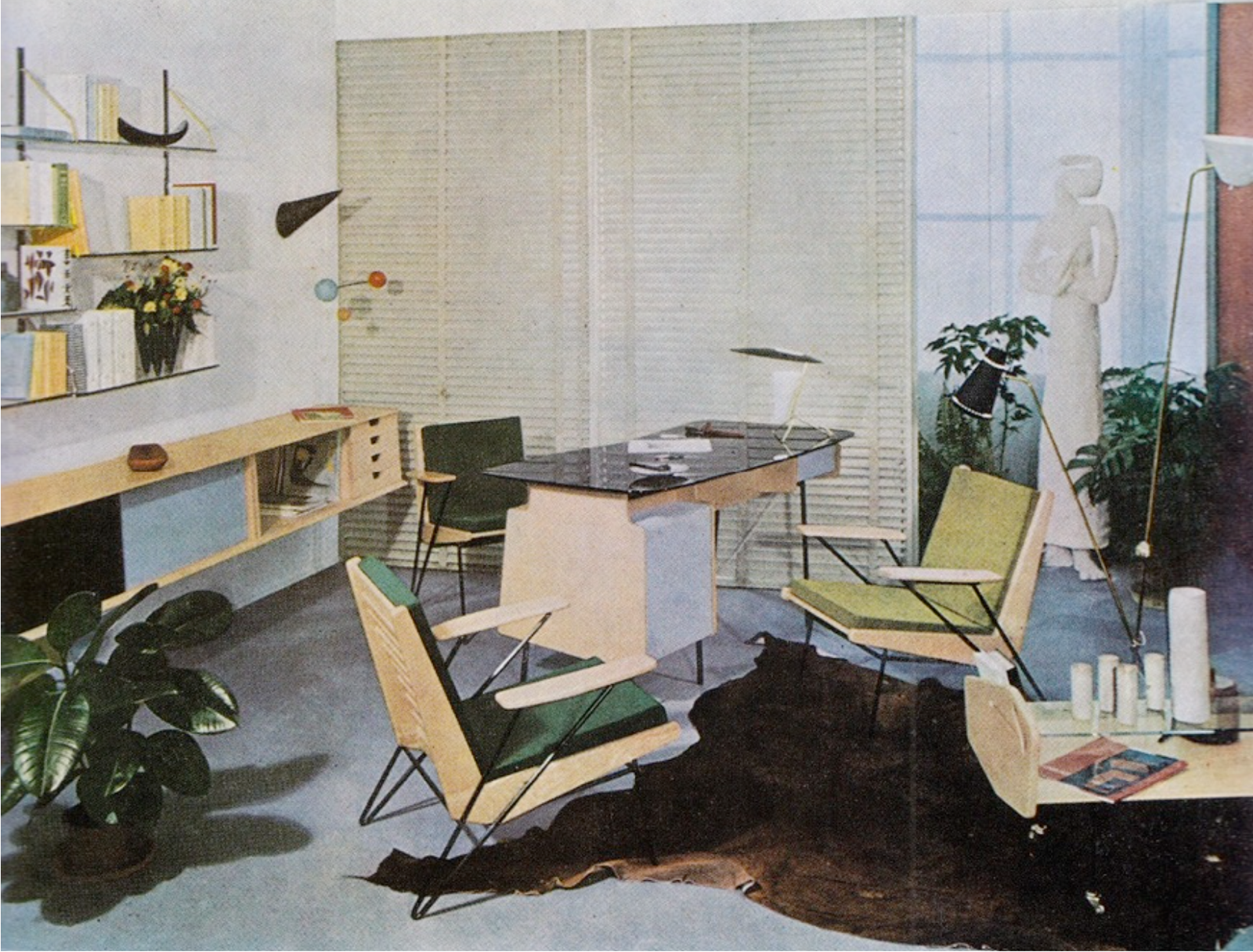
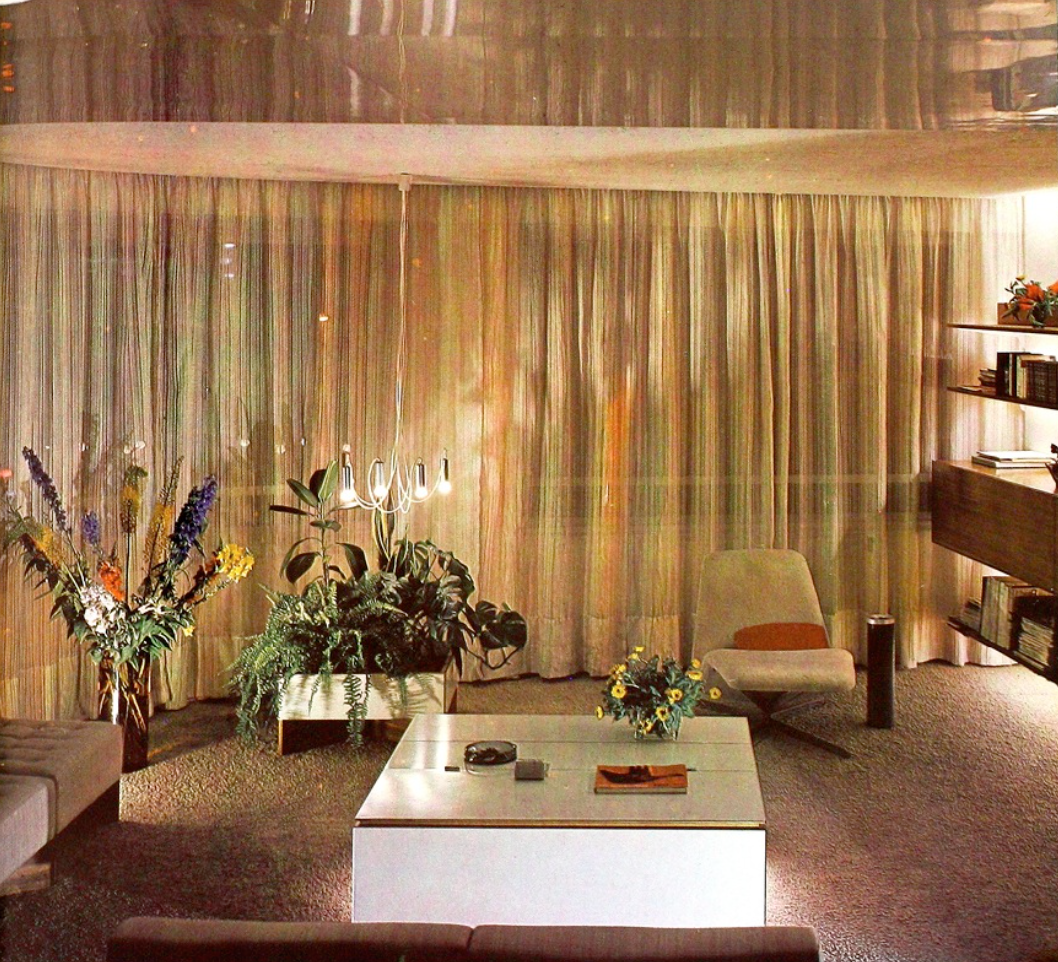
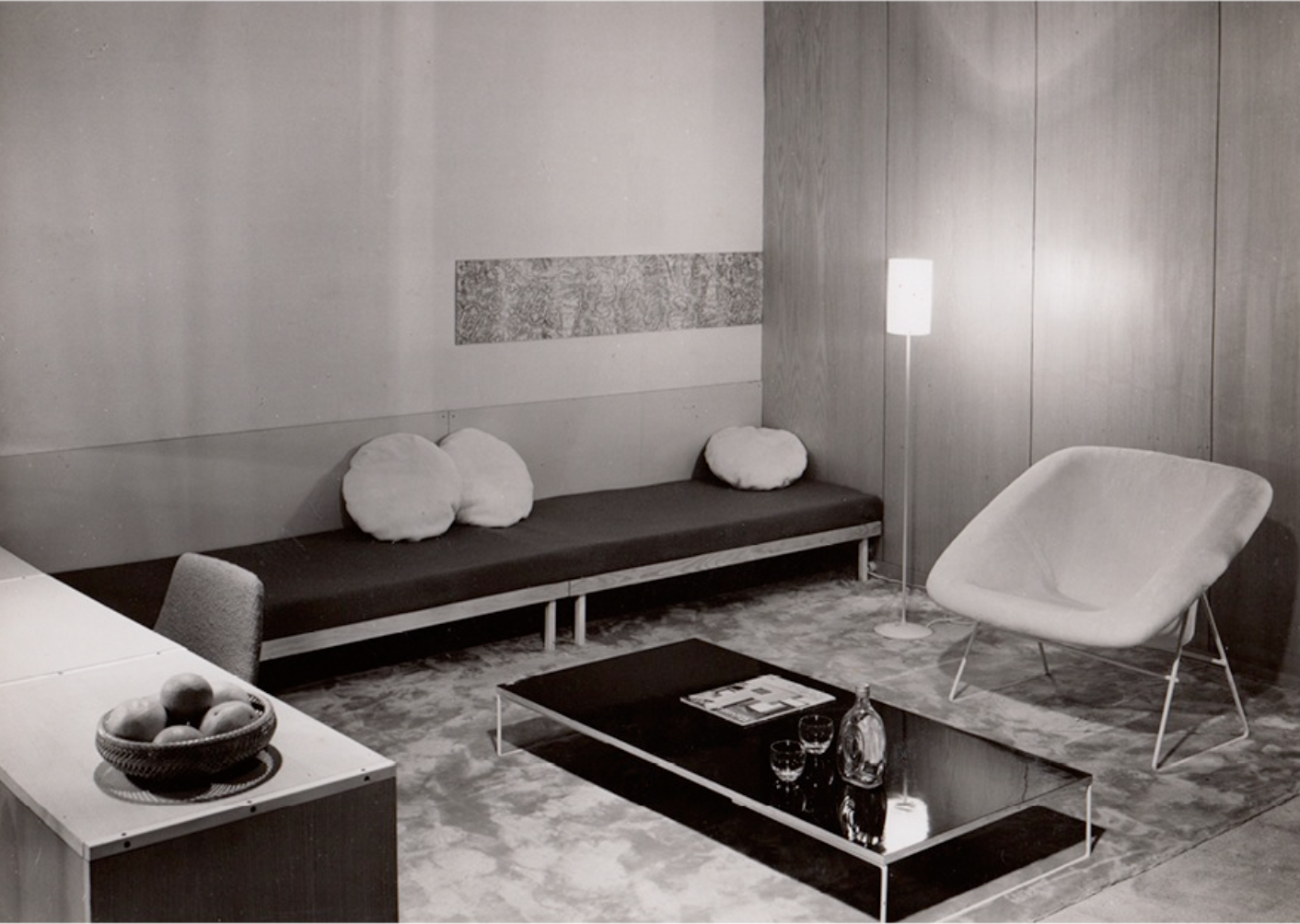
Les trois documents ci-dessous sont prélevés dans le corpus iconographique de la thèse Génération Formes Utiles.
DOCUMENTS D’ÉPOQUE — SÉLECTION
PIERRE GUARICHE AT DIZAGN
ŒUVRE DISPONIBLE
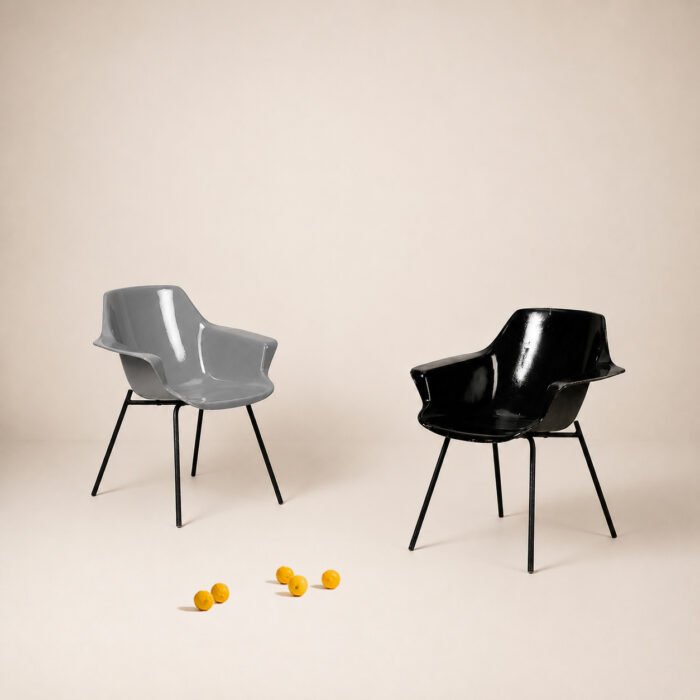
ARCHIVES DIZAGN — ŒUVRES VENDUES
Pièces déjà passées par DIZAGN et conservées en ligne à titre documentaire.
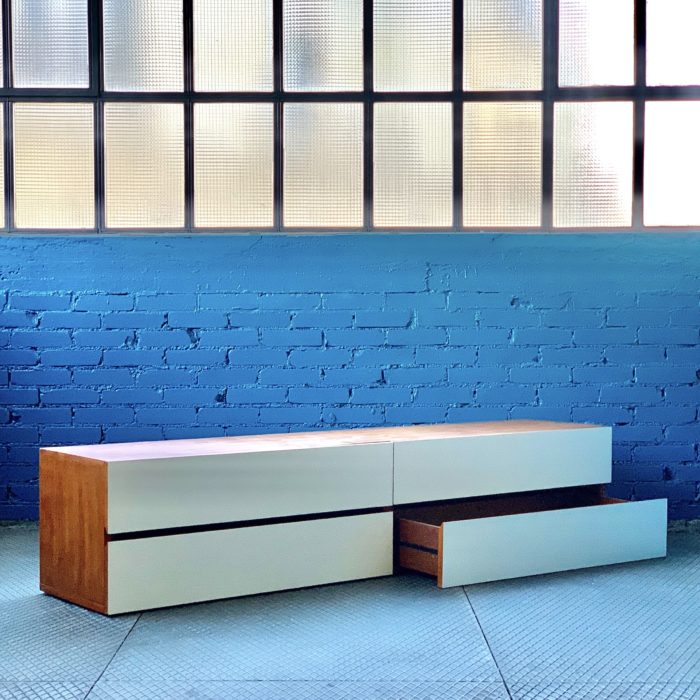
Expertise DIZAGN → Thibault Lannuzel →
Main sources: Centre Pompidou; Galerie Pascal Cuisinier; DIZAGN documentation. Portrait: rights reserved.