
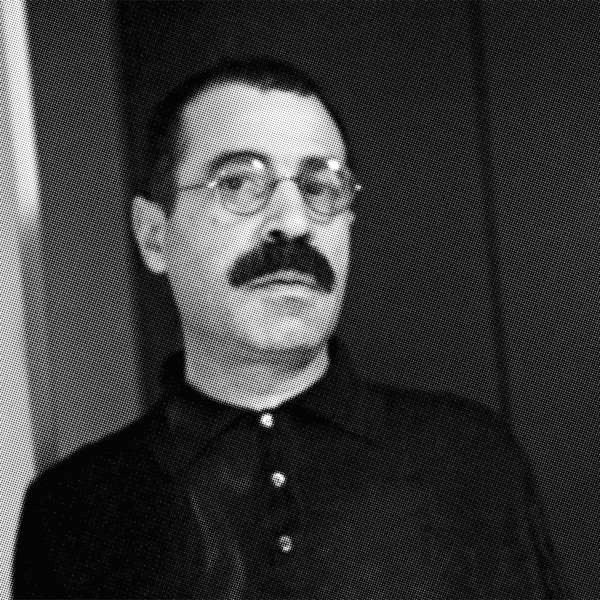
Portrait of René-Jean Caillette. Source: Galerie Pascal Cuisinier — all rights reserved.
RENÉ-JEAN CAILLETTE
1919–2004 · DESIGNER · INTERIOR ARCHITECT · PRODUCTION FURNITURE
René-Jean Caillette is one of the key figures of the first generation of post-war French design. Older than many of his contemporaries, he played a leading role in the recognition of mass-produced furniture and in the professional organization of young designers.
His work combines a deep knowledge of cabinetmaking techniques with a constant curiosity for molded plywood, steel, stainless steel, rattan, and plastics. Through Charron, Steiner, Airborne, Disderot, and later VIA, he developed furniture over several decades that was rational, inventive, and deeply connected to the evolution of its uses.
BIOGRAPHY
Born in 1919 in Fay-aux-Loges, in the Loiret region, René-Jean Caillette grew up in an environment closely linked to furniture making. His father, who became a cabinetmaker, set up his workshop in the Faubourg Saint-Antoine district of Paris. From a very young age, Caillette was thus surrounded by a world where artisans, decorators, and publishers mingled.
In 1933, he entered the École Supérieure des Arts Appliqués à l'Industrie (School of Applied Arts to Industry). He graduated top of his class in the furniture section in 1937 and supplemented his training with evening courses in art history at the École du Louvre. His first professional experiences led him to Schmit & Cie and then to Pomone, the Bon Marché department store's art workshop directed by Albert Guénot. Alongside this, he pursued drawing, engraving, and painting, activities that would remain a part of his life.
After the war, Caillette gradually devoted himself to mass-produced furniture. He rejected the model of the unique and expensive piece, favoring designs that could be widely produced and distributed. In 1949, he and Roger Landault founded the Saint-Honoré group, which was joined by several young designers. This experience led a few years later to the Association of Designers of Mass-Produced Models, created with the support of Marcel Gascoin and Michel Mortier.
His participation in the 1950 Household Arts Exhibition marked a significant milestone. With limited resources, he presented a living room set on his own stand, composed of modular furniture, a mobile sideboard, and a bookcase-secretary. The commercial reception was encouraging and confirmed his intuition: modern furniture could combine quality design, functionality, and repeatable manufacturing.
The meeting with Georges Charron was pivotal. Their collaboration would last over twenty years. Caillette designed storage furniture, tables, chairs, and complete sets for the publisher, while also occasionally pursuing self-publishing. In the early 1950s, he participated in the creation of Groupe 4 alongside Joseph-André Motte, Alain Richard and Geneviève Dangles. The objective is to offer the public resolutely contemporary furniture, designed by young designers and distributed under a common identity.
Caillette also collaborated with several major manufacturers: Steiner and Airborne for seating, Pierre Disderot for lighting, and later Parscot, Fermob, and VIA. He experimented with numerous new materials. The Coccinelle chair, made of fiberglass, is a testament to this research. But his most famous design remains the Diamant chair, developed in the late 1950s. Its molded plywood shell, obtained through folding and thermoforming, demonstrates a remarkable economy of material and structure.
Presented at the 1958 Brussels World's Fair, the Diamant chair became one of the icons of post-war French design. Caillette received several awards throughout his career: the René Gabriel Prize in 1952, prizes at the Milan Triennales, and the Grand Prix in Brussels. These successes accompanied a very broad production encompassing domestic furniture, seating, lighting, and interior design.
His work also extended to major public programs. At the Maison de la Radio, designed by Henry Bernard, he designed the music foyer while Pierre Paulin worked on the artists' foyer. Caillette conceived the space as a whole: furniture, circulation, lighting, and the division of volumes formed a coherent system.
Teaching also played a central role in his career. He taught at ENSAD from 1954 to 1972, at ESAG Penninghen from 1969 to 1981, and then at the Visual Institute of Orléans. He also wrote on mass-produced furniture and interior design. In the 1980s, he continued to experiment, notably with the RJC folding chair, supported by VIA. René-Jean Caillette died in 2004, leaving behind a body of work that spans more than half a century of French design.
WORK AND FORMAL LANGUAGE
Caillette's design language is based on a fruitful tension between structural rigor and invention. His furniture rarely seeks spectacular effects: it prioritizes practicality, mobility, transformation, and material economy. Molded plywood, stainless steel, metal tubing, and composite materials allow him to reinvent traditional typologies.
His seating reveals a particular attention to the continuity of surfaces and how a single piece can fulfill multiple structural functions. In the Charron collections, the sophistication of the wood species interacts with very slender metal legs, producing elegant yet understated furniture.
PUBLISHERS AND COLLABORATORS
Charron · Steiner · Airborne · Pierre Disderot · Parscot · Fermob · VIA · Groupe 4 · ACMS · collaborations with Roger Landault, Marcel Gascoin, Michel Mortier, Joseph-André Motte, Alain Richard and Geneviève Dangles.
SELECTIVE CHRONOLOGY
1919 — born in Fay-aux-Loges 1933–1937 — Arts applied to industry, valedictorian · 1949 — creation of the Saint-Honoré group 1950 — first personal stand at the Household Arts Fair 1952 — René Gabriel Prize 1953–1954 — ACMS and Group 4 1957 — Ladybug chair 1958 — Diamond chair and Grand Prix in Brussels 1960s — Charron, Steiner and major development projects 1986 — RJC folding chair with VIA 2004 — death in Paris.
SELECT BIBLIOGRAPHY
Pascal Cuisinier Gallery, retrospective René-Jean Caillette, 2016 · Patrick Favardin, Interior designers of the 1950s · catalogue Mobi Boom, the explosion of design in France 1945–1975 · Charron, Steiner and Disderot archives · VIA documentation.
PUBLIC COLLECTIONS
Centre Pompidou / National Museum of Modern Art · Museum of Decorative Arts, Paris · public collections, notably from the VIA donation and acquisitions devoted to French design from the 1950s–1980s.
RJC folding chair at the Centre Pompidou · Documentation Gallery Pascal Cuisinier.
FORMES UTILES GENERATION
René-Jean Caillette is one of the eleven designers studied in the doctoral research Useful Forms Generation by Thibault Lannuzel, dedicated to French design from 1945 to 1973.
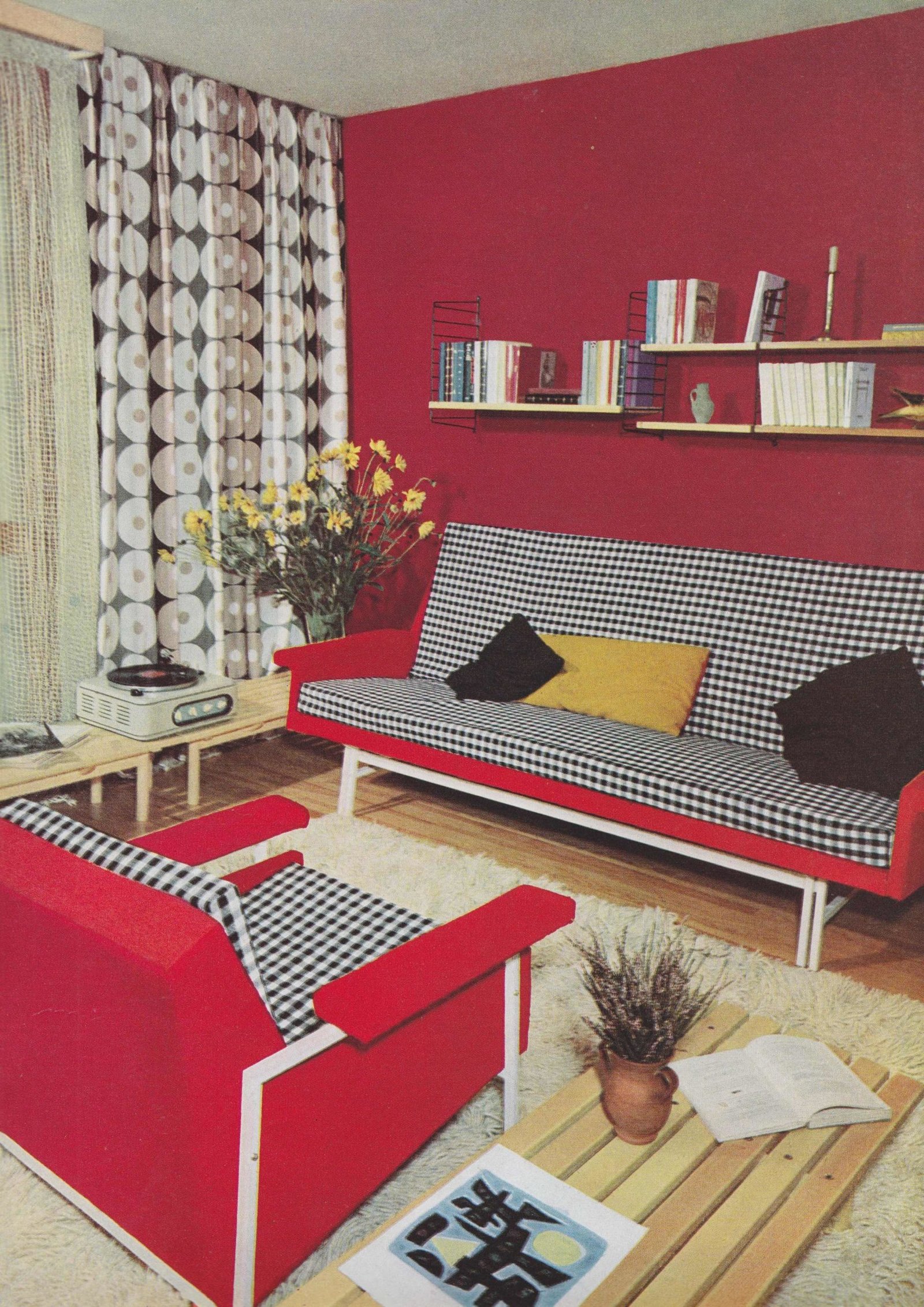
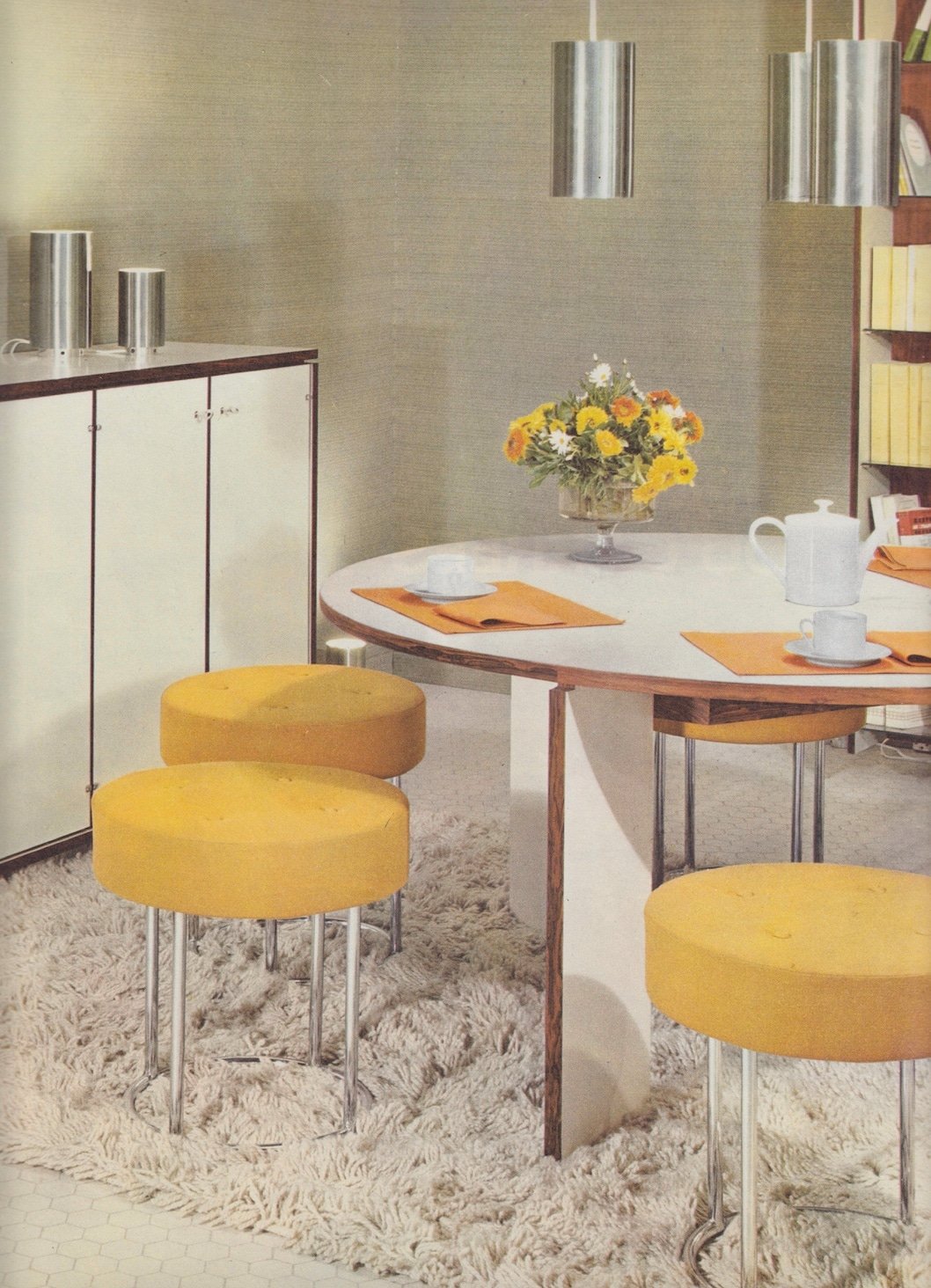
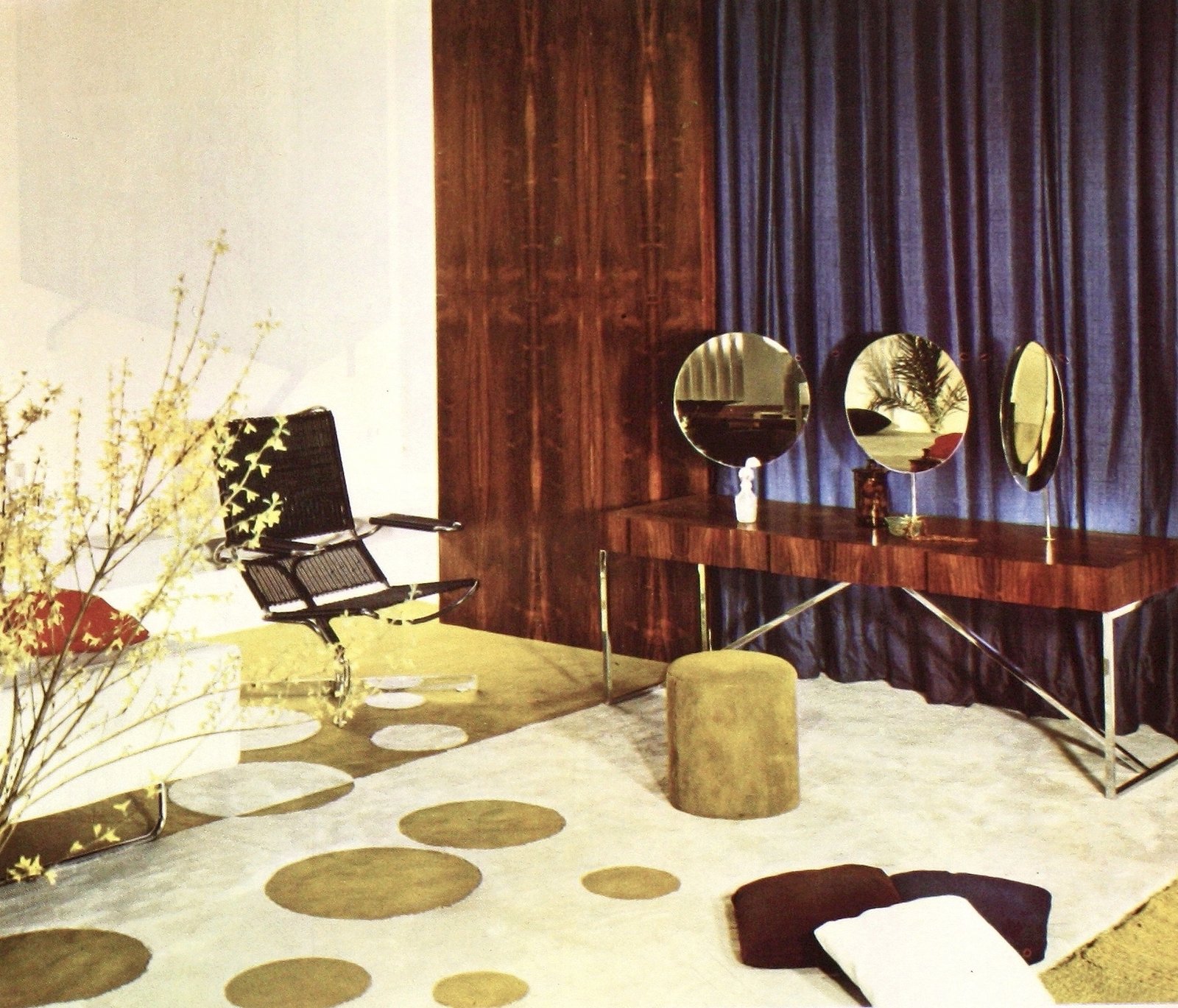
The three documents below are taken from the iconographic corpus of the thesis Useful Forms Generation and the archival collections that it references.
PERIOD DOCUMENTS — SELECTION
RENÉ-JEAN CAILLETTE AT DIZAGN
AVAILABLE WORK
DIZAGN ARCHIVES — WORKS SOLD
Pieces already processed by DIZAGN and kept online for documentary purposes.
-

RENE-JEAN CAILLETTE, FLOORLAMP B10, DISDEROT ED., 1970
-

R-J CAILLETTE, B10 FLOORLAMP, DISDEROT ED., 1970
-

R-J CAILLETTE, RJC FOLDING CHAIR, VIA ED. 1986
-

RJ CAILLETTE, ILLUMINATED BEDSIDE LIGHTS, CHARRON ED., C. 1961
-

RENÉ-JEAN CAILLETTE, TABLE, CHARRON ED., C.1958
-

RENE JEAN CAILLETTE, UNIQUE COFFEE TABLE, C. 1962
-
RENÉ-JEAN CAILLETTE, TABLE, CHARRON ED., C.1958
-
RENE JEAN CAILLETTE, UNIQUE COFFEE TABLE, C. 1962
-
RJ CAILLETTE, ILLUMINATED BEDSIDE LIGHTS, CHARRON ED., C. 1961
-
R-J CAILLETTE, B10 FLOORLAMP, DISDEROT ED., 1970
-
R-J CAILLETTE, RJC FOLDING CHAIR, VIA ED. 1986
-
RENE-JEAN CAILLETTE, FLOORLAMP B10, DISDEROT ED., 1970
-

RENÉ-JEAN CAILLETTE, Set of Four Primevère Chairs, 1982
3800 €
DIZAGN Expertise → Thibault Lannuzel →
Main sources: Centre Pompidou; Musée des Arts décoratifs; Galerie Pascal Cuisinier; DIZAGN documentation. Portrait: all rights reserved.