
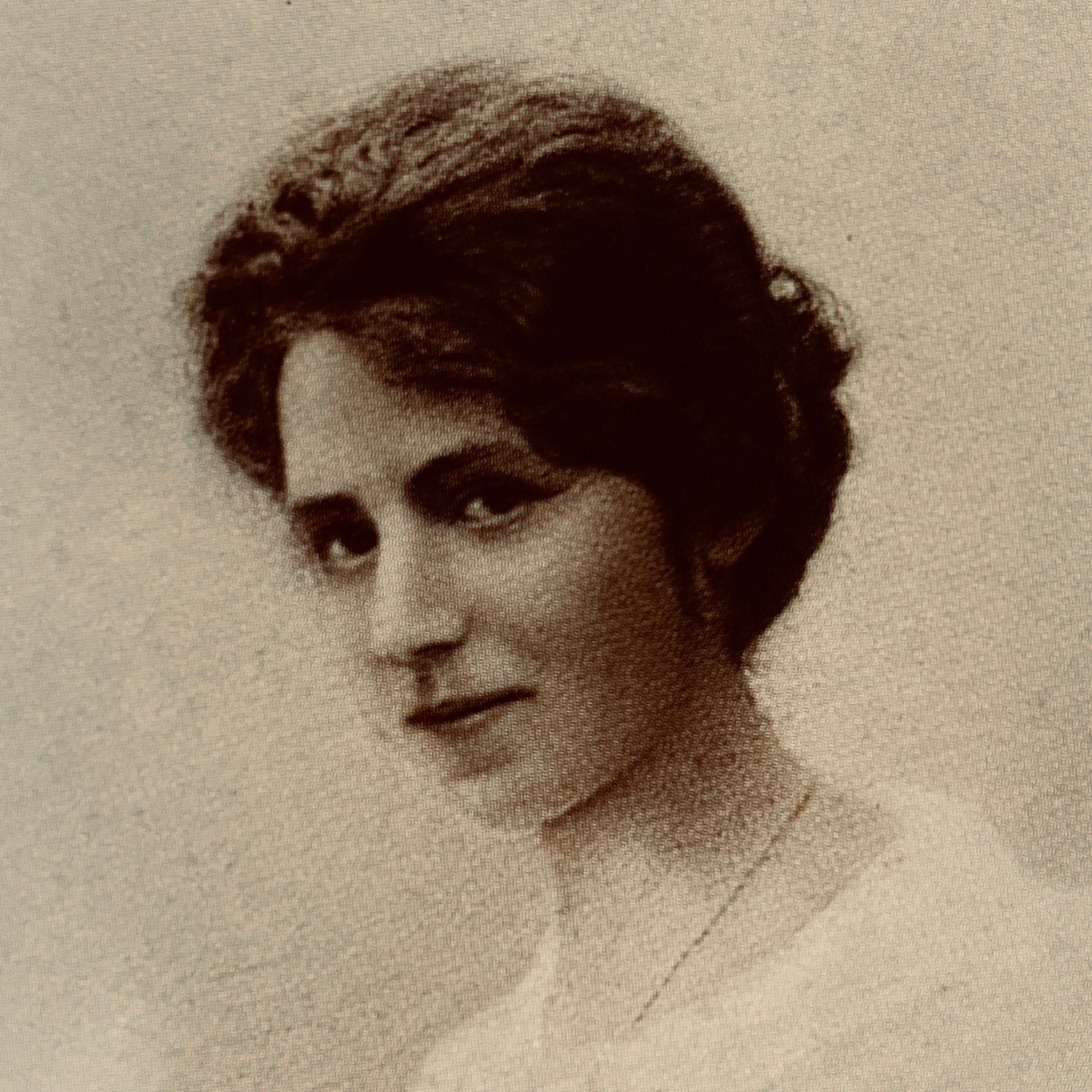
JEANNE MALIVEL
Artist and designer: thinking together about furniture, pattern and space.
Jeanne Malivel (1895–1926) is a major figure in the revival of Breton decorative arts.
His work, brief but varied, ranges from drawing to engraving, from ceramics to furniture and textile designs.
She seeks contemporary forms capable of expressing a regional culture without copying antique furniture.
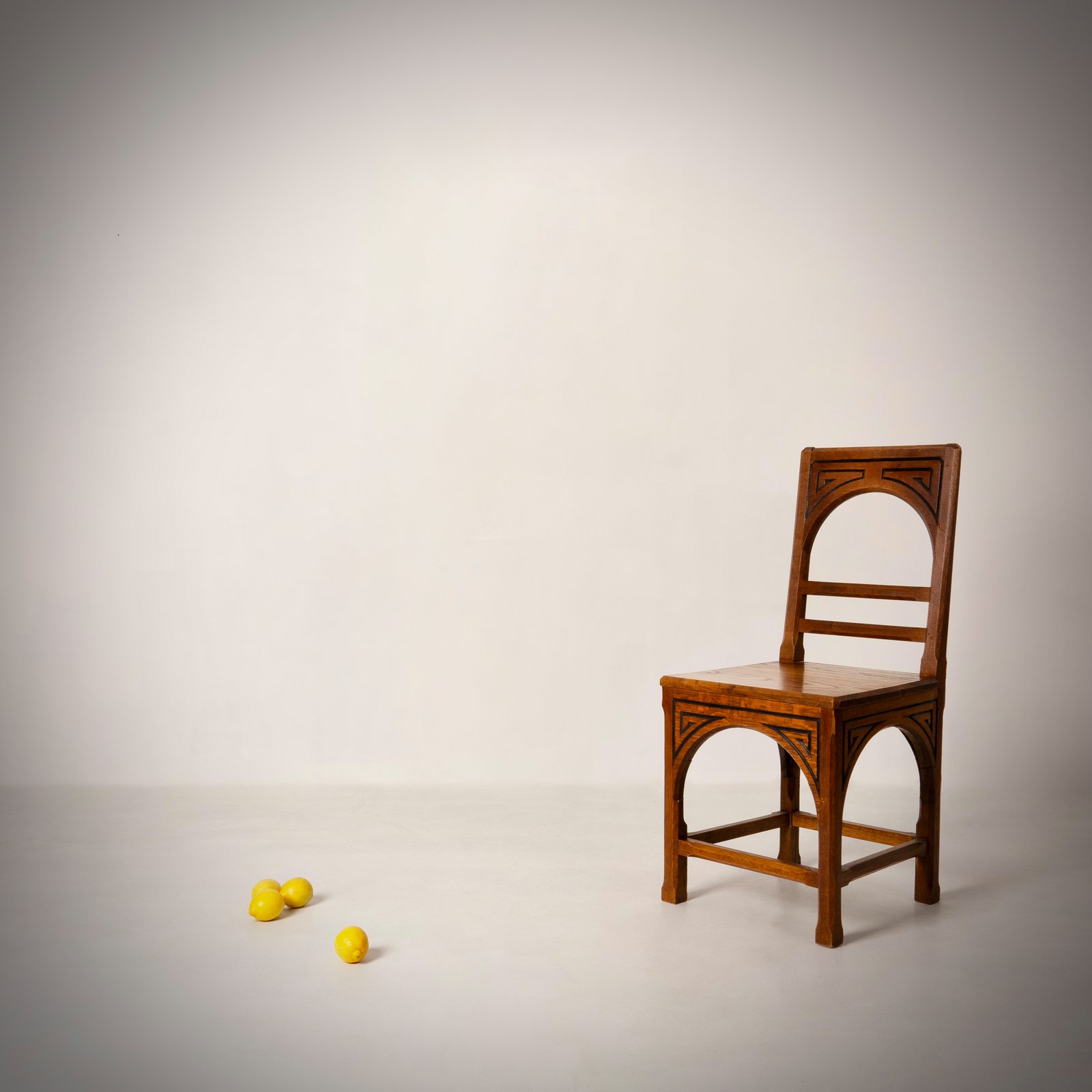
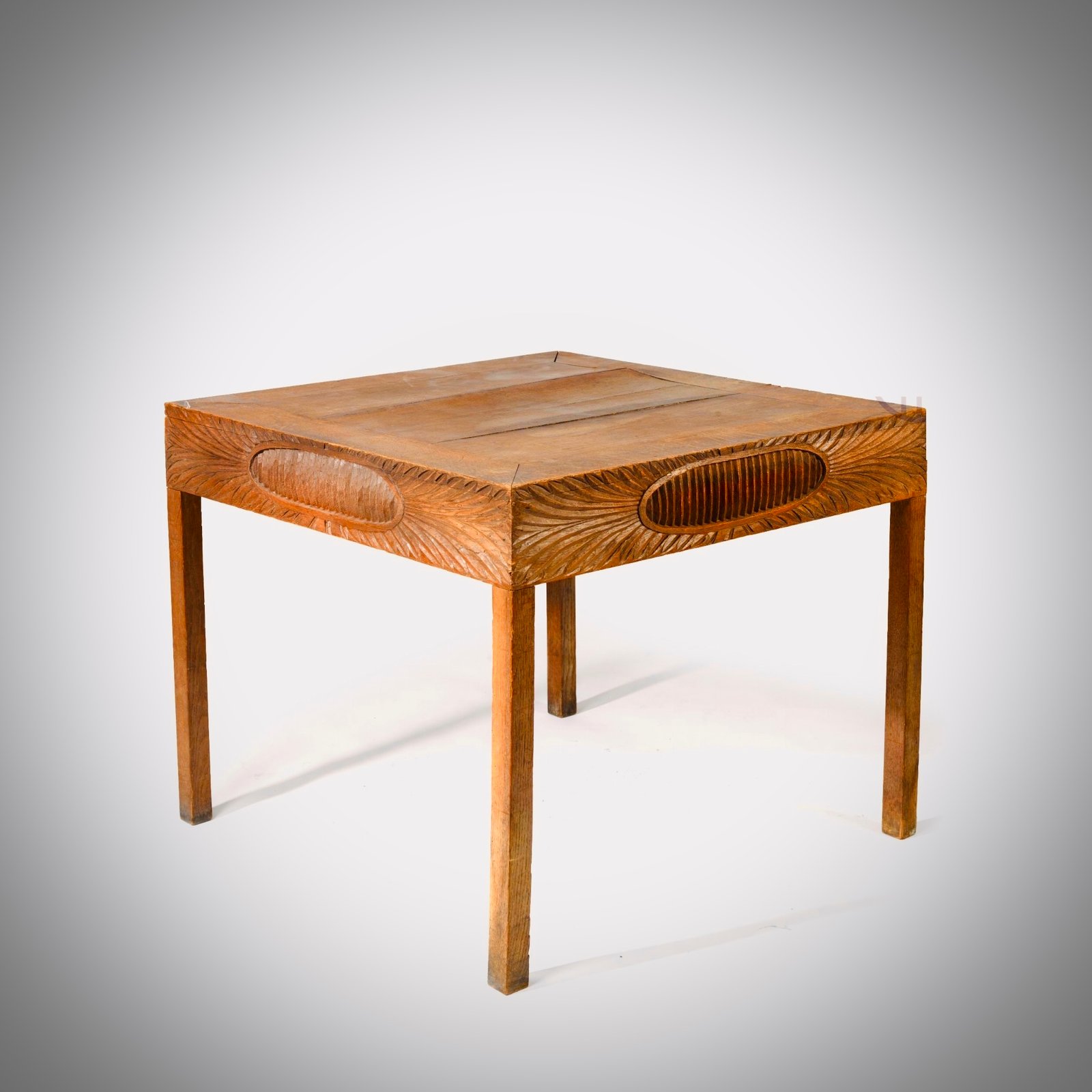
From Loudéac to Parisian workshops
Born in Loudéac, Jeanne Malivel trained in drawing under Louise Gicquel during her studies in Rennes. The First World War interrupted her artistic career: returning to Loudéac, she worked as a volunteer nurse and sketched the wounded in her notebooks. These drawings reveal a practice attentive to both people and forms.
She passed the entrance exam for the École des Beaux-Arts in Paris again in 1918. The Association of Friends of Jeanne Malivel recalls her ties with the Guilde Notre-Dame and the workshops of Maurice Denis, dedicated to sacred art. Her return to Brittany was accompanied by a commitment to local skills: craftsmanship should contribute to the region's economic life and offer opportunities to young Breton women tempted to leave and work in Paris.
Source : Association of Friends of Jeanne Malivel, biographical note.
Engraving, between history and imagination
The wood engravings give a central place to Breton history and stories. The association's selection includes, in particular, Nominoë, Jeanne-la-Flamme, the landing of John IV, the camp at Conlie, and the Battle of Ballon. The legendary figures of Viviane and Merlin appear alongside portraits of writers, from Brizeux to Tristan Corbière. This collection allows us to explore several dimensions of his graphic work: historical narrative, imagination, and literary memory.
A Breton modernity
In the early 1920s, this research joined that of other artists and craftsmen gathered around the Seiz Breur.
The group wants to bring artistic design and workshop work closer together.
The lines become sharper, the volumes simpler, and the decor more legible.
Regional motifs do not disappear: they are transformed and used judiciously.
The Osté of 1925
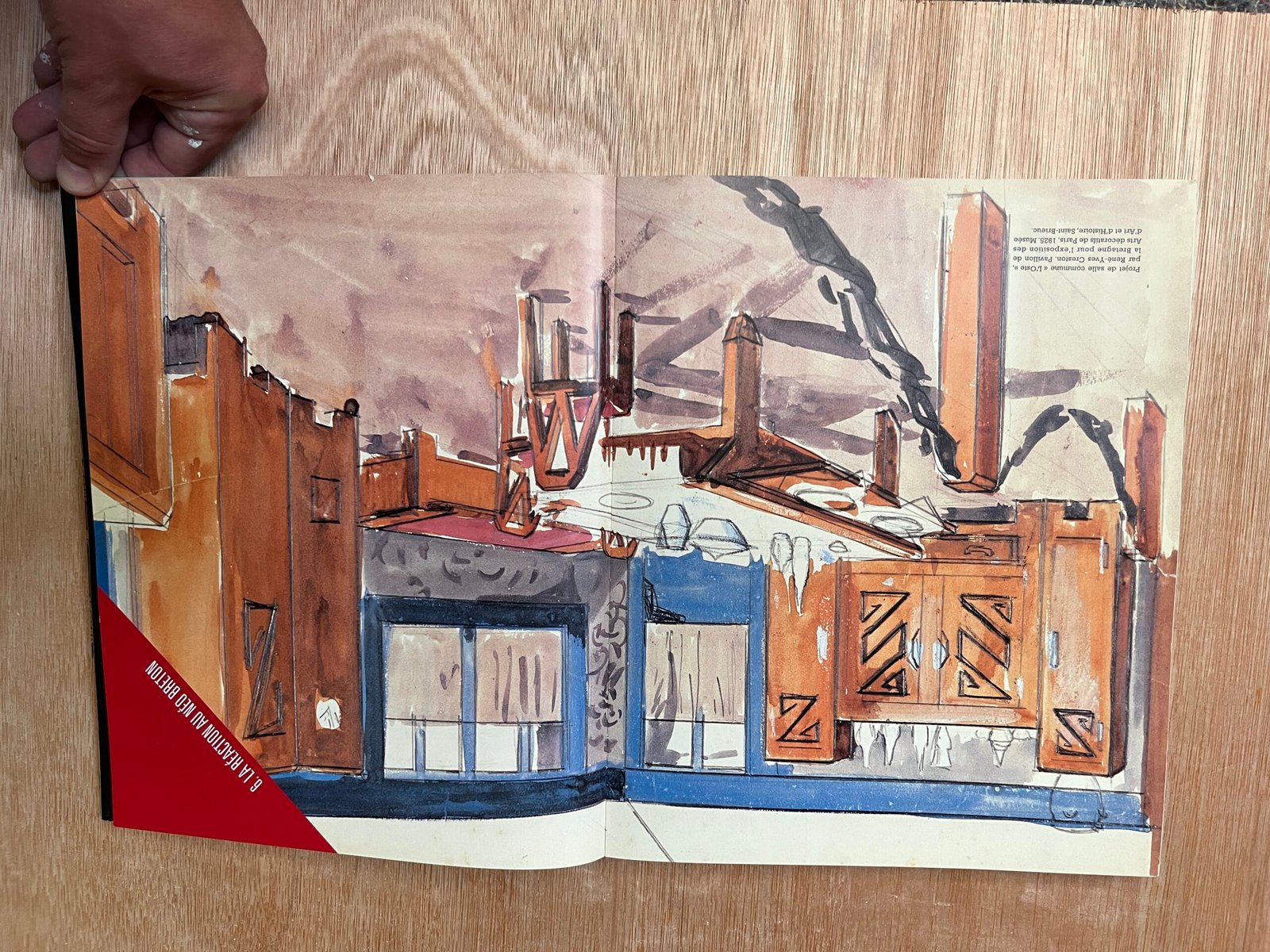
The dining room presented at the Brittany Pavilion of the International Exhibition of Decorative Arts in Paris in 1925 provides a demonstration of this.
Malivel and René-Yves Creston provided drawings and assembly sketches as early as 1923.
The carpenter Gaston Sébilleau makes the furniture.
This division of roles is essential for correctly allocating parts.
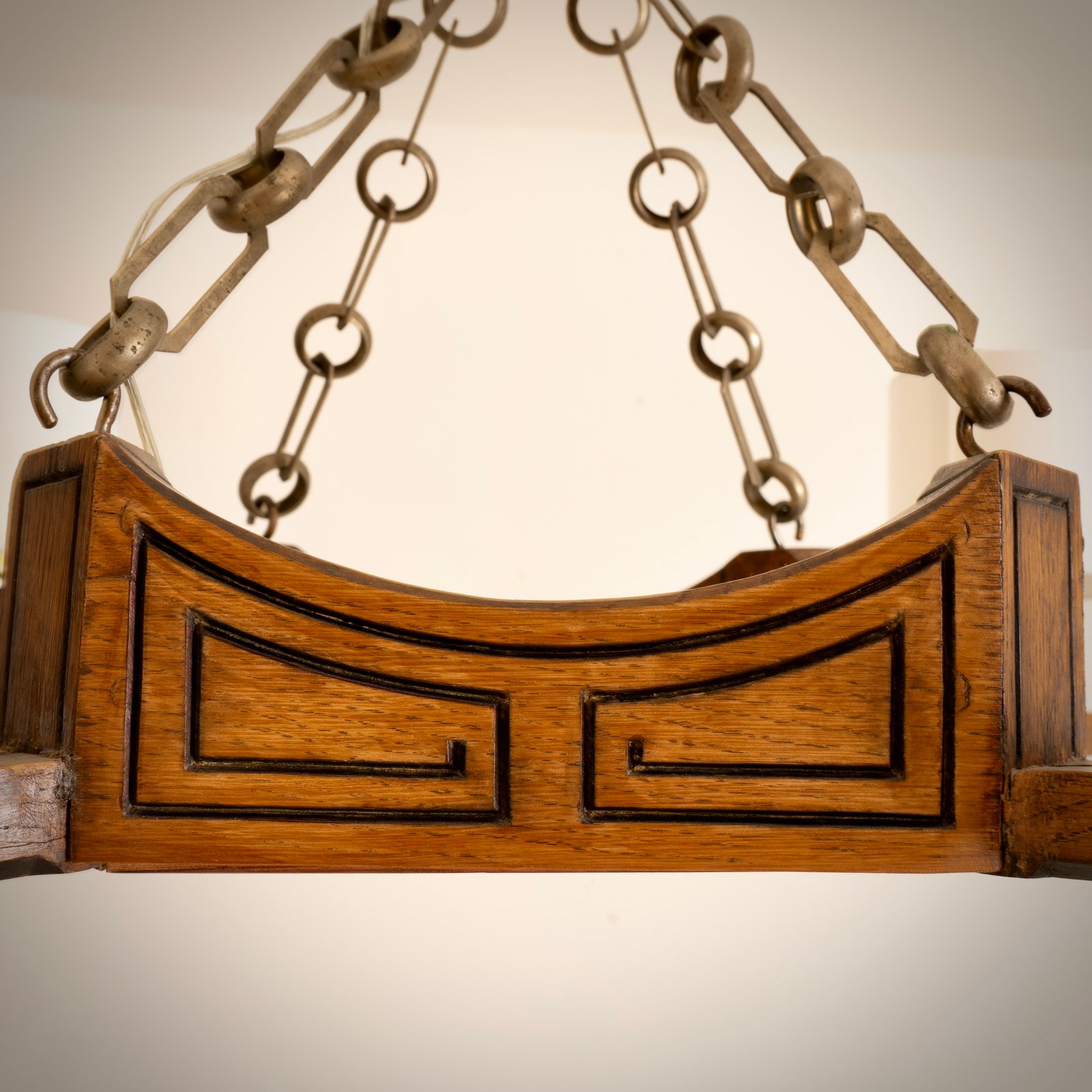
The whole combines solid furniture with a desire to lighten its silhouette.
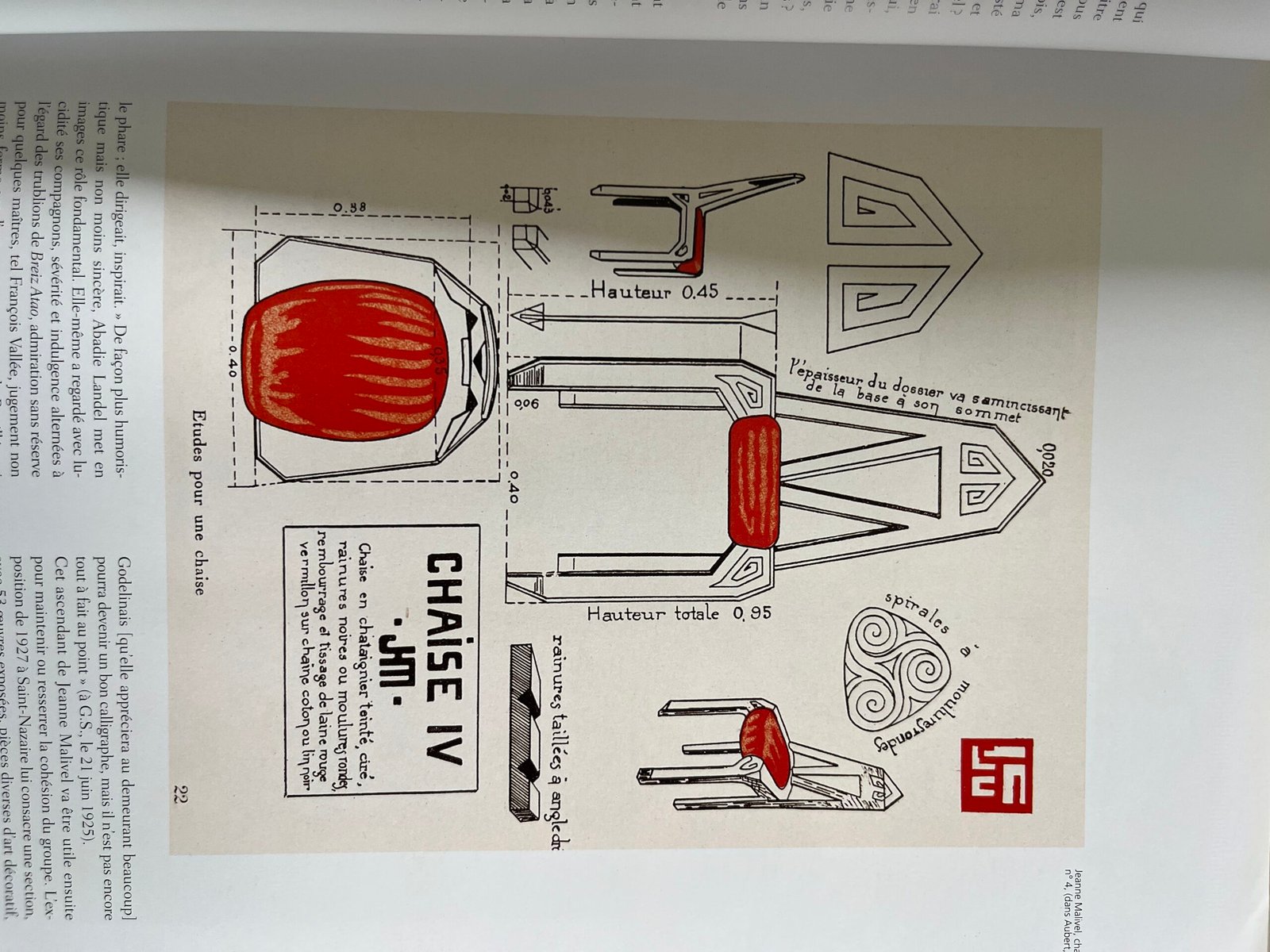
Their construction is not hidden behind added decoration: junctions and structures contribute to the design.
On a cabinet kept in Quimper, a simplified lightning bolt, carved into the wood and painted black, is enough to animate the doors.
The chairs feature simple backrests and fabric-covered seats.
The furniture from Osté was praised at the 1925 exhibition.
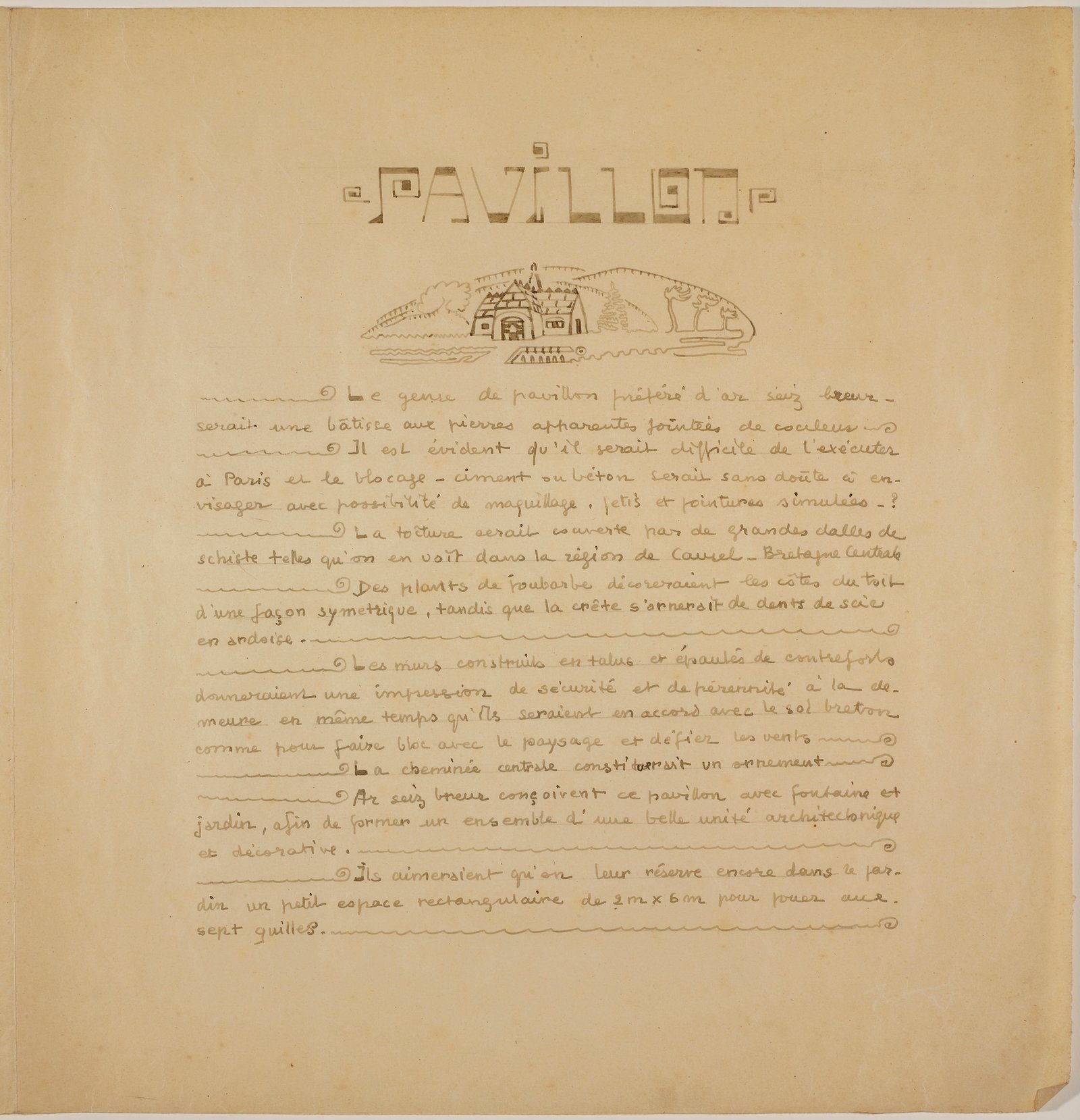
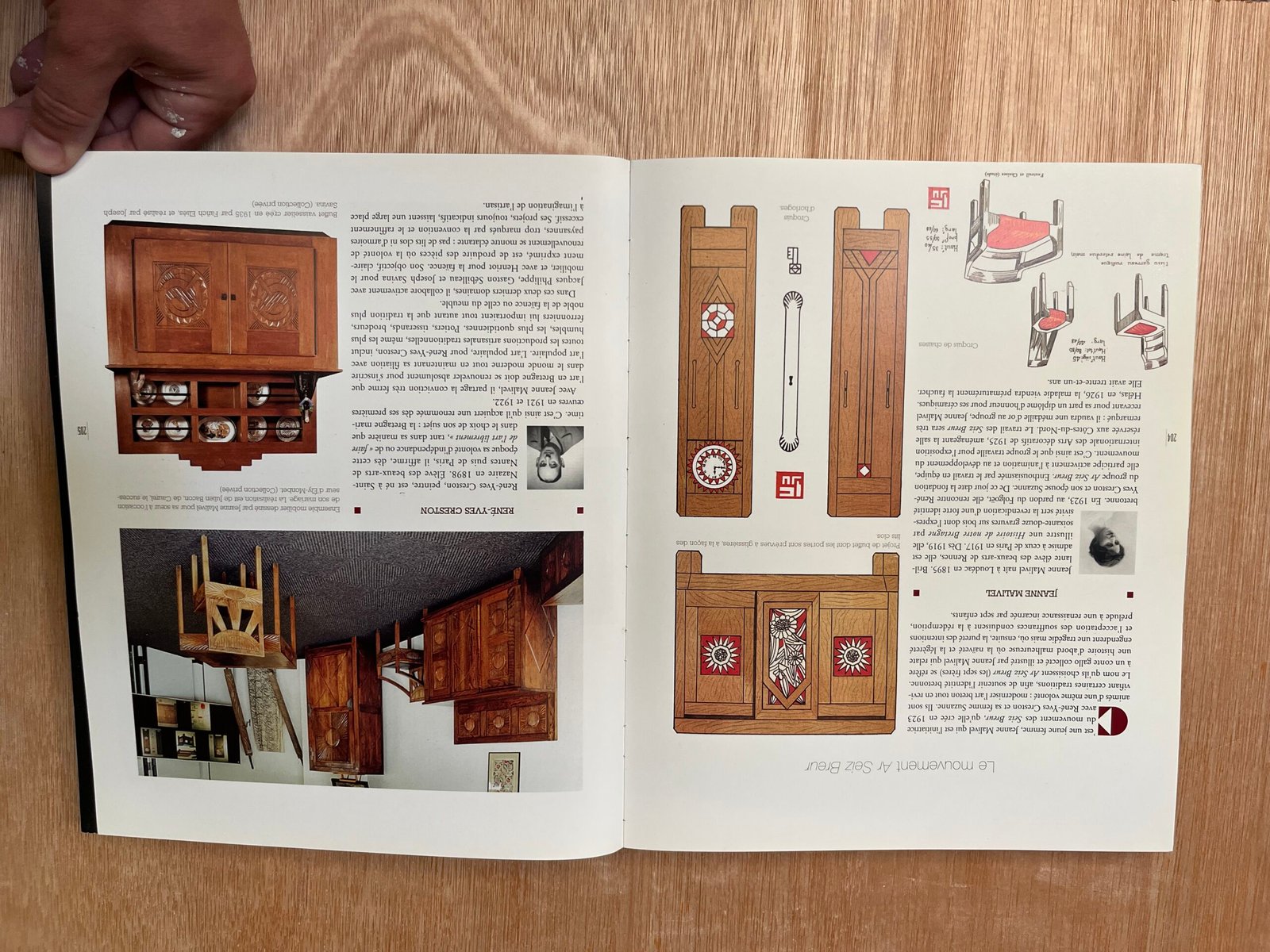
René Trotel documents the bedroom designed by Jeanne Malivel for her sister's wedding and made by Julien Bacon, in Caurel (p. 205). The design of the furniture and its execution in the workshop thus form part of the same project, adapted to domestic life.

Why look at the documents?
A piece inspired by this vocabulary is not automatically a piece of furniture designed by Malivel.
The provenance, dimensions, assemblies and old photographs must be compared with the works preserved.
The signatures, stamps and documentation of the workshop deserve special attention.
We must also distinguish between what Malivel designed alone, what she designed with Creston, and what Sébilleau manufactured.
From furniture to home arts
The catalogue of works presented by the association broadens the perspective beyond the Osté. It includes a bonnetière dated 1919, a piece of furniture with the "Kaourentin" motif and furniture from the 1925 exhibition. These reference points allow the furniture projects to be placed within a broader context.
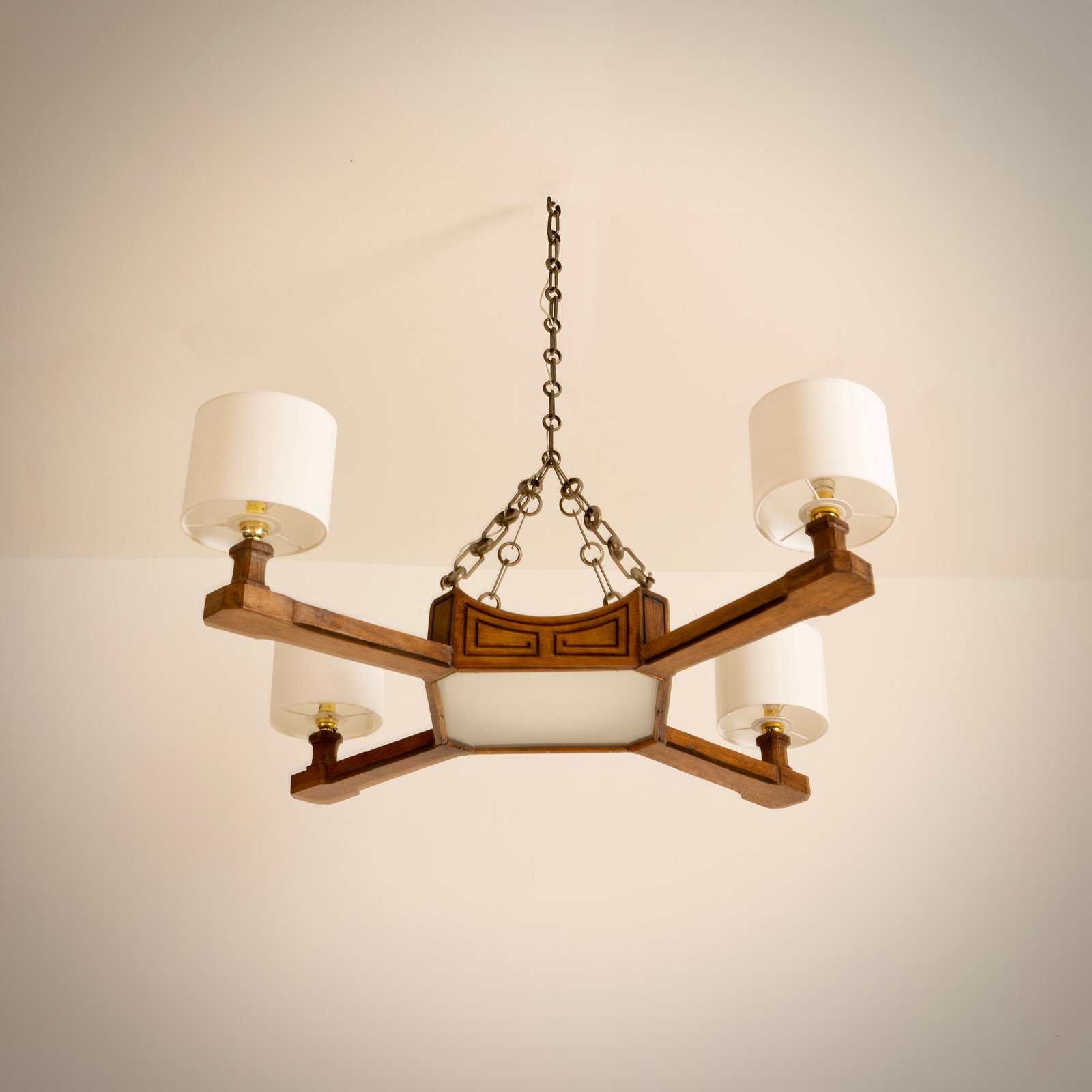
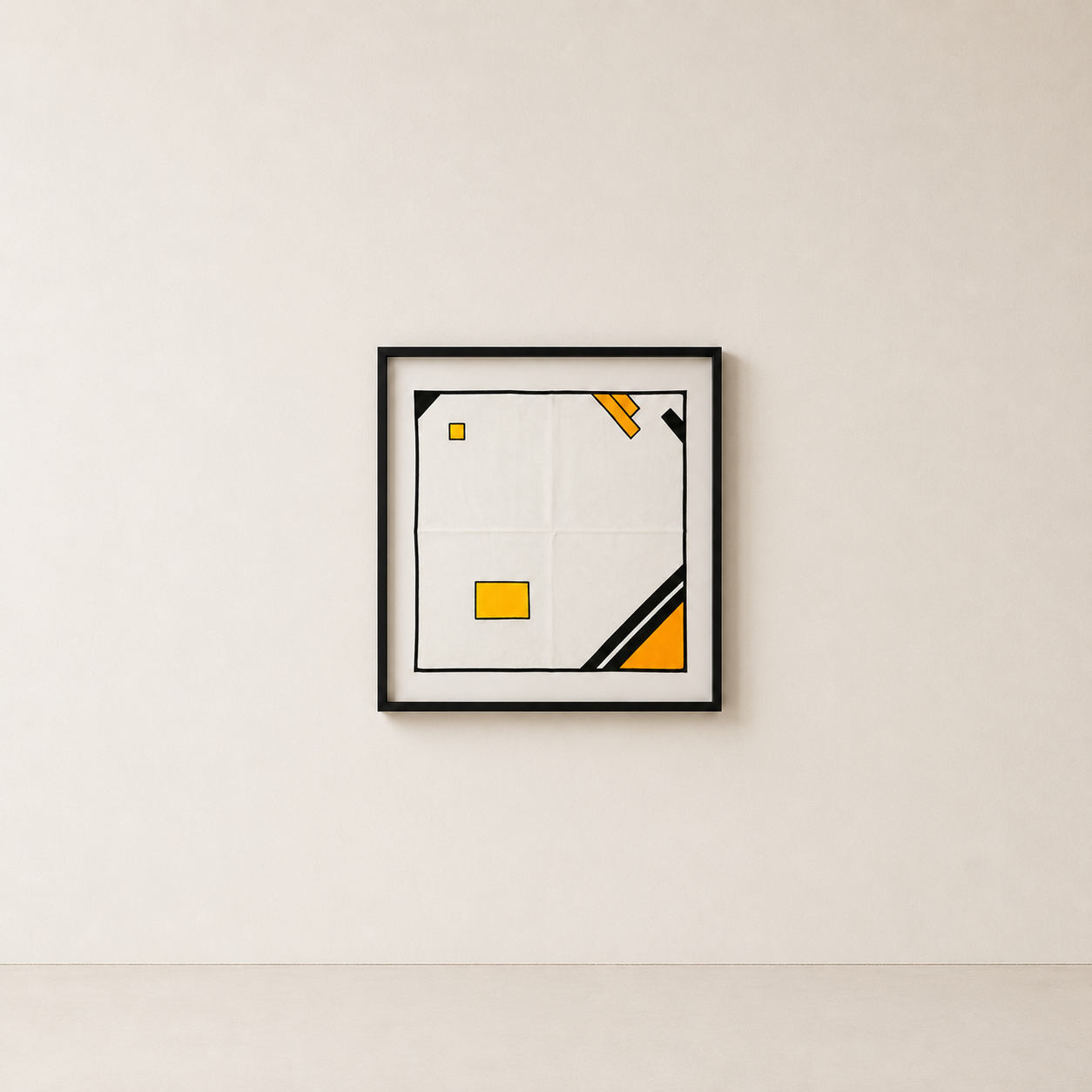
The textiles—furnishing fabric with leaves, ribbons, a cushion with Celtic motifs, and a napkin—are displayed alongside the ceramic "yellow service" and stained-glass designs, including a flower basket and a fern. Their juxtaposition invites us to view the interior as a unified whole, where furniture, fabrics, tableware, and lighting all contribute to the overall decor.
The site also reminds us that the tale The Seven Brothers, transcribed into Gallo and illustrated by Malivel, is the origin of the name Ar Seiz Breur.
Source : Association of Friends of Jeanne Malivel, gallery of works. The titles and date of the bonnetière (hobby) are taken from the captions in this gallery.
A work to be documented and passed on
Founded in Rennes in March 2014, the Association of Friends of Jeanne Malivel works to catalogue and preserve the artist's creations. It promotes their appreciation through exhibitions, publications, and reissues, with the support of a scientific committee comprising art historians, curators, and academics. Its work provides a valuable resource for furthering the study of the works and their history.
Source : presentation of the association.
Further reading
- Jeanne Malivel in the Great War, 2018 version, 75 pages: to extend the study of the diaries and the experience of war.
- Jeanne Malivel Study Day, Proceedings of the conferences of September 29, 2018 at the Breton Departmental Museum, 49 pages.
- Jeanne Malivel Colloquium, Proceedings of the symposium held on April 15, 2023 at the National Institute of Art History, 88 pages.
- Revolts and battles in Brittany, texts by Françoise Le Goaziou, 112 pages: a contextualization of the engravings and preparatory drawings.
References and editions: Bibliography of the Friends of Jeanne Malivel.
The centenary in 2026 in Loudéac
To mark the centenary of his death, the exhibition at the Loudéac media library, running from September 2nd to October 30th, 2026, explores Malivel's ties to his hometown. Organized in partnership with the Museums of the Linen Route and the association, it benefits from loans from private collections. This local perspective complements the understanding of his role in the revival of Breton decorative arts.
Source : association news, accessed on October 16, 2026.
Key Dates
- 1895 — Born in Loudéac.
- 1923 — Co-founding of the Seiz Breur and first projects for the Osté.
- 1925 — Presentation of Osté at the Exhibition of Decorative Arts in Paris.
- 1926 — Death.
Sources
Osté cabinet, Breton departmental museum, record 02080006834.
Chairs from Osté, Breton departmental museum, record 02080006841.
These records allow us to compare the details of an object with the examples kept in Quimper.
BIBLIOGRAPHYLIBRARY
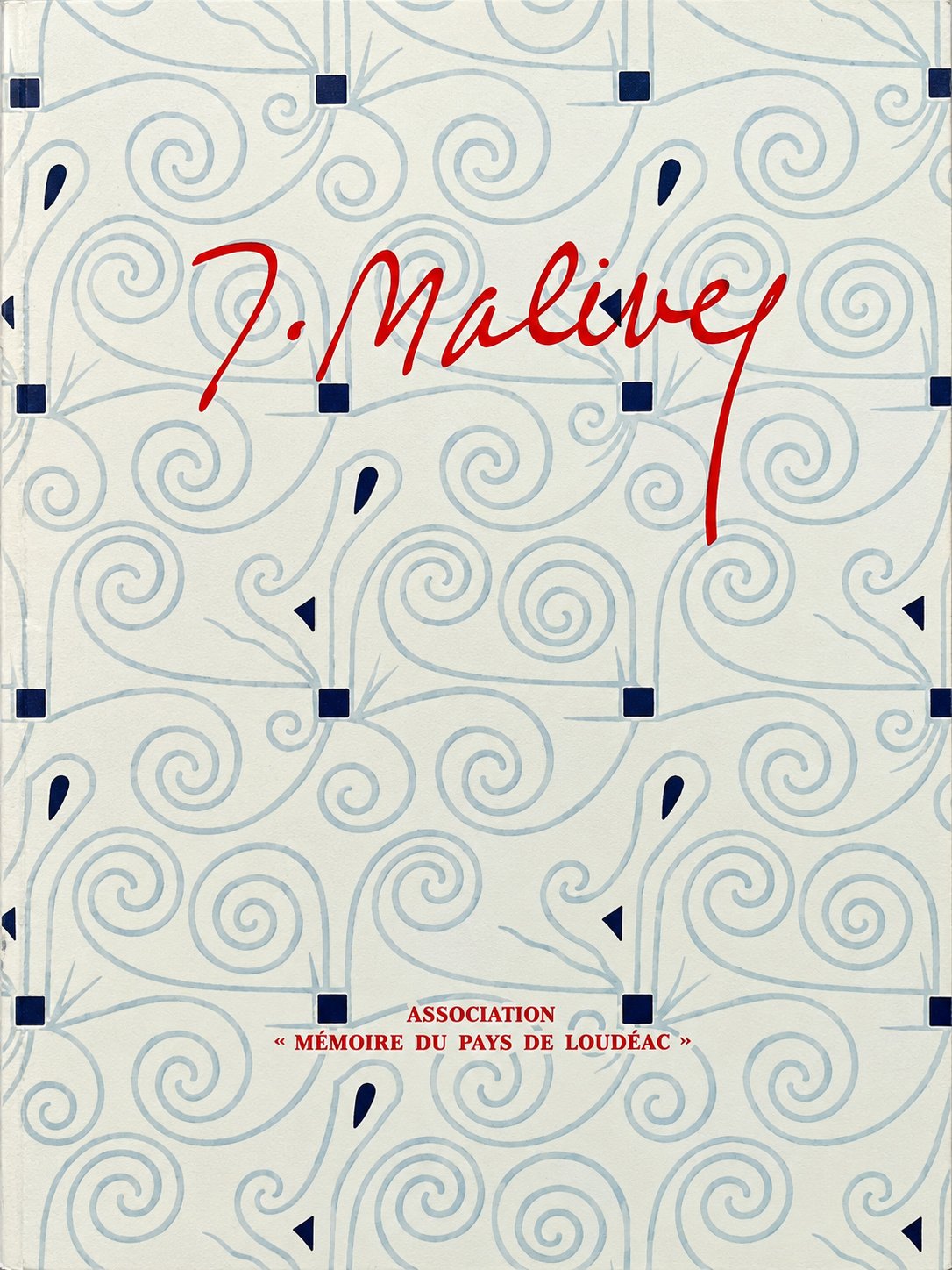
Jeanne Malivel: her work and "The Seven Brothers"«
Octave-Louis Aubert · Preface by Maurice Denis
Association Mémoire du Pays de Loudéac · 1995
Reissue of the 1929 book dedicated to Jeanne Malivel.
Reference ↗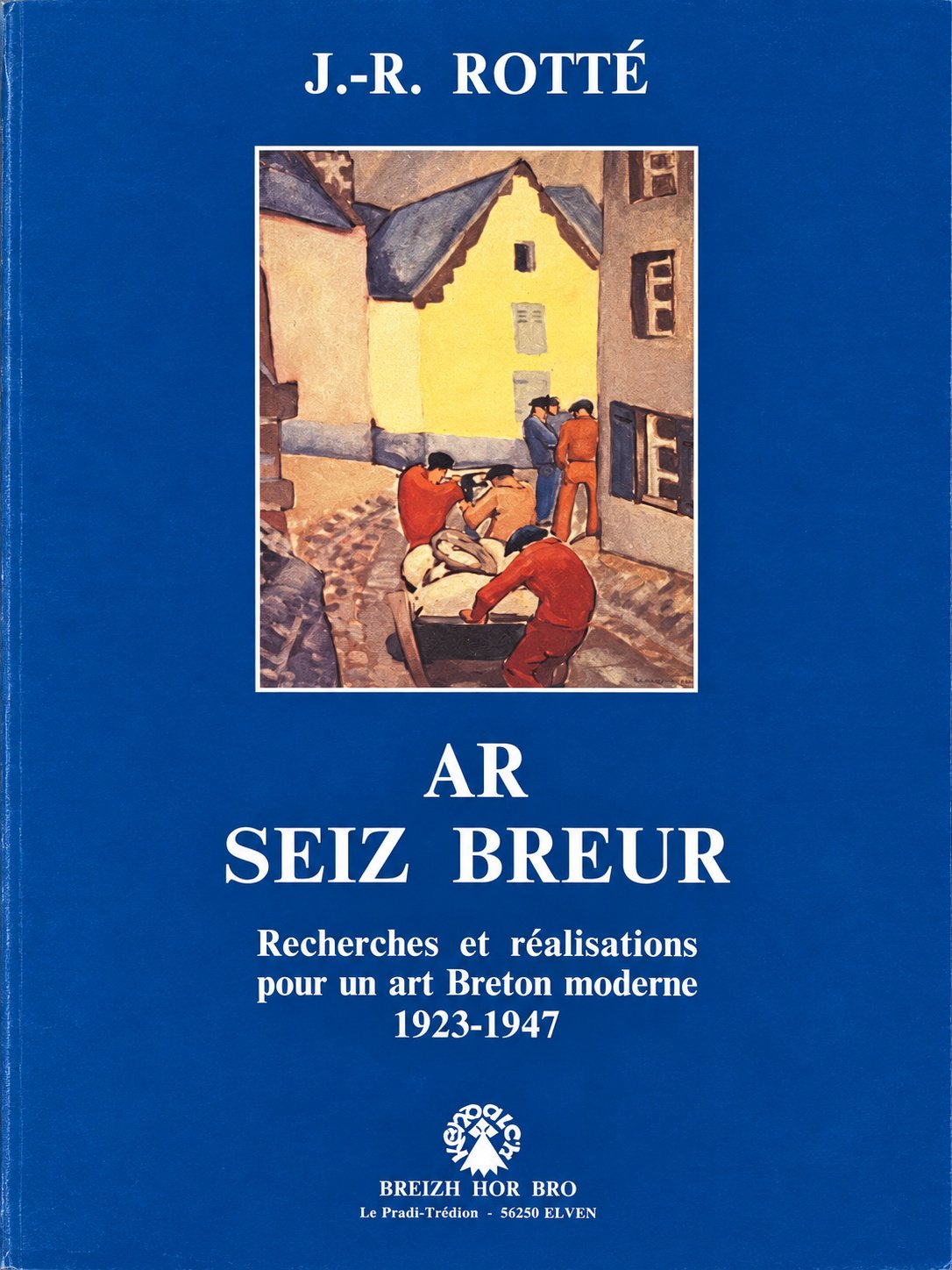
Ar Seiz Breur. Research and achievements for a modern Breton art, 1923–1947
Jean-René Rotté
Breizh Hor Bro, Elven · 1987 · 203 p.
History of the movement and its research in the applied arts.
Reference ↗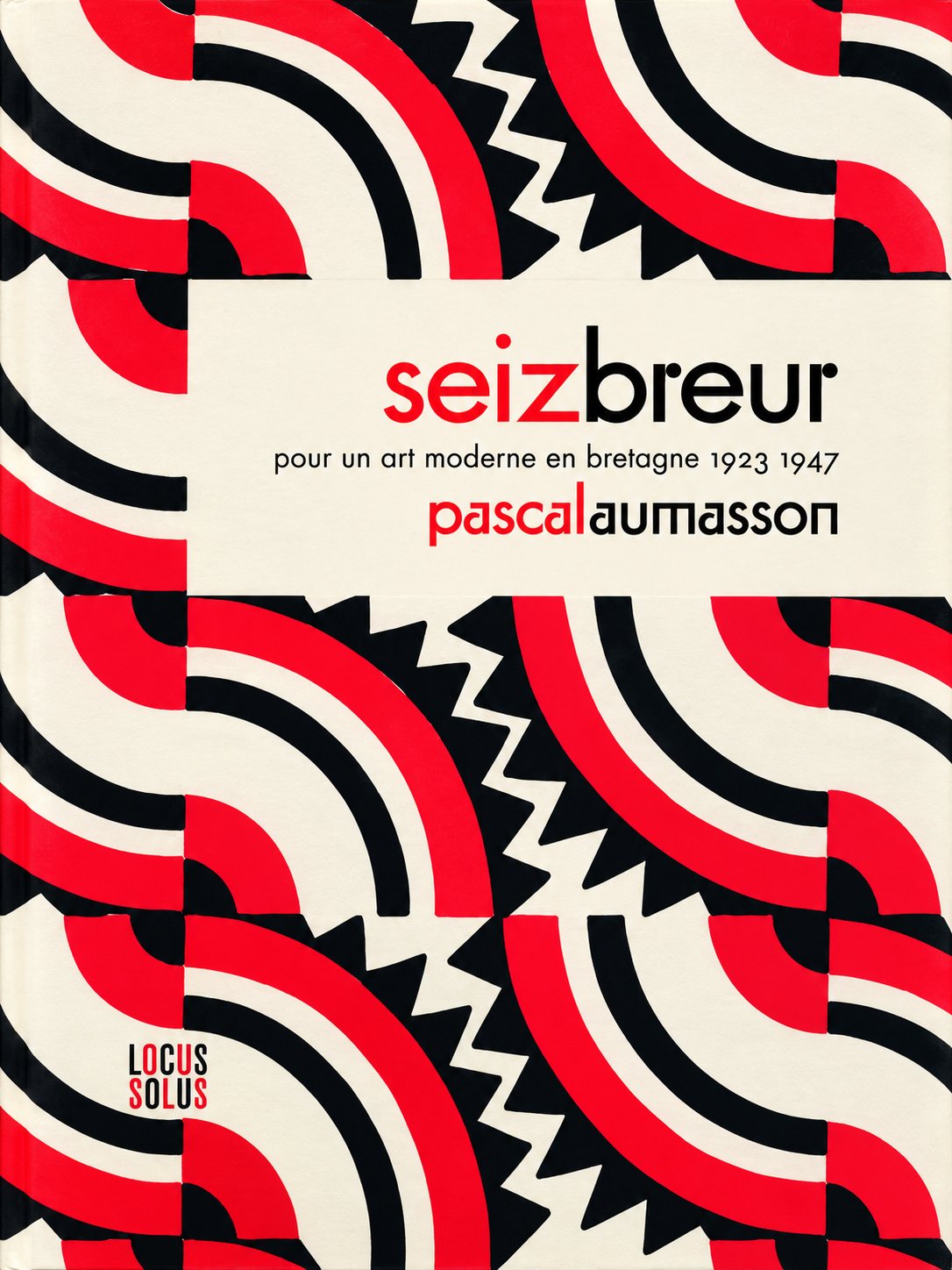
Seiz Breur. For a modern art in Brittany, 1923–1947
Pascal Aumasson
Locus Solus · 2017 · New edition in 2023
An illustrated study of the artists, disciplines and achievements of the movement.
Reference ↗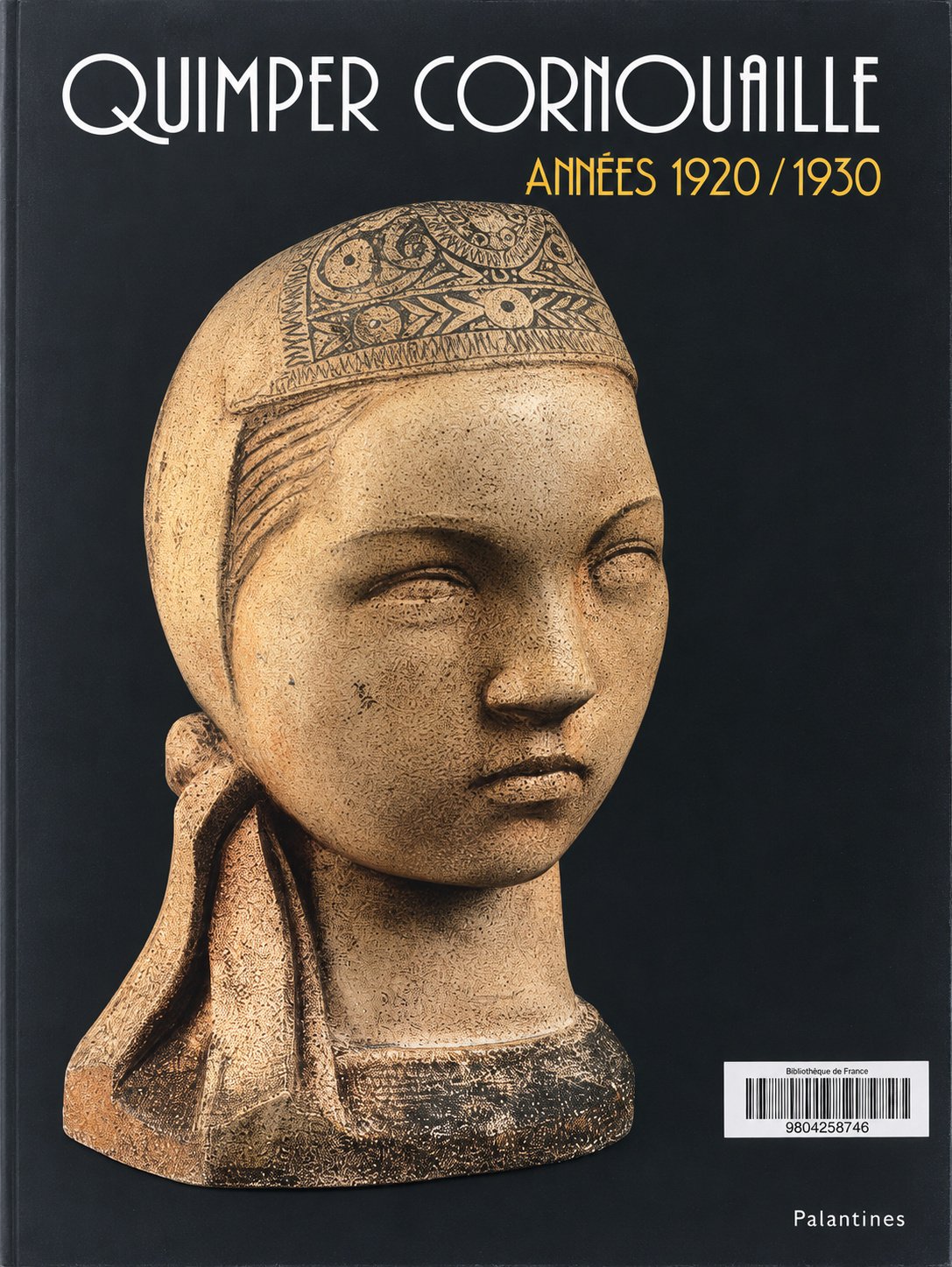
Quimper Cornouaille. 1920s/1930s
Philippe Le Stum (dir.)
Palantines, Quimper · 2010 · 173 p.
Catalogue dedicated to Art Deco in Cornwall: furniture, ceramics and visual arts.
Reference ↗- Denise Delouche, «Jeanne Malivel, the beacon of Breton renewal», in Ar Seiz Breur 1923–1947, 2000, p. 44–59.
- Daniel Le Couédic and Jean-Yves Veillard (eds.), Ar Seiz Breur 1923–1947. Breton creation between tradition and modernity, Terre de Brume / Musée de Bretagne, Rennes, 2000.
- René Trotel, Breton Furniture: History and Splendors of a Regional Craft, Coop Breizh, preface by Laurence Prod'homme.
- Olivier Levasseur, Jeanne Malivel: a committed artist, Locus Solus, 2023.
- Philippe Le Stum, Folk arts of Brittany, Ouest-France, 1995.