
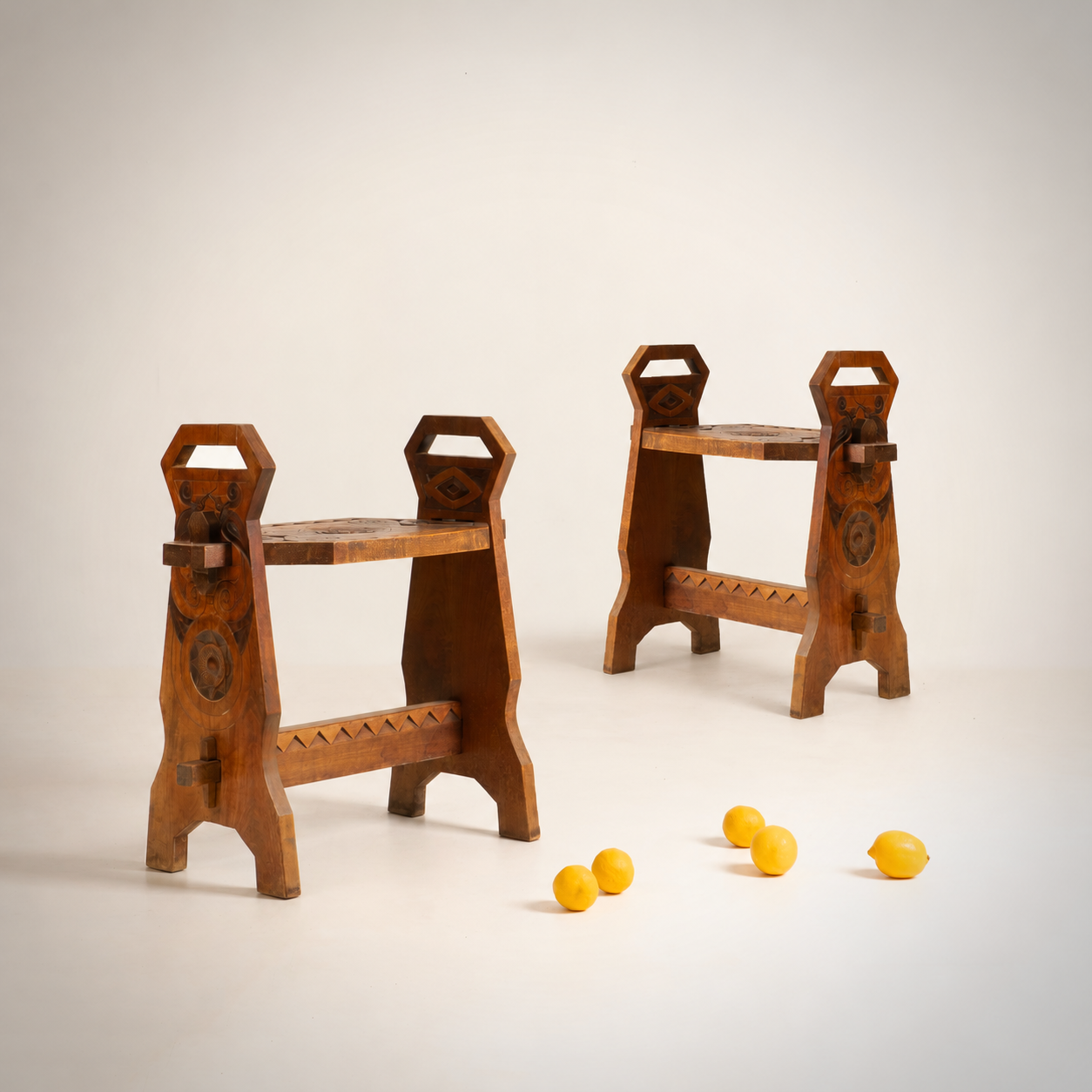
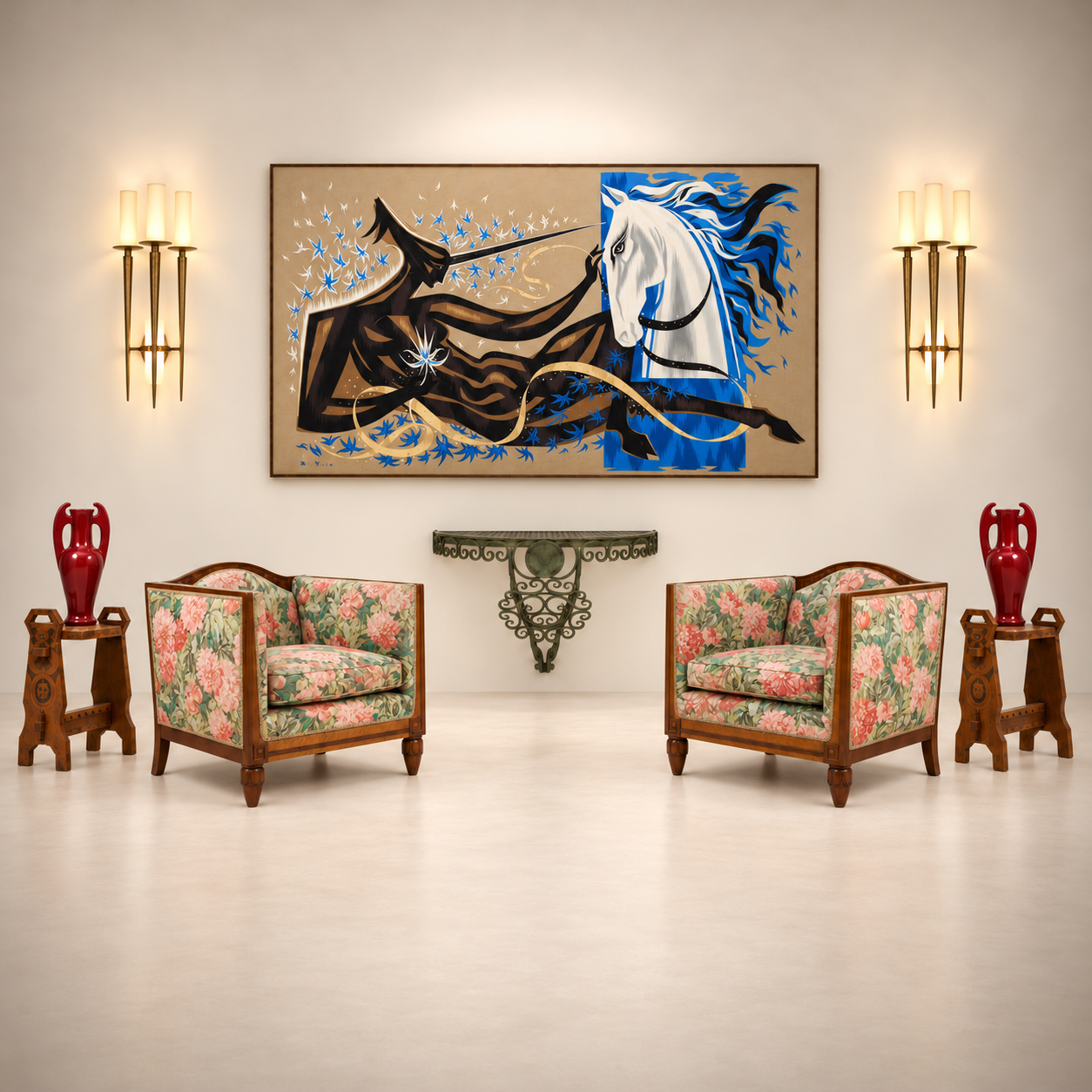
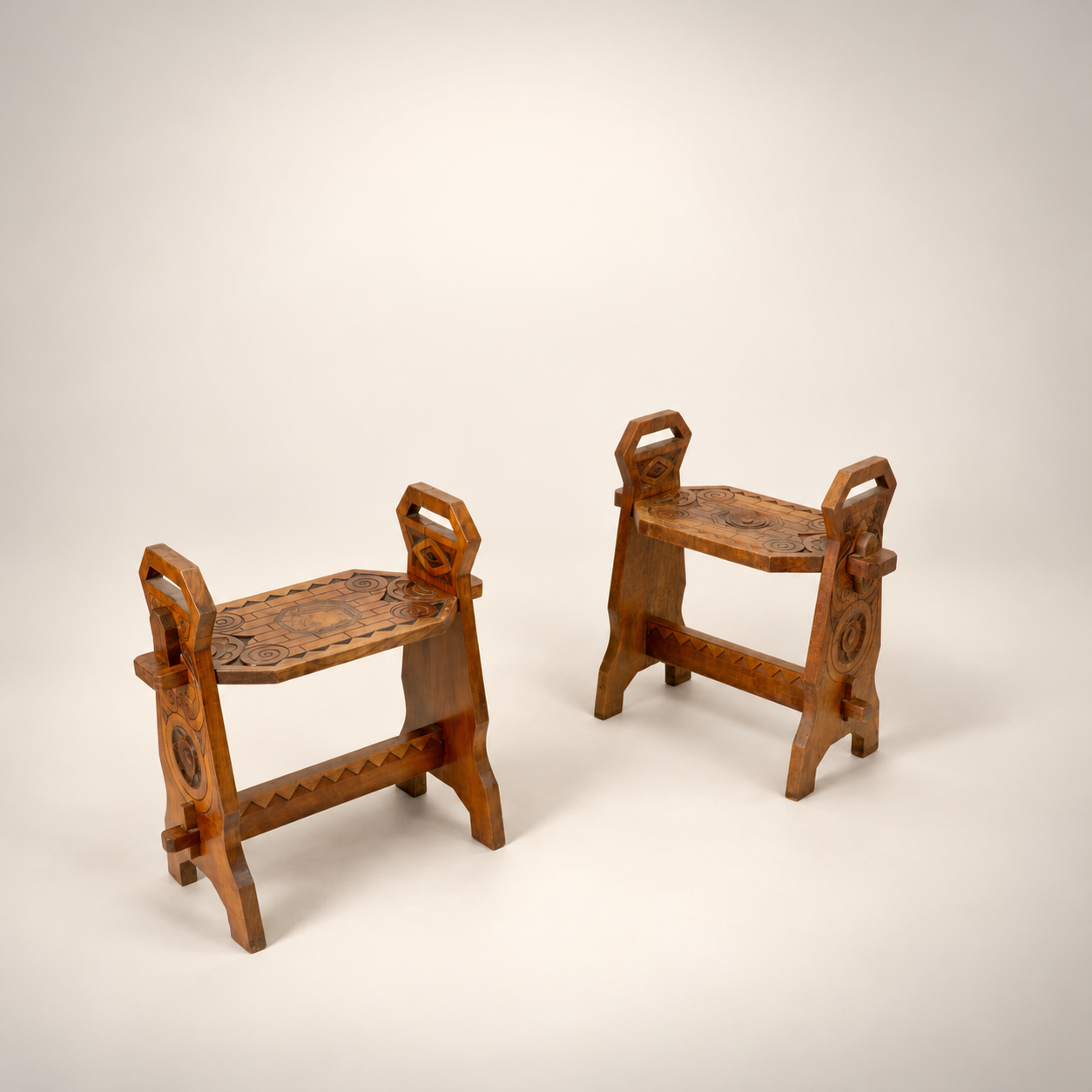
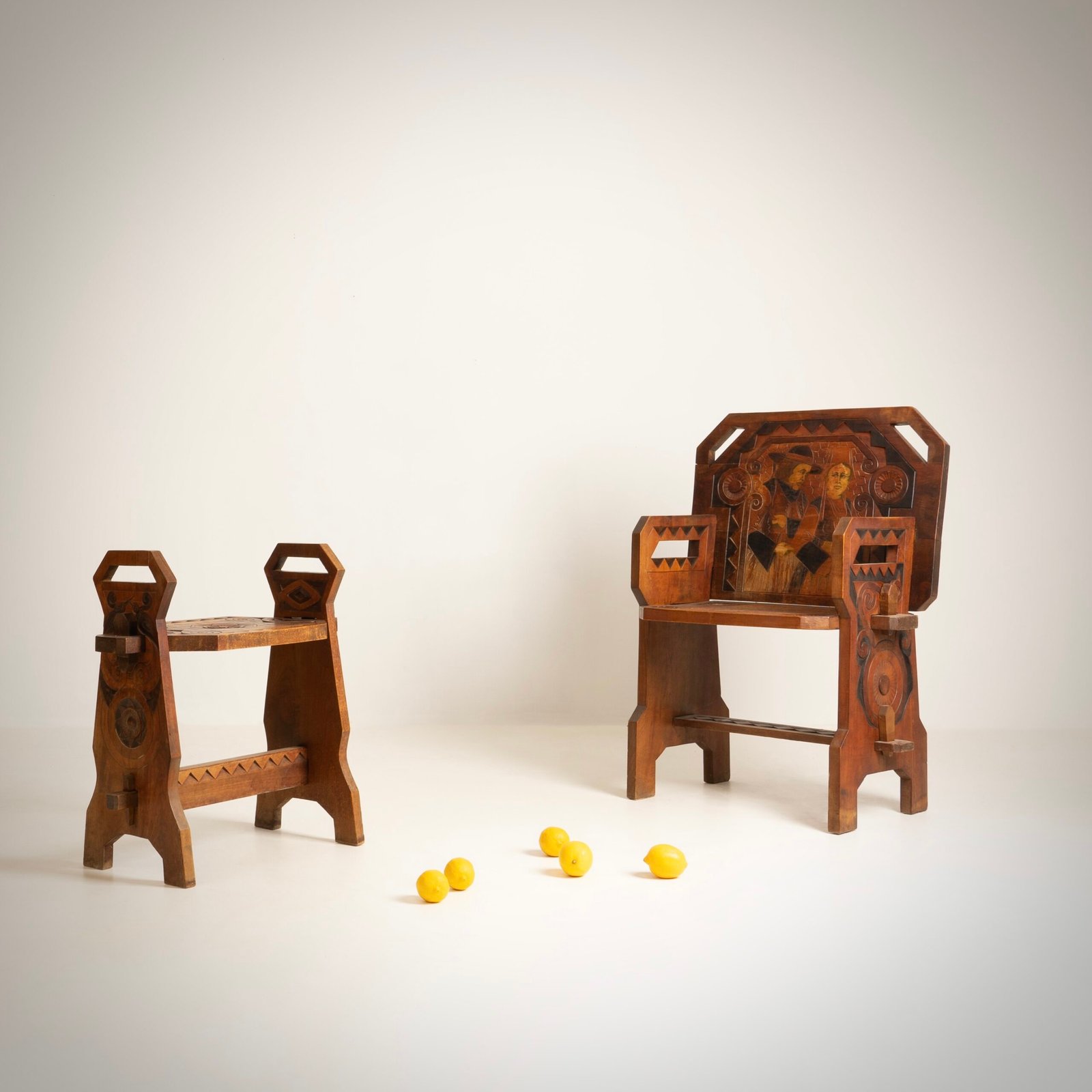
Paul Fouillen, pair of pedestal tables, Quimper, France, Circa 1929
PAUL FOUILLEN (1899-1958)
Pair of side tables
Paul Fouillen Studio, Quimper, France, Circa 1929
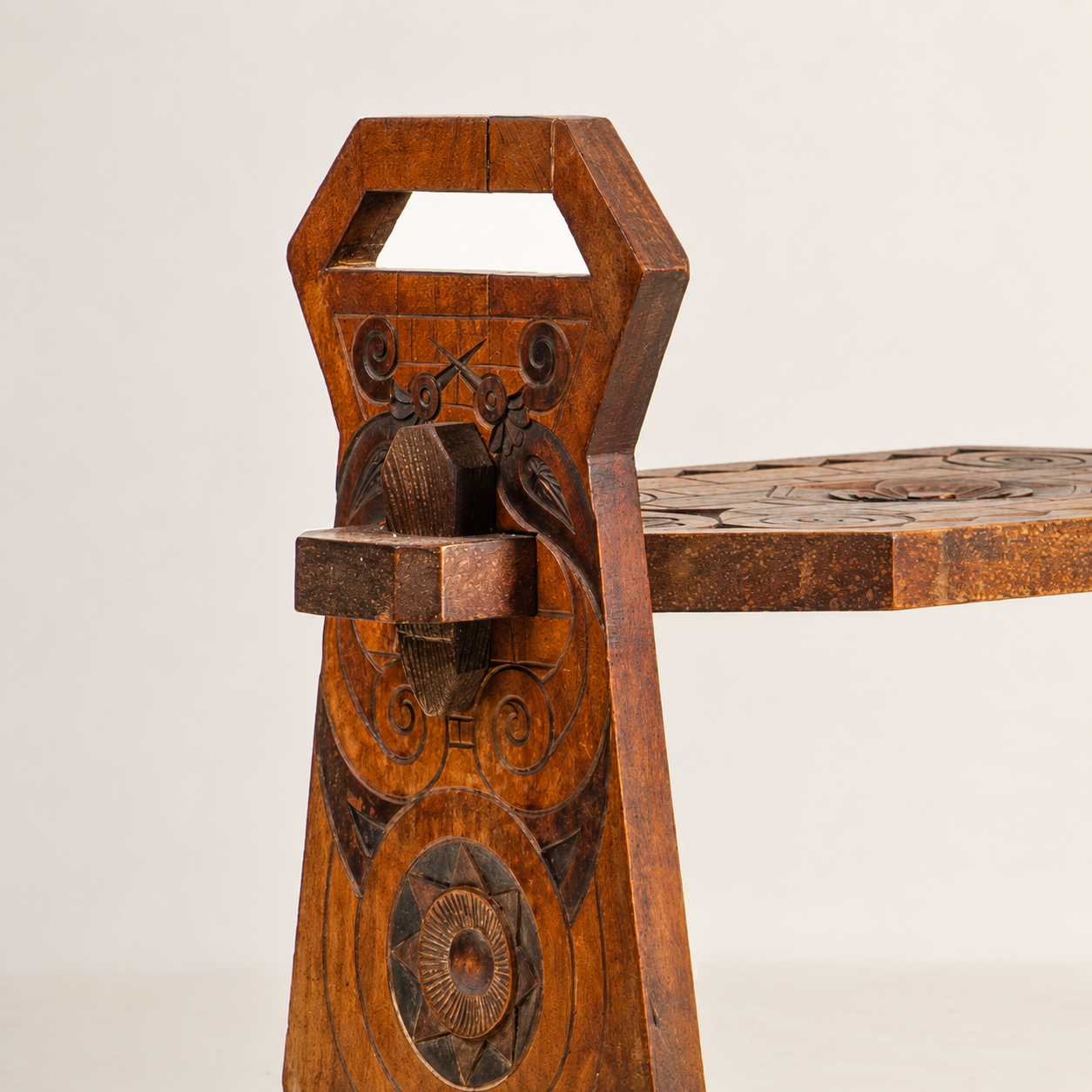
Solid beech, molded, stained, and pyrographed with Breton motifs, signed, demountable.
High. 60 x Width. 29 x Depth 60 cm
3000 €
Available — worldwide shippingAvailable — worldwide shipping
Reference:
Collection of the Breton Departmental Museum, Quimper
Literature:
THÉALLET, Philippe, SÉVÈRE, Christian, Paul Fouillen 1899–1958, Quimper, Association des Amis de Paul Fouillen, 1999
General works and exhibition catalogues
LE STUM, Philippe (ed.), Quimper Cornouaille. Years 1920/1930, Quimper, Éditions Palantines, 2010, 173 p.
LE COUÉDIC, Daniel and VEILLARD, Jean-Yves (eds.), Ar Seiz Breur 1923–1947. Breton creation between tradition and modernity, Rennes, Musée de Bretagne / Éditions Terre de Brume, 2000.
LE STUM, Philippe, «Paul Fouillen», in Quimper. Three centuries of earthenware, exhibition catalogue, 1990.
GRAVIANO, Tony, Paul Fouillen: the HB Quimper years (1922–1928), 2018, bilingual French-English edition, 224 p.
AUMASSON, Pascal, Seiz Breur. For a modern art in Brittany, Éditions Locus Solus, 2023.
Biography:
Paul Fouillen (Lorient, 1899 – Quimper, 1958) is among the creators who contributed to the renewal of Breton furniture during the interwar period. His work, at the crossroads of cabinetmaking, pyrography and decorative painting, illustrates the search for a modern language based on regional artistic traditions.
After training at the Rennes School of Fine Arts, he joined the Grande Maison HB earthenware factory in Quimper in the early 1920s, where he became head of a decoration workshop. There he developed a characteristic figurative vocabulary, composed of Breton figures with geometric silhouettes, scenes of daily life and motifs inspired by folk art.
In 1929, Paul Fouillen, along with his brother-in-law Hervé Patérour, a wood turner, founded a carpentry and decoration workshop in Styvel, in the Locmaria district of Quimper. This company, which would employ up to twenty-five people, produced furniture and decorative objects in carved, stained, painted and pyrographically decorated wood.
Furniture then became a key area of his work. He designed armchairs, benches, pedestal tables, tables, and storage units for modern interiors. His creations reflect a desire to simplify the structures of regional furniture. The forms became more geometric, the silhouettes more defined, and the joinery adapted to efficient manufacturing. Some sets were designed using a system of assembly and disassembly with pegs, facilitating both assembly and transport.
This constructive modernization is accompanied by a decorative style deeply rooted in Breton culture. Rosettes, wolf's teeth, geometric patterns, figures in traditional costume, and popular scenes form a repertoire regularly used on the backs, panels, and crossbars of the furniture. Pyrography plays a significant role in this production. Combined with pigments and paint, it allows for highlighting the contours of figures, organizing surfaces, and creating decorative contrasts without systematically resorting to relief carving.
Paul Fouillen's furniture is distinguished by the combination of simplified construction and figurative decoration inherited from the neo-Breton tradition. This synthesis is one of the defining characteristics of his work. His research is part of the broader movement to revitalize Breton decorative arts, which also included Jeanne Malivel, René-Yves Creston, Jacques Philippe, and Jean-Julien Lemordant. While close to the spirit of modernization championed by the Seiz Breur, he nevertheless maintains a personal style in which folk art remains particularly prominent.
The Styvel workshop continued its carpentry activities until around 1937. After the Second World War, Paul Fouillen gradually shifted his production towards ceramics and installed a kiln in his Quimper workshop in 1945. Today, his furniture from the 1930s bears witness to an important stage in the evolution of decorative arts in Brittany. His creations, preserved notably at the Musée départemental breton in Quimper, illustrate the research undertaken to reconcile regional heritage, new manufacturing techniques, and Art Deco aesthetics.
Our Selection


