
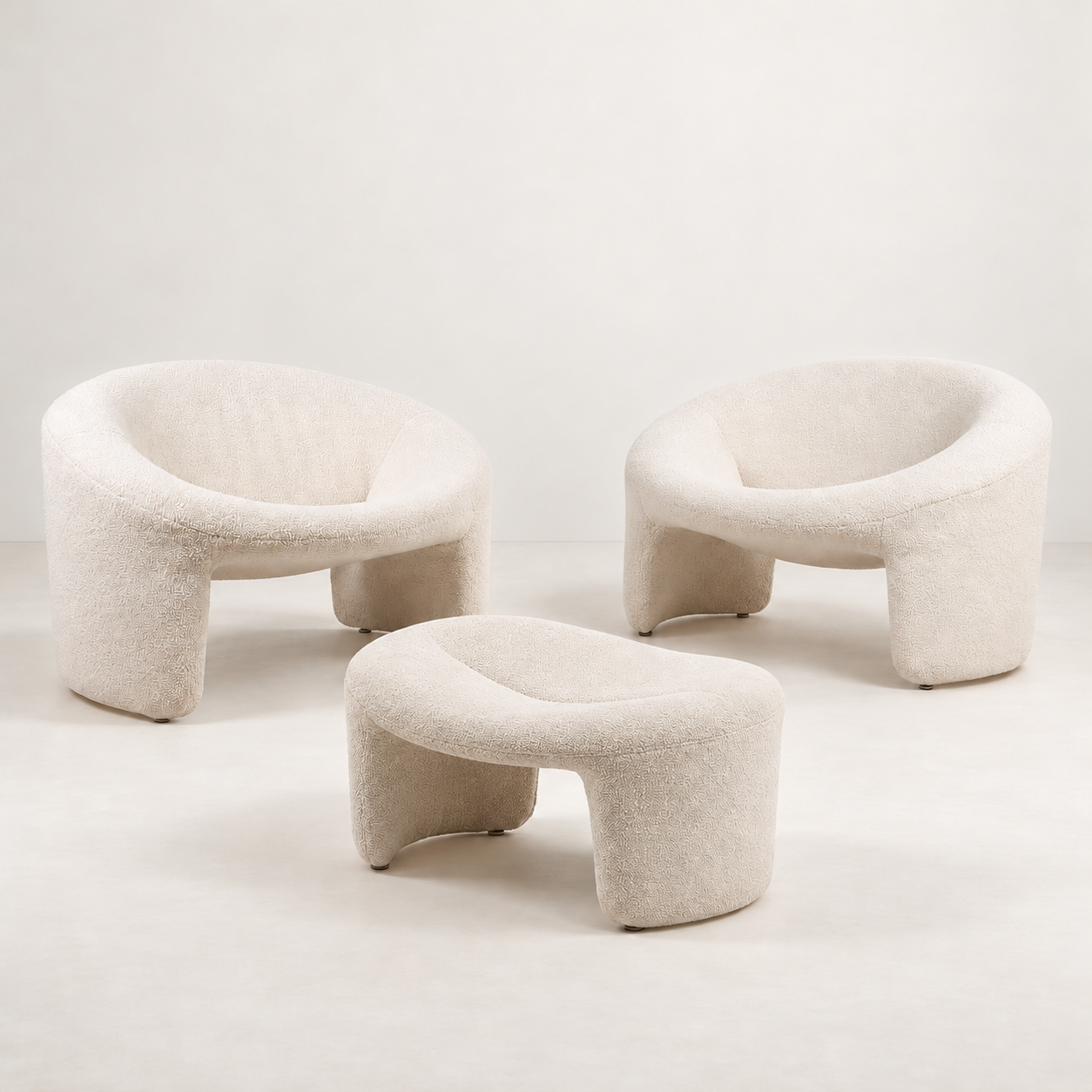
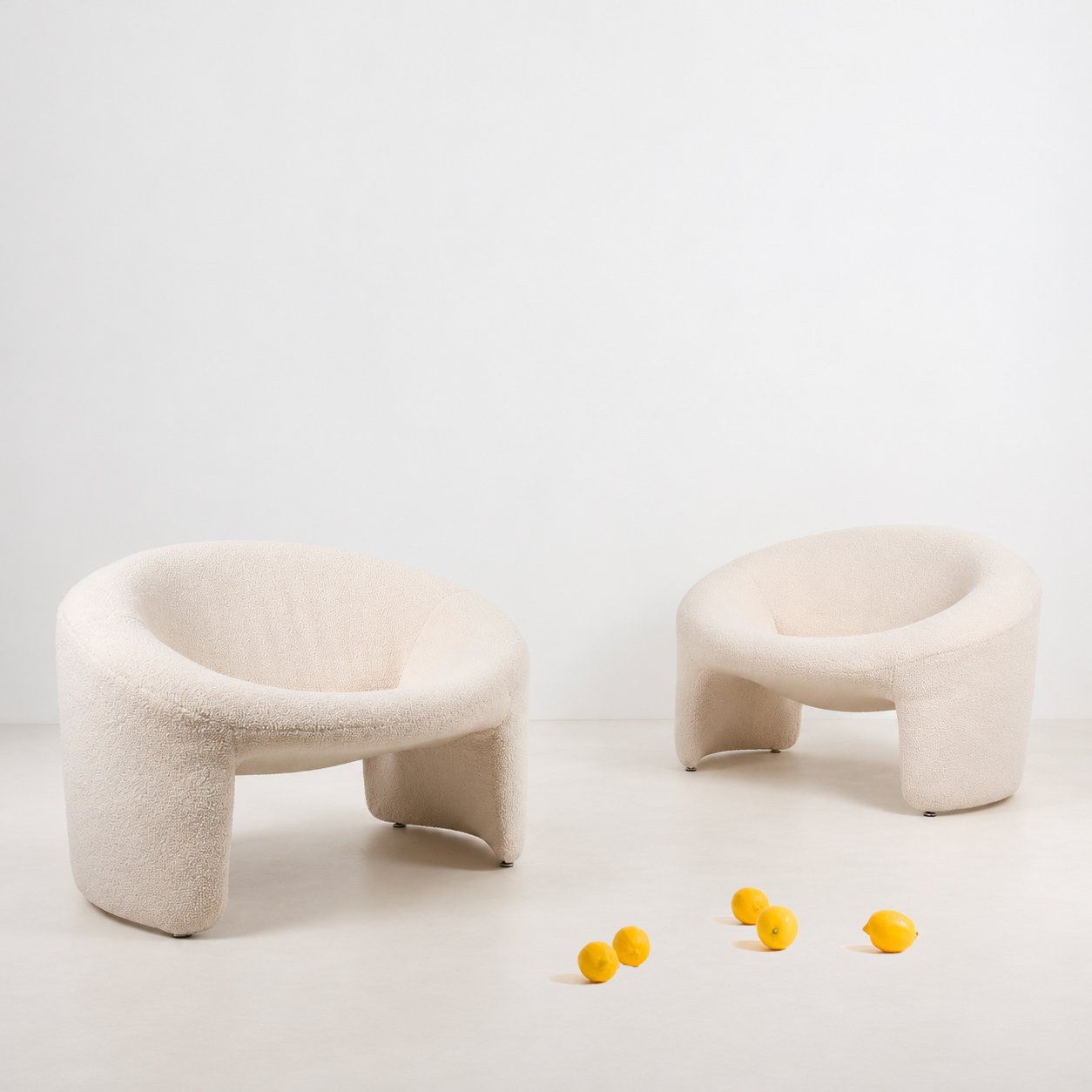
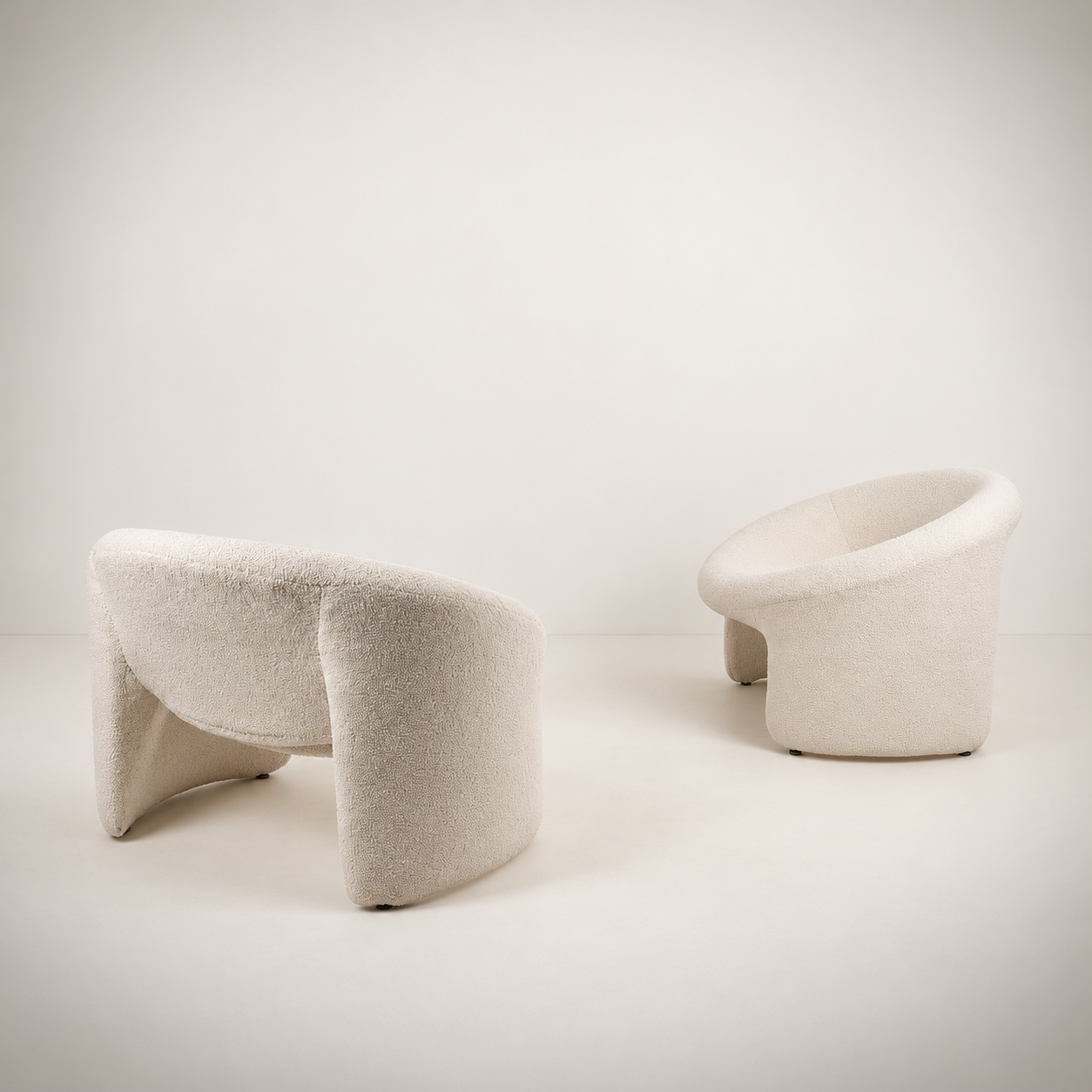
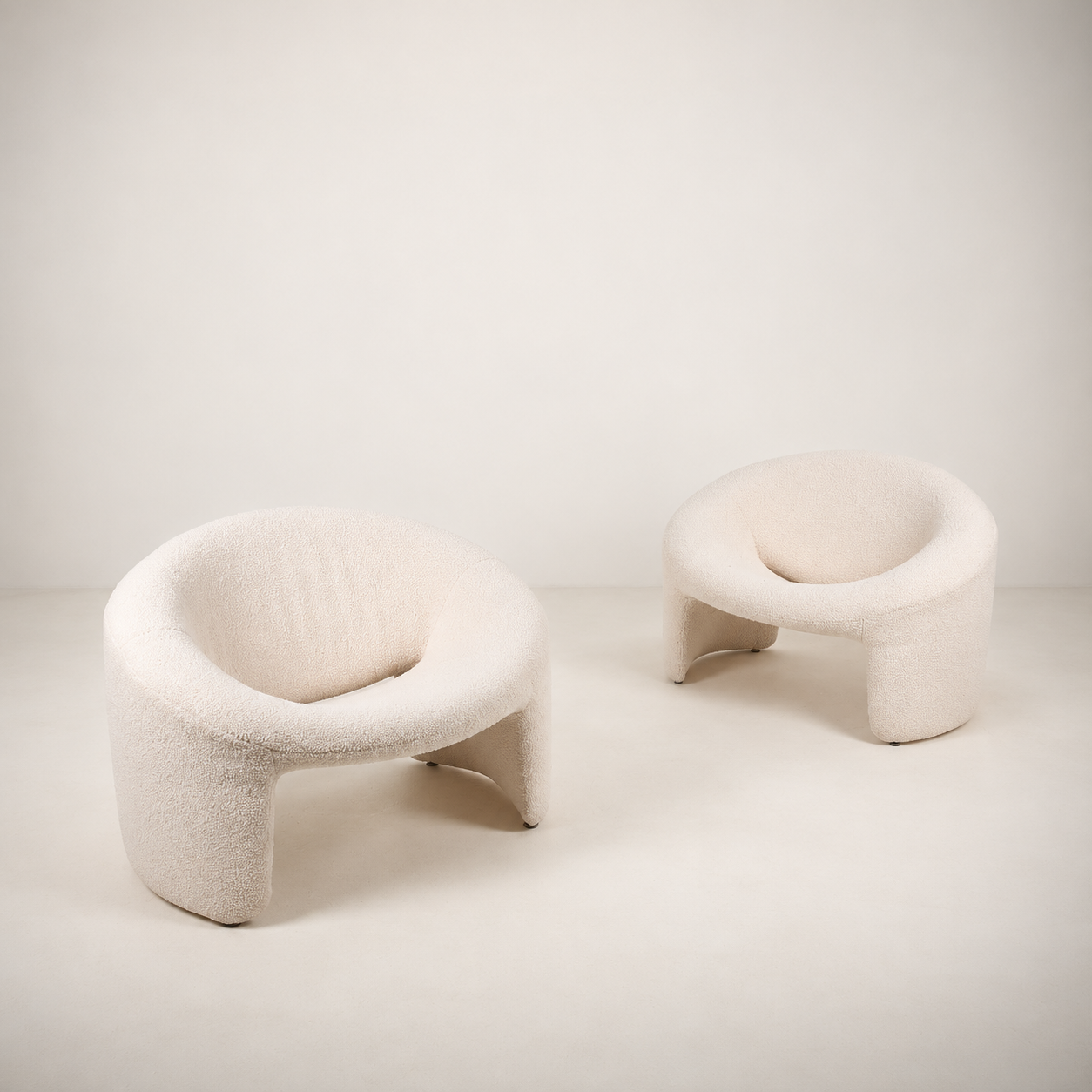
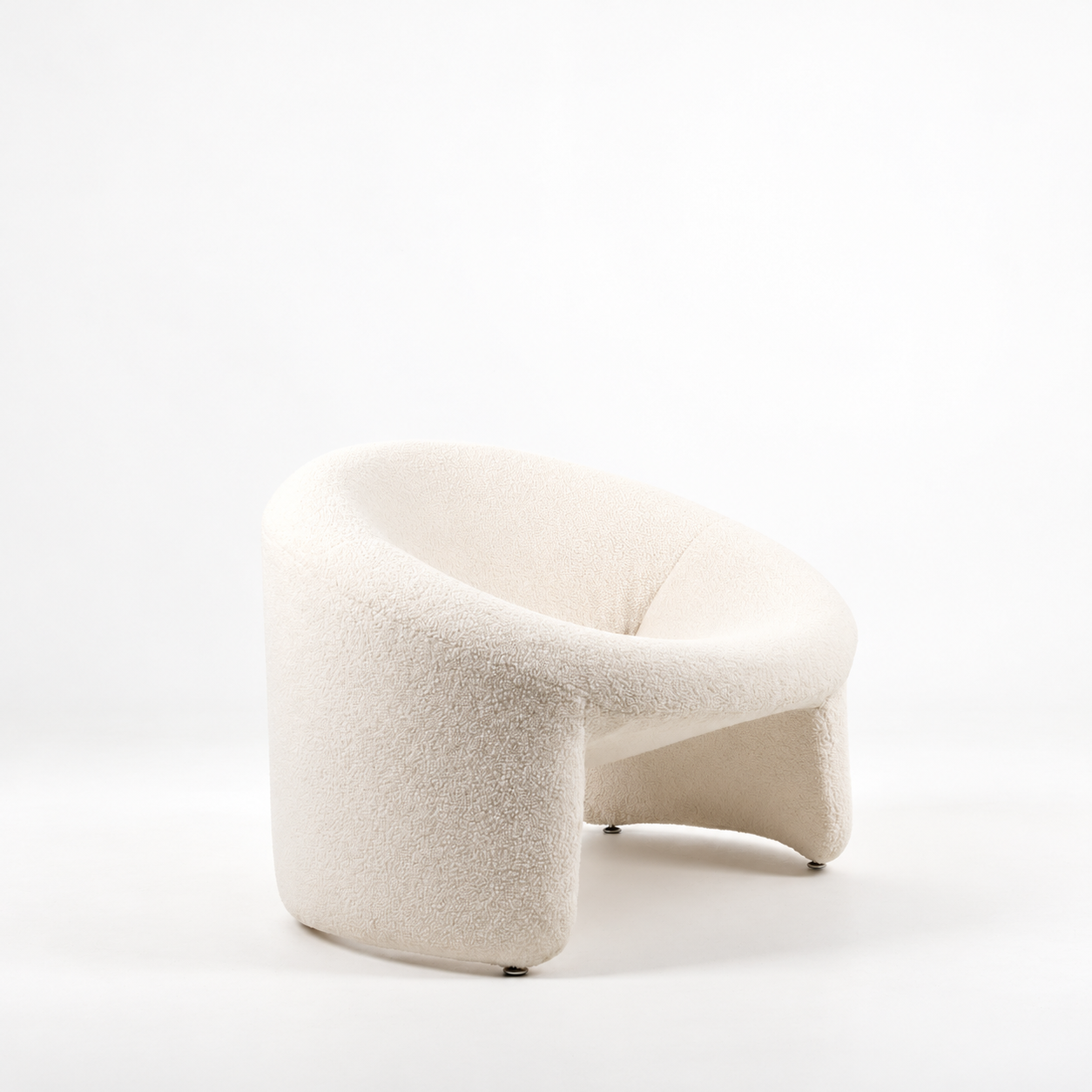
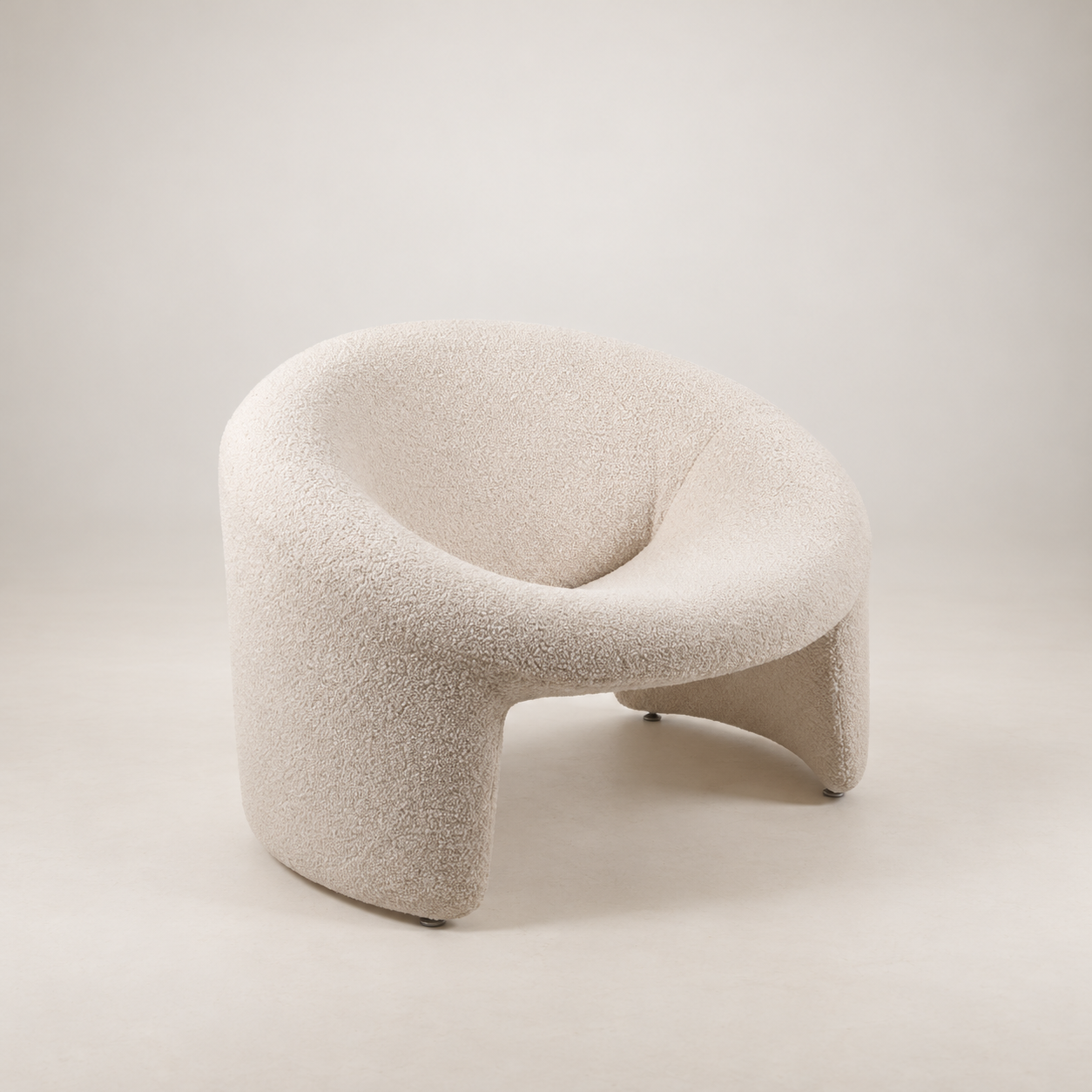
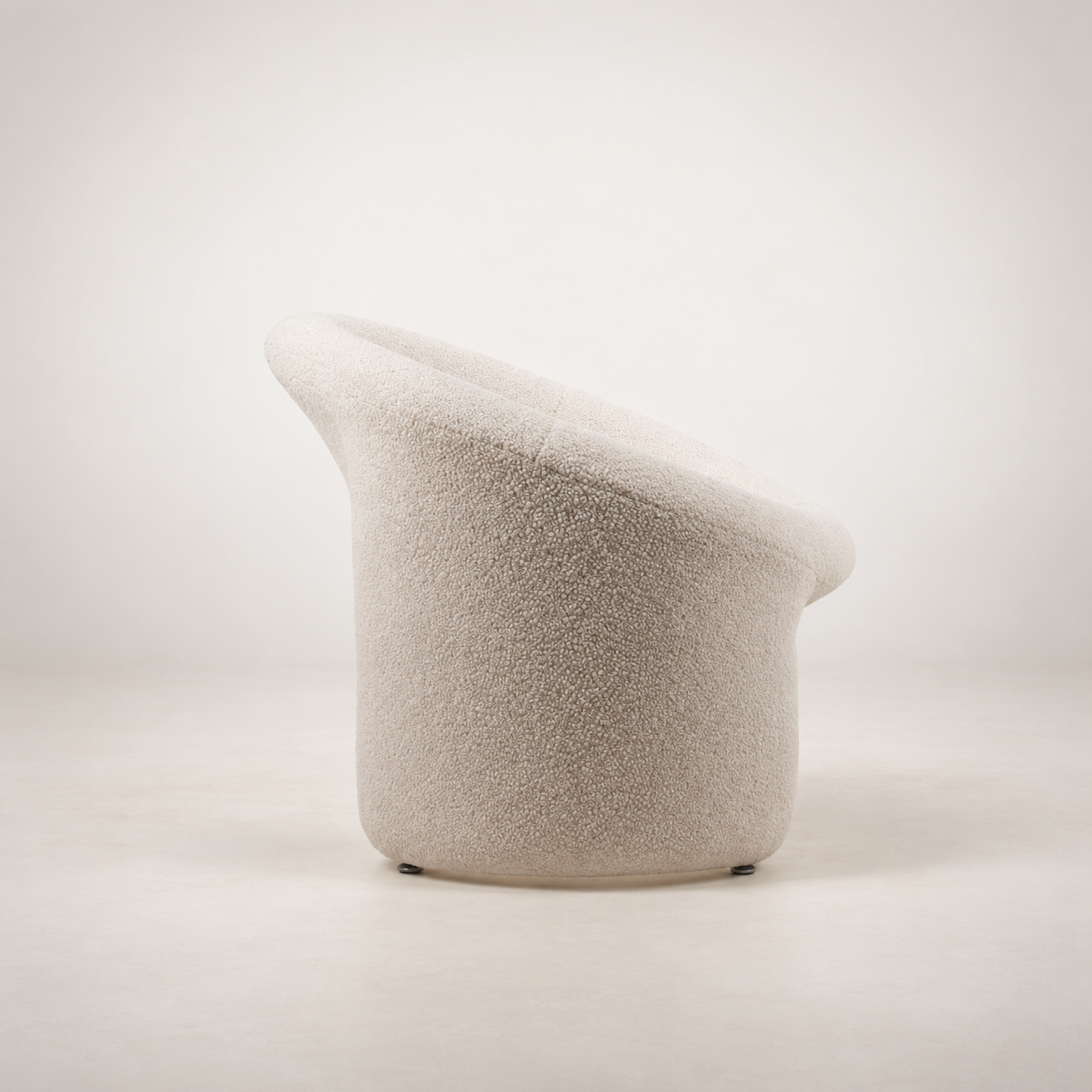
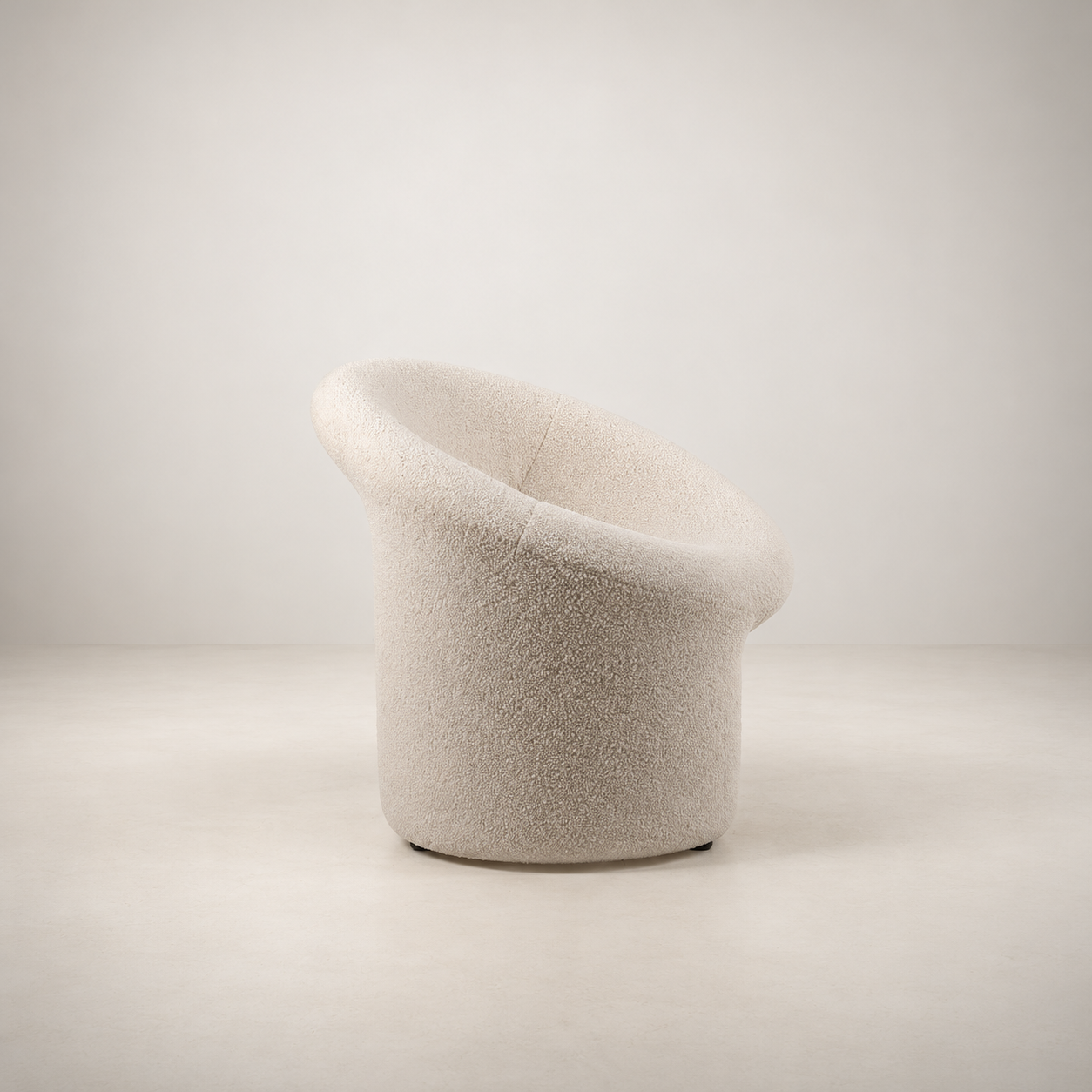
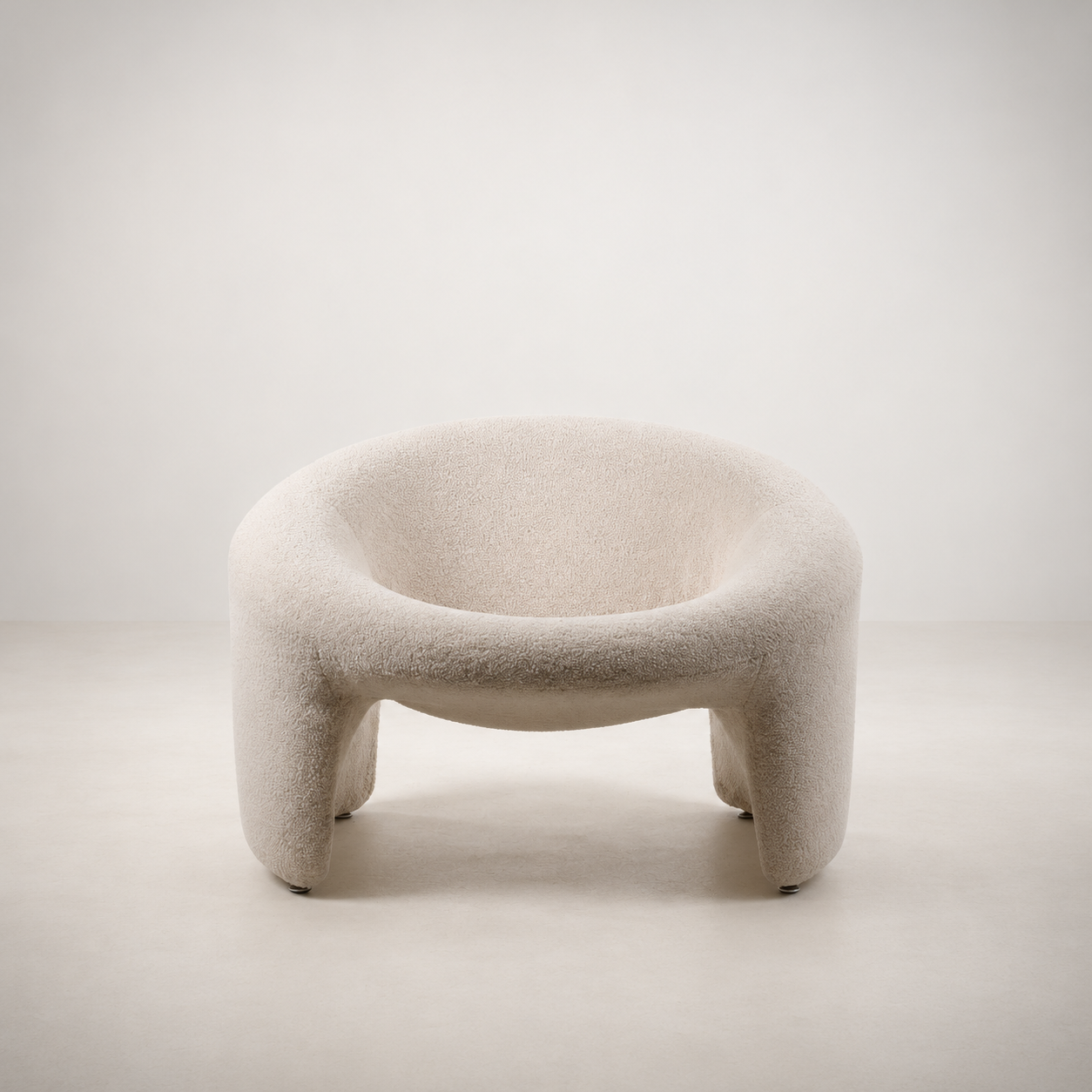
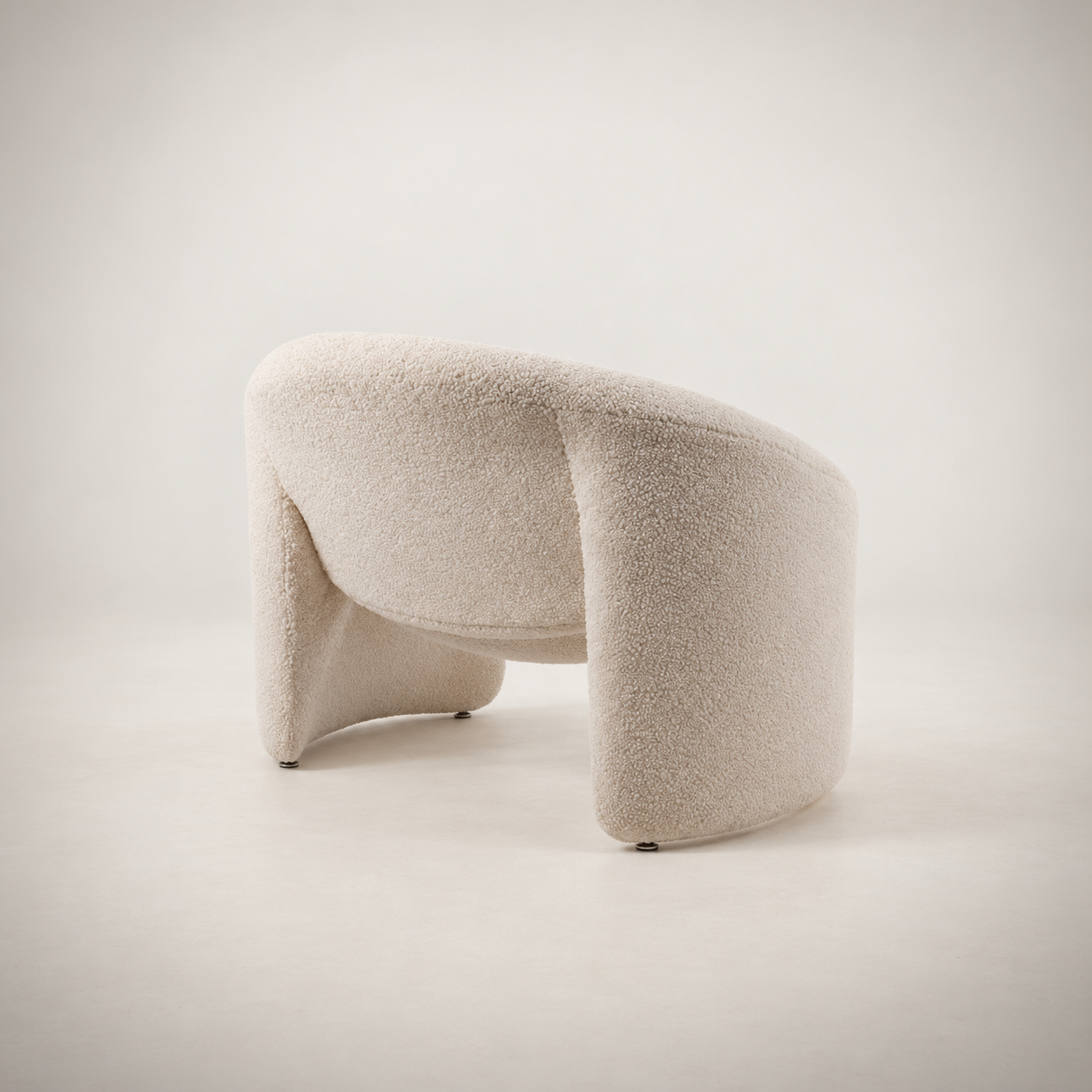
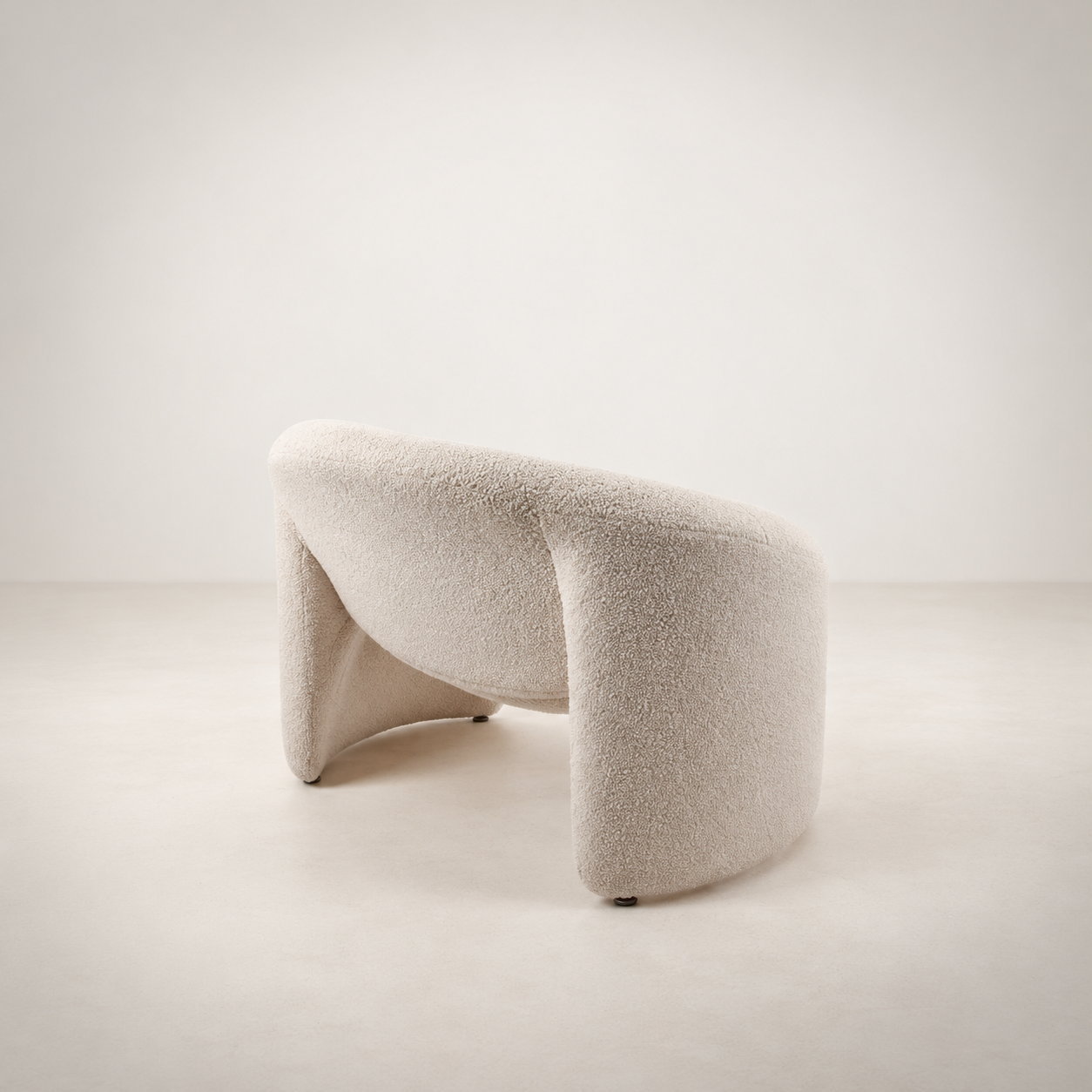
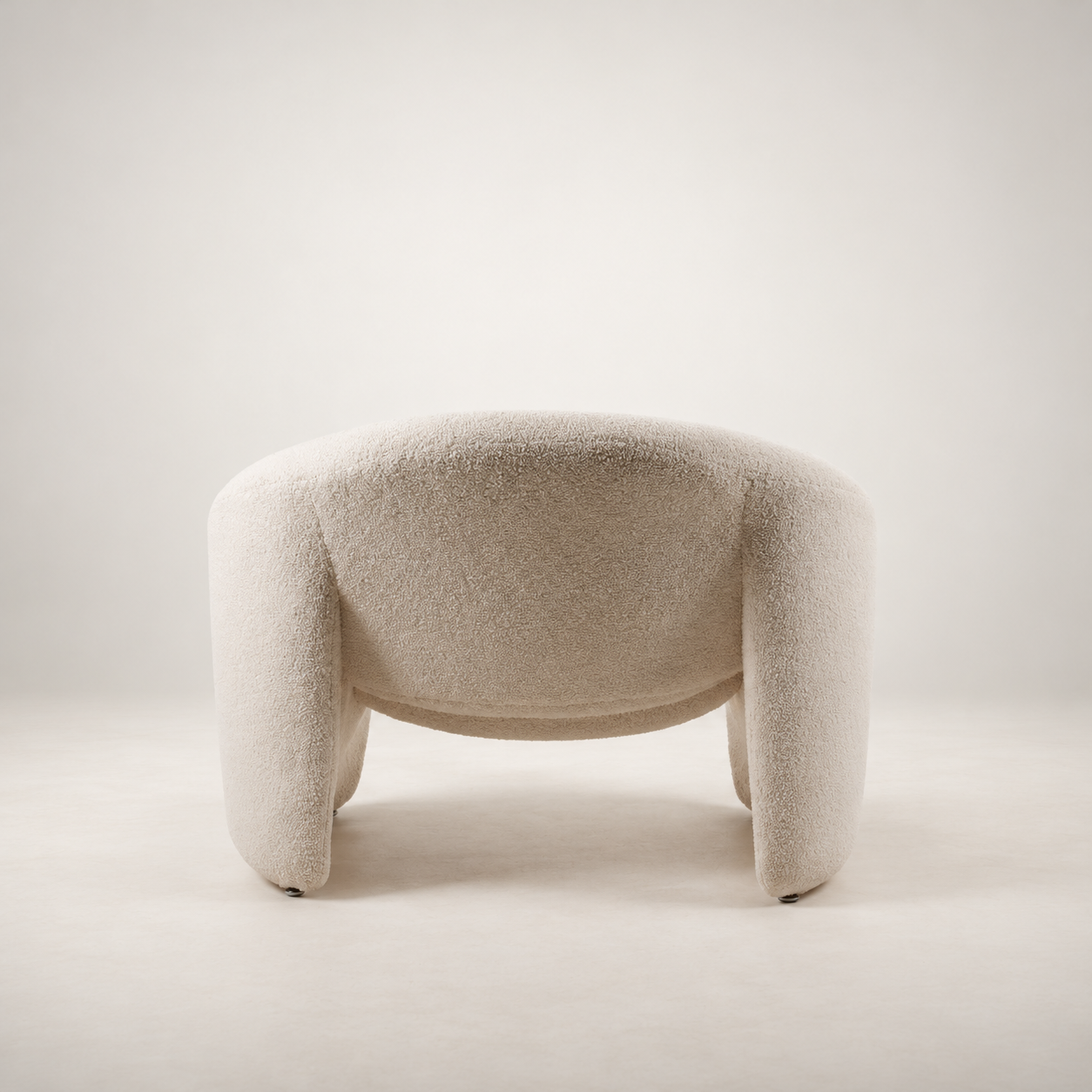
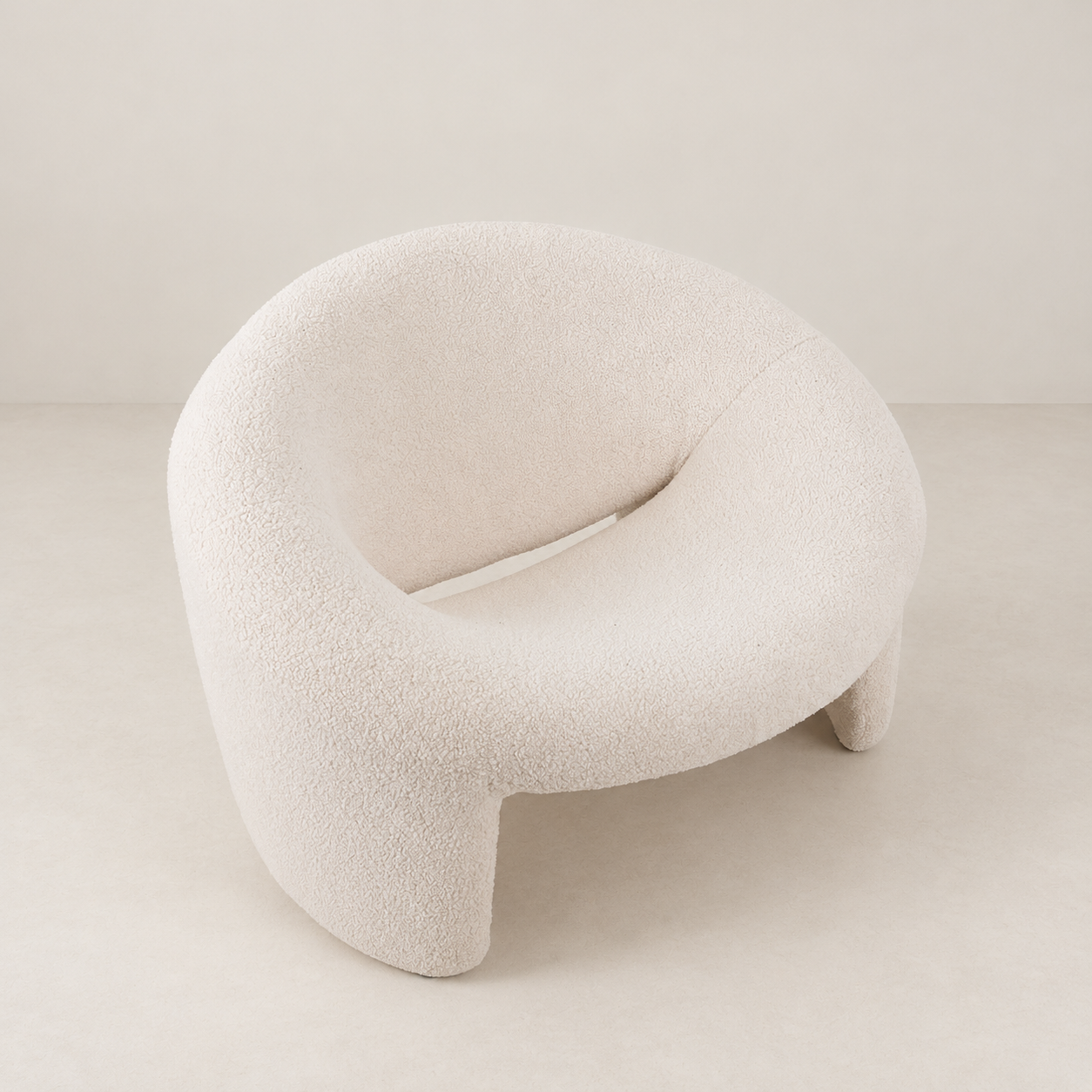
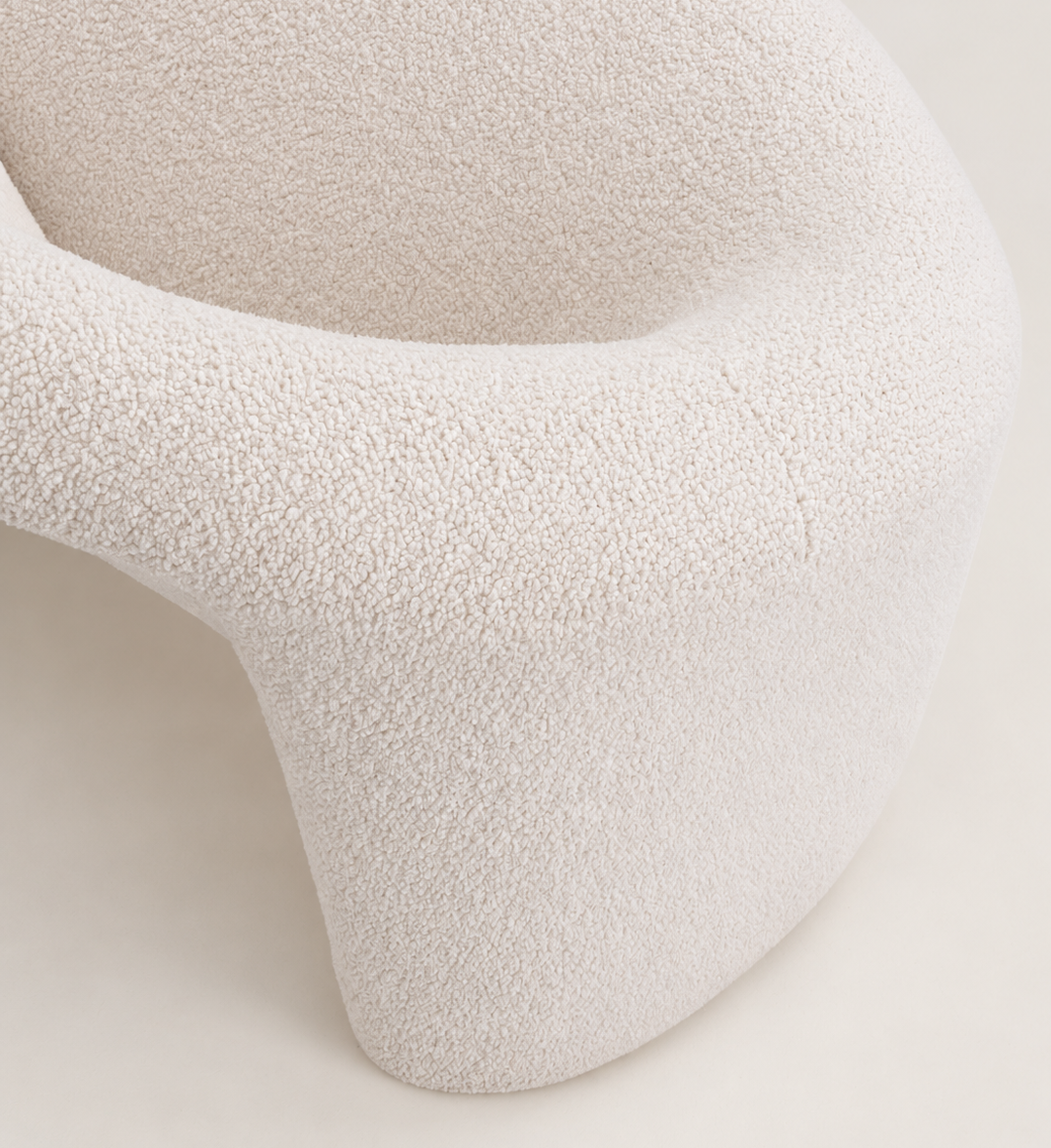
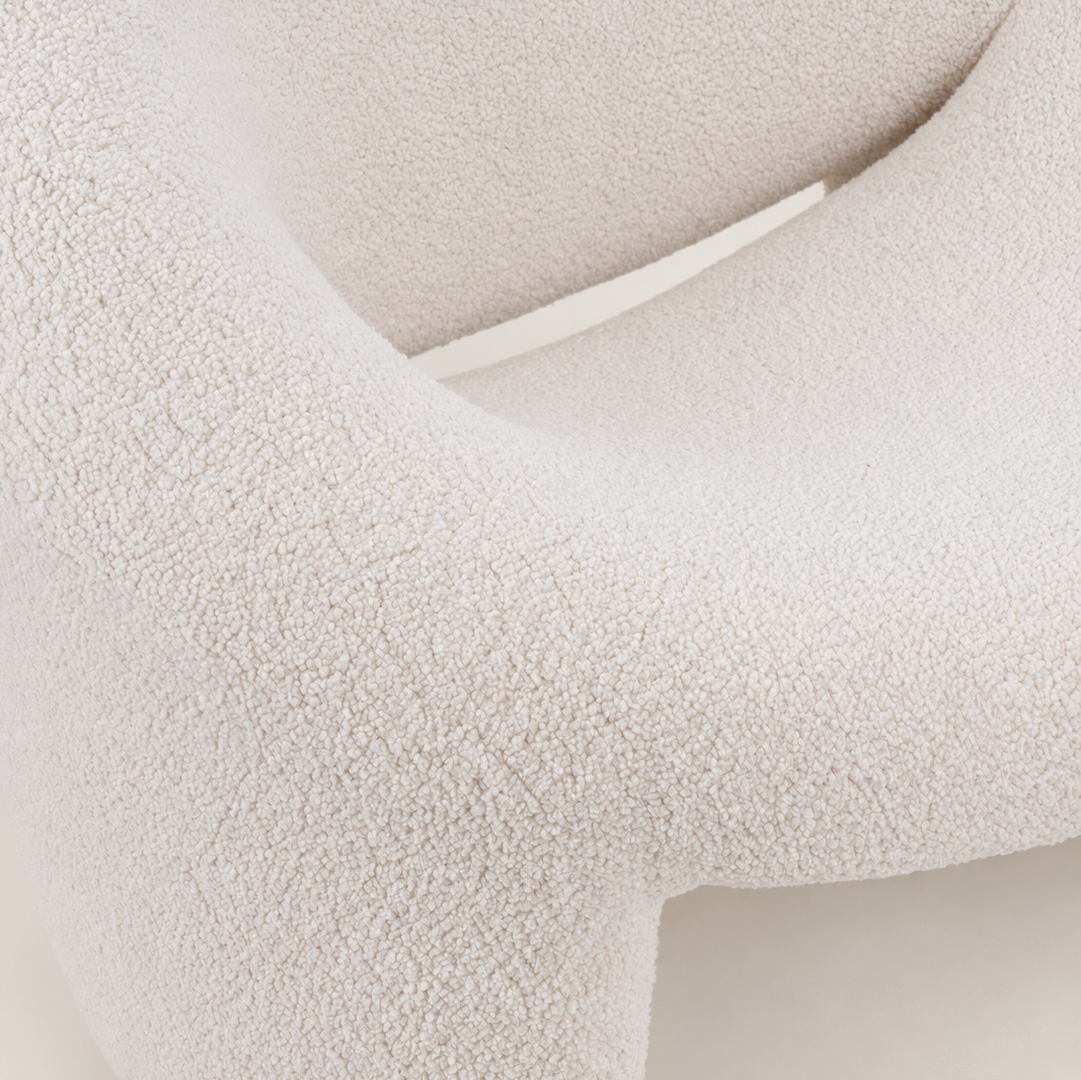
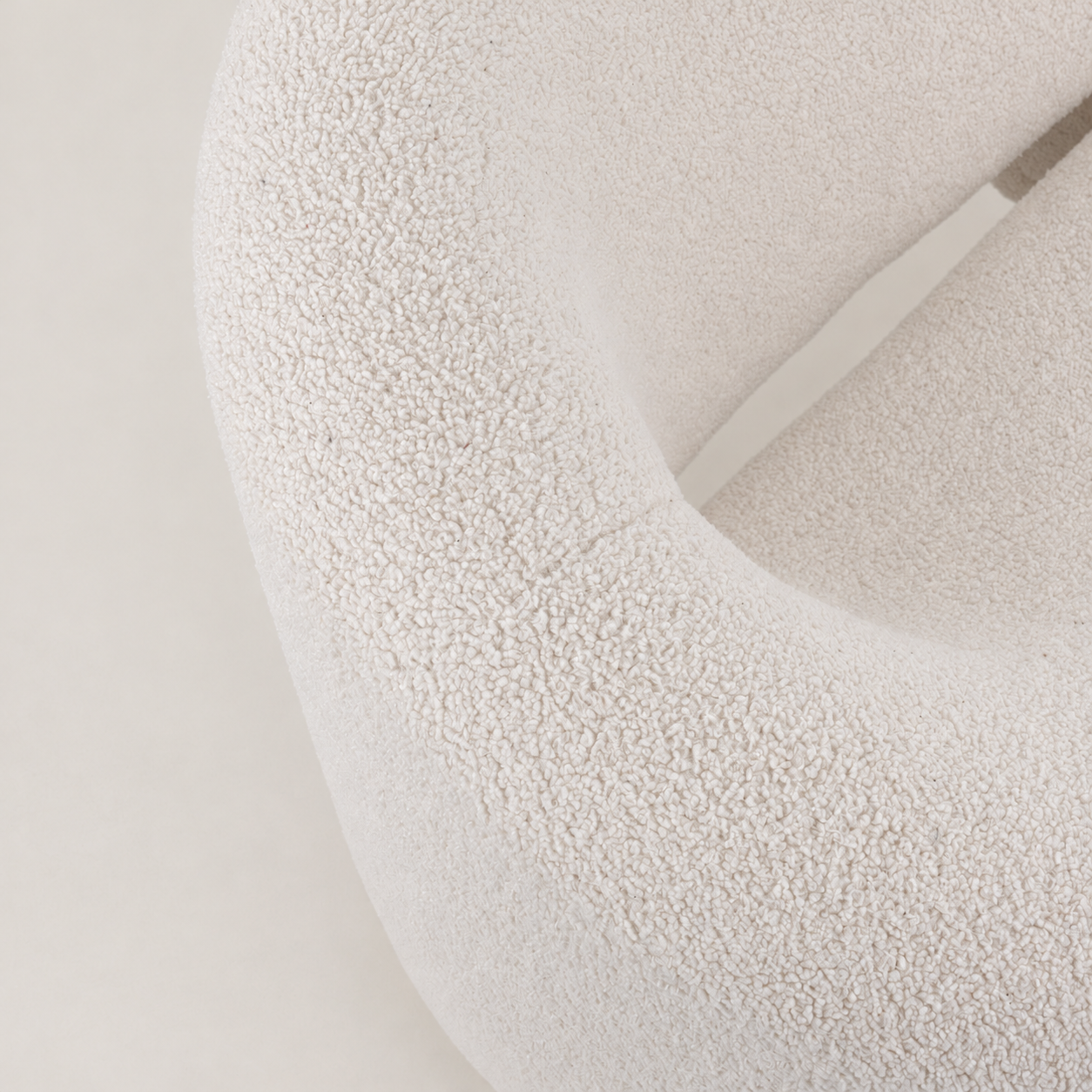
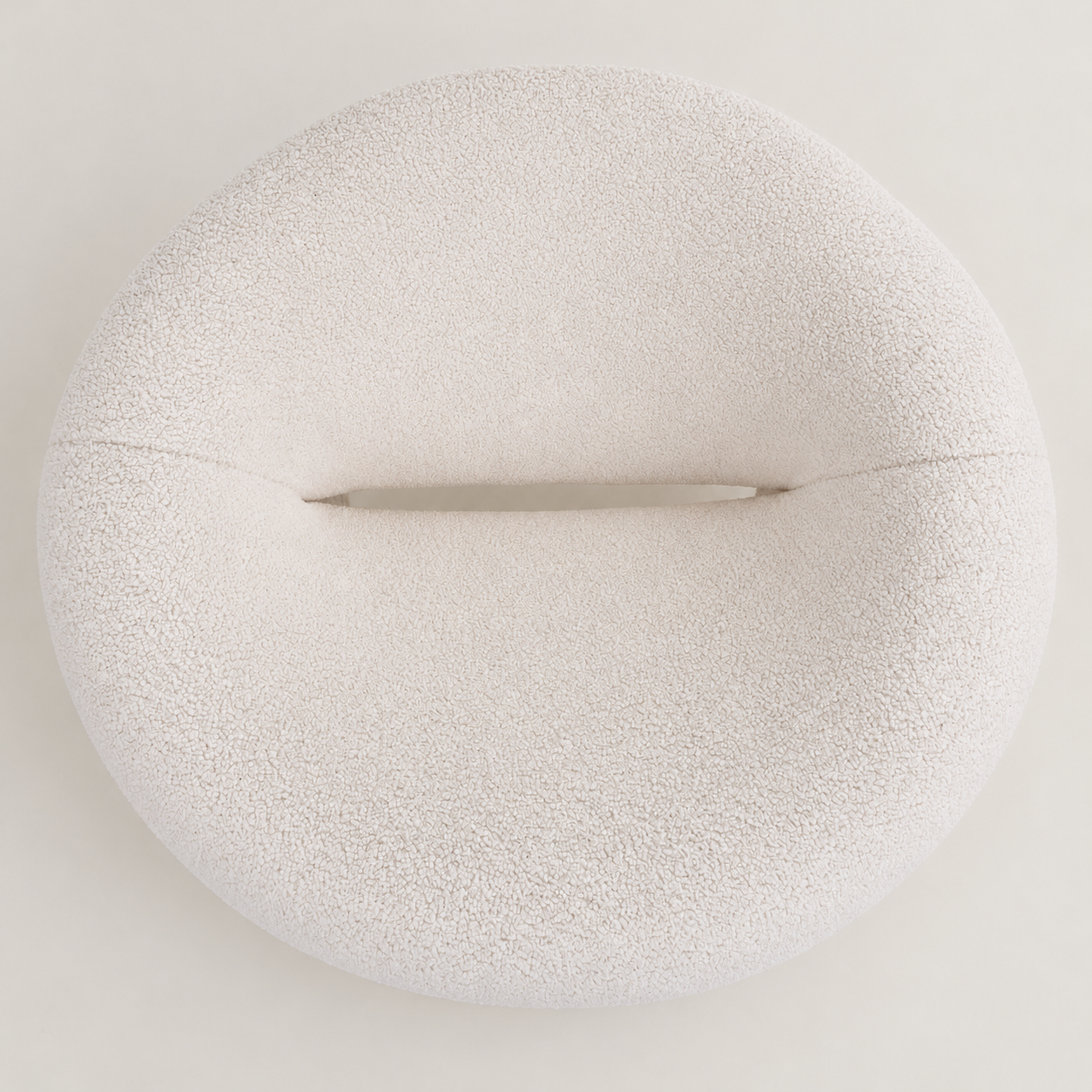
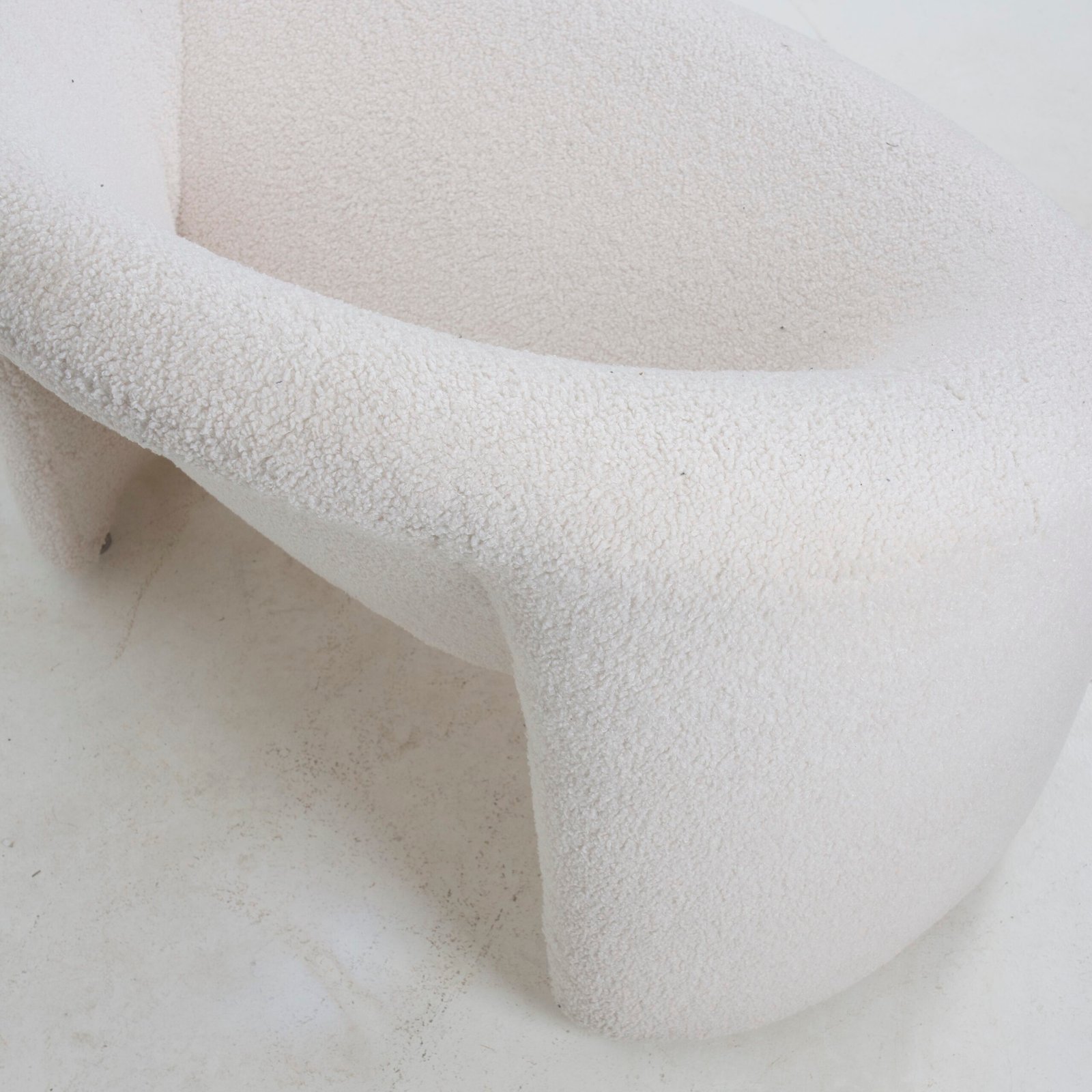
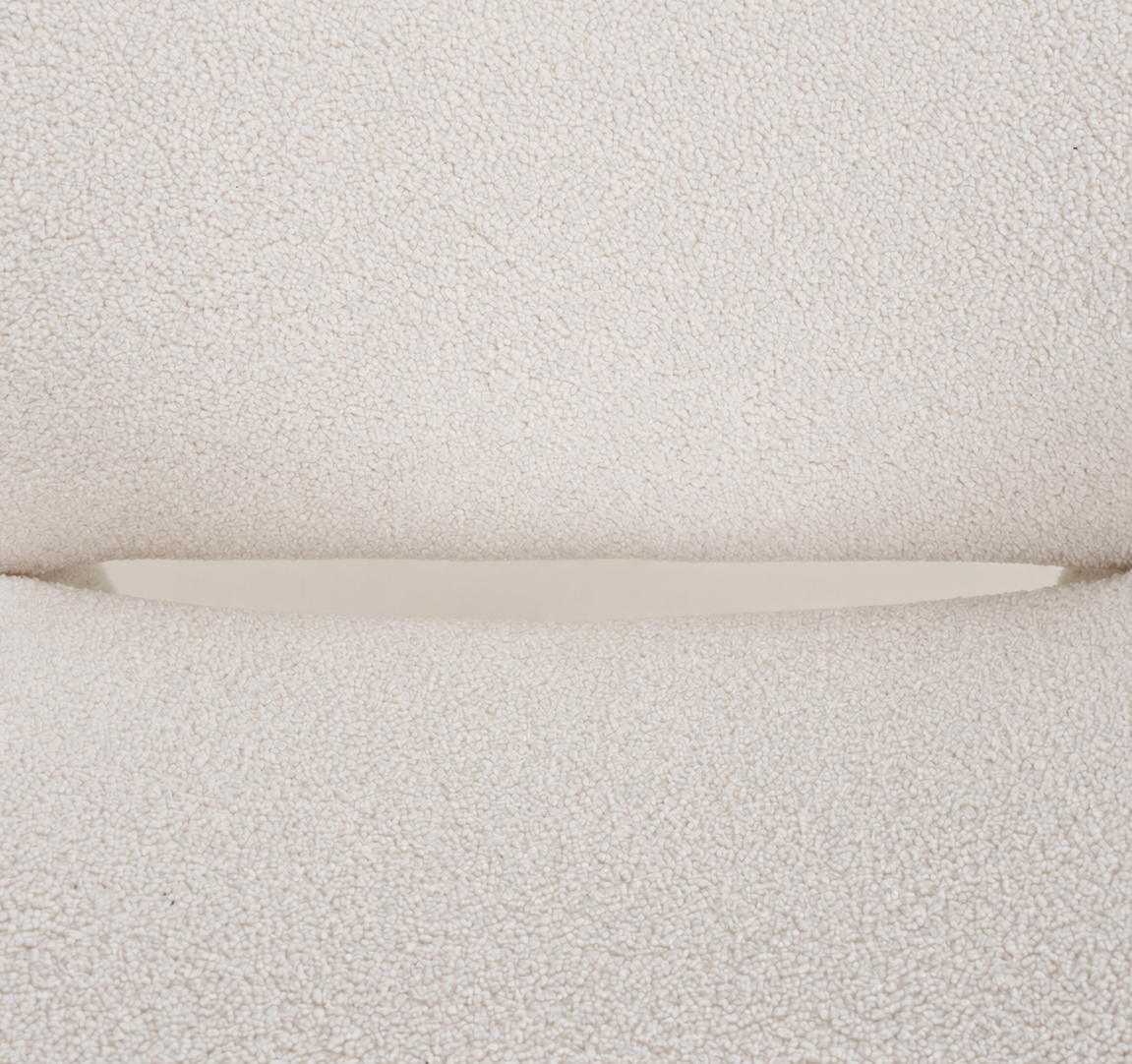


OLIVIER MOURGUE, armchairs and footstools Montreal, Airborne Ed., 1967
Olivier Mourgue (1939-)
Pair of Montreal armchairs and matching ottoman/footrest
Mobilier National-Atelier de recherche et création, Airborne edition, France, 1967
Fiberglass structure, foam and fabric (free choice)
chrome-plated metal feet
H. 65 (seat 38) x D. 63 x W. 87 cm
12000 €
Available — worldwide shippingAvailable — worldwide shipping
Details
ARC–Mobilier National collection, inventory no. GMT-22591-014. The model was commissioned for the reception room of the French pavilion at Expo 67 in Montreal.
The prototypes were developed and executed by the Atelier de Recherche et de Création from Olivier Mourgue’s drawings. The first production run was entrusted to Airborne: thirty armchairs, ten ottomans and six coffee tables bearing the “Mobilier national” label.
Literature
Furniture and decor, no. 840, August–September 1968.
Airborne trade catalogue, 1970.
Japan Interior Design, special issue, 1971.
Mobilier national 1964-2004, 40 years of creation, catalogue.
Biography
A graduate of the École Boulle and later a student at the École Nationale Supérieure des Arts Décoratifs, Olivier Mourgue (born 1939) designed the Joker range for Airborne from 1959. His collaboration with the manufacturer continued for nearly twenty years through the Whist, Djinn, Montréal and Bouloum series.
Close to Jean Coural, he also worked with the Atelier de Recherche et Création of the Mobilier National and, together with Pierre Paulin, contributed to the design of the cafeteria at the Maison de la Culture in Rennes.
Discover Olivier Mourgue at DIZAGN
- Olivier Mourgue — biography and selection
- Model 2093 floor lamp, Disderot, 1967
- Model 2093 lamp, Disderot, 1967
Model history:
Created for the main hall of the French pavilion at the 1967 Montreal World's Fair, the Montréal armchairs marked a significant milestone in Olivier Mourgue's collaboration with the Mobilier National (National Furniture Collection). Developed with the Atelier de Recherche et de Création (Research and Creation Workshop) and subsequently produced by Airborne, the design combined a public commission, experimentation with materials, and the pursuit of a new way of living.
In Olivier Mourgue, In Search of the Dream, Thibault Lannuzel places these chairs within a comprehensive design project. Mourgue considers armchairs, tables, textiles, lighting, and colors together. The red and fuchsia seats interact with a purple carpet, curtains by Geneviève Dupeux, and a tapestry based on a work by Georges Mathieu. The armchair thus contributes to the composition of a space, transcending its function as an isolated object.
The construction is based on a molded polyester shell, padded with foam and initially covered with a removable jersey slipcover. This technique allows for an enveloping silhouette with continuous volumes. The thesis also highlights the similarity between the figure-eight design of the tables and the plan view formed by the armchairs and their ottomans.
The Mobilier national documents a first edition commissioned from Airborne comprising thirty armchairs, ten poufs, and six coffee tables. This figure refers to the first series and does not represent the total production of the model.
Literature:
– LANNUZEL, Thibault, Olivier Mourgue, in search of the dream, Master II thesis, University Paris IV–Sorbonne, under the direction of Jean-Louis Gaillemin, 2008–2010, p. 41–43, 60–61 and 231; documents reproduced p. 195–197.
– ZUBER-CUPISSOL, Myriam, The Research and Creation Workshop of the Mobilier National, 1964–2000: A Plea for Contemporary Furniture. Homage to Jean Coural, 2001, pp. 19–20.
– ZUBER-CUPISSOL, Myriam, Mobilier national 1964–2004: 40 ans de création, Paris, Réunion des musées nationaux / Mobilier national, 2004, p. 38.
– Trait d'Union. Exhibition of the Research and Creation Workshop of the Mobilier national, Château de Chavaniac-Lafayette, 2018, p. 25.
Biography: Olivier Mourgue and the seat as space
Trained at the École Boulle and then at the École nationale supérieure des arts décoratifs, Olivier Mourgue has developed a practice enriched by studio work and the creation of prototypes. His approach combines observation of uses with a concrete knowledge of materials.
His collaboration with Airborne gave rise to several major research projects on seating, including Joker, Djinn, Whist, Montréal, and Bouloum. With Montréal, he transposed this approach to a national representation commission: the armchair became an element of a coordinated environment, where volumes, colors, and textiles contribute to the experience of space.
Thibault Lannuzel's thesis highlights this continuity between furniture and interior architecture. It allows us to understand Montreal as a milestone in Mourgue's research on ways of sitting, moving, and living.
Public collections:
The Mobilier national, Paris, holds examples of the model, notably under the numbers GMT 22591/014 and GMT 22591/001
Documented presentations and displays of the model:
– 1967 — Montreal World's Fair: furniture for the main hall of the French pavilion.
– 1969 — Quinzaine française, Musée d'Art wallon, Liège: presentation of Montreal chairs and tables, listed in the report, p. 231.
– 1969 — Trade fair, Munich: presentation of five chairs and two coffee tables Montreal, recorded in the report, p. 231.
– 2018 — Trait d'Union, Château de Chavaniac-Lafayette, April 6–June 4: a Montréal armchair is featured in the exhibition booklet, p. 25. mobiliernational.culture.gouv.fr
These demonstrations concern the model; no participation from the DIZAGN pair is confirmed.
Our Selection


